Opinions

Those children neglected by Health and the girl who wanted to change the world

Antonia Madella Noja. She comes from Lotta Continua, studied with Geymonat, created the Tog Foundation for those born with brain injuries, in which Carlo Cracco collaborates

by Paolo Bricco
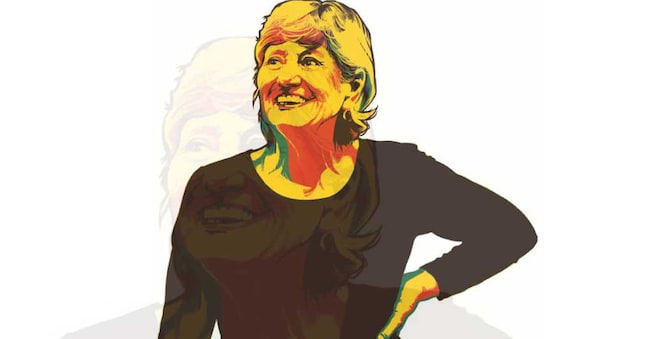
Laurea in filosofia. Antonia Madella Noja è laureata in Filosofia e Medicina Riabilitativa, ha lavorato a Milano dal 1979 al 2011. Dal 2011, dirige il centro di Eccellenza creato dalla Fondazione TOG Onlus per la cura e riabilitazione di bambini affetti da Para

6' min read

Translated by AI
Versione italiana

6' min read

Translated by AI
Versione italiana

"Children with brain injuries do not give off the smell of fear. They live their existence in a natural way. It is the parents, on the other hand, who have the smell of anguish in their every gesture. Because they know that their children's condition is not reversible. Many of them cannot accept it. It is human. It is a very deep emotional pain that produces very complicated practical problems'.

Antonia Madella Noja - born in 1949 - created the Tog Foundation in Milan, where free rehabilitation care is offered to children with complex neurological pathologies, cerebral palsies and genetic syndromes with intellectual disability. The Tog Foundation, of which Madella Noja is the general secretary, is a special place: it represents a meeting point between the Italian culture of rehabilitation, which has its own historical, present and future medical-clinical and care-cultural originality, and an instance of gratuitousness that has an almost political component, directly connected to the biography of its founder.

Loading...

We are in the bistro that Carlo Cracco, through his family non-profit Fondazione Mastro Martino, has opened inside Tog. Tog, built where the disused public showers in Via Livigno once stood, is located near Viale Jenner, not far from the old squat mosque.

"Cracco follows pro bono fundraising dinners. The municipality asked that a share of the project be open to the neighbourhood. It was natural to ask him if he would be interested in participating,' Antonia explains.

The bistro is simple. There is no slick elegance. Dishes are charged the same, if not less, than any bar or diner in this city now inhospitable to those without assets as well as income. The waiters are very friendly. The spaces can be used by mums and dads, grandmas and grandpas while they wait for their little ones to have their rehabs and therapies.

Antonia's story is intertwined with the stories of the boys and girls.

His father Pietro and mother Elisa were from Mantua. Pietro came from a family of landowners. Elisa had a working class background and worked as a saleswoman in a pastry shop in the city centre. They moved to Milan, where Pietro was an engineer in the record and gramophone factory La Voce del Padrone: it was his invention to make the special press used to make the hugely successful vinyls of Giuseppe Di Stefano and Maria Callas. It was a different era. Times, however, were changing.

Antonia attends the Beccaria classical school, in the last year of Giovanni Gentile's method in purity, with all three years of high school brought to maturity plus the general references of the gymnasium programme. He recounts as a waitress brings us a menu: 'My family was middle-class. We lived near Corso Sempione. Like many teenagers at the time I became a leftist for a reason that was more psychological than cultural, more interior than reflective. One day I met a beggar in the street. And I began to think that that condition was not right. In high school I joined the Student Movement. At university I chose Lotta Continua. To have economic independence I found work as a clerk at Gillette, where I did market analysis. At Statale I enrolled in philosophy, where I graduated with Ludovico Geymonat, with a thesis on the universality of art that transcends all ideologies'.

For starters, we both take Carlo Cracco's egg, a classic of his cuisine.

Antonia well represents the less sulphurous and dangerous part of Lotta Continua, the less dedicated to power and ambiguity towards violence, the more interested in cultivating knowledge of the world and intervention in things and people with candour: 'At that time in Lotta Continua we moved from city to city to do political activity. In 1973 my future husband Ciro Noja and I went to Palermo. The decision to live in Palermo was also dictated by the excessively harsh climate in Milan, where some things neither Ciro nor I liked. We moved to Sicily together with Mauro Rostagno and Chicca Roveri, two great friends. At first we stayed in a farmhouse in Mondello. Then we moved to the city to Via Domenico Costantino, near Villa Trabia. Living in Palermo was exciting. I still remember the smell of salt and sunshine that hit you every morning when you opened the door. In addition to the political and cultural activities of militancy and proselytising in Lotta Continua, my husband started working with the university chair of architecture and I was hired as secretary by Princess Arabella Lanza di Scalea. I was from another planet compared to the princess. But I greatly appreciated the culture of that person and that environment. A humanistic refinement superior to that of the North, which my husband and I found by frequenting Elvira and Enzo Sellerio's Sellerio bookshop. We got to know Leonardo Sciascia less, but he became very close to Mauro Rostagno who became passionate, as he did with an almost metaphysical obsession, about the mafia phenomenon'.

Antonia does not drink wine. I, on the other hand, take a glass of Tuscan red. In 1974 Lisa was born: 'Almost immediately we realised something was wrong. At nine months she couldn't stand up straight in the playpen. My mother-in-law Annalisa had remained friends with an old boyfriend of hers who worked at the Besta in Milan. The cognitive and neurological tests went well. However, a neuromuscular disease emerged. Both my husband and I had tests. We were both healthy carriers. Our daughter had a 25% chance of developing it. And so it went. The decision to return to Milan was dictated by the presence of certain groups of doctors and operators who were already then on the cutting edge, clinically and in terms of care. It was the right decision for rehabilitation and therapy and for Lisa's schooling.

Today Lisa, who was a member of parliament with Matteo Renzi's Italia Viva, is a regional councillor in Lombardy and a corporate and antitrust lawyer working in both Italy and the United States.

Antonia as main course takes a salmon. I, on the other hand, spaghetti aglio, olio e peperoncino. Back in Milan, Lisa is cared for at the Associazione italiana assistenza spastici (Aias) in Via Mantegazza. The Italian culture develops child neuropsychiatry, which links neurology and psychomotricity in a dialogue between neuroscience, human sciences and relational psychology. The Aias, the Buzzi and Besta city hospitals and the San Gerardo in Monza were - are - in a network with the major British and Israeli experiences.

Lisa's mother enrols in the faculty of rehabilitation medicine. She is hired at Aias and becomes the therapist coordinator. Antonia notes: 'Parents know that there is no cure that will make their children well. To use a philosophical term, it is an ontological condition. A particular form of being. At the same time, however, it is not inescapable. Many things can be done for the little ones. The same with their families and their teachers'. She pauses, is silent for a moment. Then she takes the floor again: 'I said earlier that our children have no smell. They don't. To use a political image, they smell third way. Their condition is not reversible. But it is addressable. It is reformable, almost refoundable. They are neither healthy, as much as that means, nor sick. I studied philosophy with Geymonat, a great hybridiser of humanistic and scientific thought. My boys and girls remind me of quantum physics, which changed the rules of the linearity of things. I put it simply: with and for them, two plus two does not always equal four. If we all work together and if they are lucky, it can make five'.

For dessert we both take a Mont Blanc. Antonia works at the Aias and then leaves it in 2011. She created the Tog Foundation with the support of the Carlo De Benedetti Foundation, which chose her project as a family charity initiative.

Over the last twenty-five years, the administrative definition of what is a disease and what is a cure has changed in Italian public health. Madella Noja explains: 'Since 2000, the state and the regions have reduced the funds for rehabilitation medicine. Our boys and girls are not curable. Public bureaucracy has penalised the allocation of budgets precisely because of the non-reversibility of their condition.

The money issue matters. Now, fortunately, we are getting some more public resources. But most of our funds, after the substantial initial donation from the De Benedetti family, come from private individuals and bank foundations. Giuseppe Guzzetti, the former patron of Cariplo, has helped us in no small way. A golden rule applies here: nobody pays for services'.

And so, even today in Milan, while it is raining outside, the girl from Lotta Continua who, so many years ago, went to live in Palermo with her Ciro, in the sunny and salty air of Sicily, where together they had Lisa, from whom everything - in the end - originated.

Copyright reserved ©
Loading...

Brand connect

Loading...

Newsletter

Notizie e approfondimenti sugli avvenimenti politici, economici e finanziari.

Iscriviti