
'Those who come out of prison and have a trade are saved'

7' min read
7' min read
"My dissertation was on the criminal responsibility of the President of the Republic. It was a subject on which not much had been written. My supervisor was Giuliano Vassalli. A great teacher. He had invited me to overcome any form of intellectual shyness: if I did not agree with the little that had been written on the subject, I should express my point of view. And so I did. I deduced the elements of abstract responsibility of the president from constitutional law and not from criminal law. The wound of Antonio Segni's resignation in 1964 was still open in the body of the nation. Segni had remained at the Quirinale for two years. He had left for health reasons. But shadows had lengthened over his alleged knowledge of parts of the Piano Solo, the coup project of Carabinieri General Giovanni de Lorenzo. The discussion of the thesis turned into a real debate with Vassalli himself, the constitutionalists Vezio Crisafulli and Aldo Sandulli, the Professor of Criminal Procedure Giuseppe Sabatini and Tullio Delogu, a professor of criminal law who had recently joined Vassalli, engaged for almost an hour in a debate on a subject that had gone from cold and abstract to concrete and incandescent.
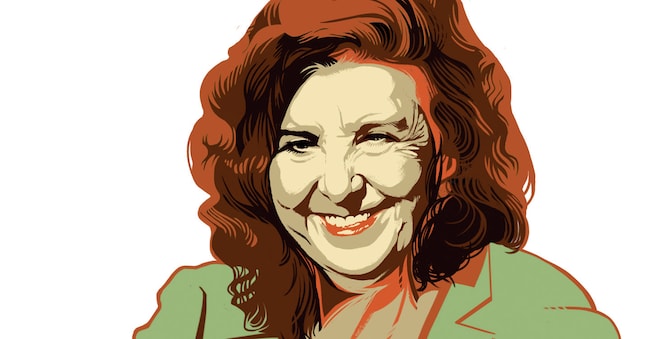
There is much of the future Paola Severino - lawyer, one of Italy's foremost experts on corporate criminal law, president of the Luiss School of Law, president of the National School of Administration (Sna), Italy's first female Minister of Justice, and many other things - in the story of that afternoon on a day in 1971 at La Sapienza in Rome: the apparently abstract and cold topic that becomes concrete and incandescent, the student who develops an unconventional thesis on a little-studied subject, the already well-structured young woman who moves with ease and without submission between mature men of great authority and authority who are in control of the situation and the discussion, but she initiated the discussion by choosing a topic that - as will happen to her throughout her life - is on the borderline between thought and practice, between power and responsibility, between what is seen and what is not seen, between private passion and public commitment.
We are in the Severino Studio in Piazza della Libertà in Rome. In the room set aside for lunches, from one window you can see a bend of the Tiber and from another the Basilica of St. Peter. The food was prepared by the Il Moro restaurant, a classic for Rome's upper middle class. The wine is suggested by Franco Maria Ricci, the inventor of Bibenda, a friend of Paola and her husband Paolo Di Benedetto: 'I am proud to have been awarded the title of honorary sommelier by him,' she says, smiling as we sit at the table.
On one wall is a painting by Giulio D'Anna, a Sicilian painter who manages to mix the grammar of futurism with the lights and colours of the Mediterranean: "The first painting my husband and I bought was an unfinished work from the 17th century, a monk's head whose cassock had not been painted and which was later attributed by the critic Maurizio Fagiolo dell'Arco, our friend and mentor, to Cavalier d'Arpino. The first futurist we acquired was Antonio Marasco, with a work on a bicycle race in which decomposition and speed merged into a beautiful vision. I have been interested in Futurism since the 1970s. Nobody bought the works of that cultural movement. Everyone gave it a political reading because of its connections with fascism. As an Italian born and raised until the age of thirteen in Naples, I learnt from Benedetto Croce to assign art a condition of autonomy from politics. I have two still figurative works by Giacomo Balla in my studio and a painting from his Futurist period at home'.
We both eat the appetisers with gusto. The escarole romana, the aubergines, the mushrooms, the omelette. The white wine is a 2019 Jermann Chardonnay del Friuli-Venezia Giulia, also good at room temperature. Paola Severino's life composes a geography of the professional, cultural and political soul of Italy. Naples, Rome and Milan. She recounts as she drinks her glass of white: 'I am from Naples. My paternal grandfather, Cesare, was a Post Office clerk. His three sons and three daughters went to classical high school. They had a Latin vocabulary and a Greek vocabulary. They all graduated. One of the sons, Marcello, tutored a girl, Anna Maria. Anna Maria was nine years younger. She was very beautiful. When they fell in love, Marcello, who wanted to be a lawyer, asked Anna Maria's father, Giuseppe, for her hand in marriage. Giuseppe was a civil engineer. The family home was in the Pignasecca neighbourhood, a world of poverty and nobility à la Eduardo Scarpetta, the slums and then down the street the house built by my grandfather, the first to have a refrigerator imported from the United States, the women of the neighbourhood used to come there to store butter. When there were bombings, the inhabitants would slip into the shelter that grandfather Giuseppe had dug into the Vomero hill, on which the house was leaning. The war had just ended. Giuseppe said yes. But, for his daughter's financial security, he would have preferred him to take the competition for magistrate. He agreed. First a magistrate in Intra, in the province of Verbania, and then a labour judge in Naples. In later life, he would become a lawyer in Rome. I spent my childhood in that district of Naples. As a child, I would lower my basket into the street and the women would fill it with bread, fruit and vegetables. When I was a girl I moved to Rome: in the afternoons, after classes at the Dante high school, I would go to the studio of my uncle Massimino, a councillor at the Supreme Court, who would tell me about the first cases of corruption in the tobacco and banana monopolies. But, of Naples, I have always retained, in my innermost part, the harmony in diversity and the harmonious blending of the high with the low, of the elite with the popular, in the idea of their substantial uniformity. Our geometric form is the prism. Those of Naples love the premiere of the San Carlo and the Scarlatti orchestra, the percussionist Tullio De Piscopo and the songs of Pino Daniele'.


