
Threats from Iran: Bessent forced to move to a military base
The Treasury Secretary is under scrutiny for having led the campaign of sanctions and economic isolation against the regime in Tehran. Rubio, Hegseth and Miller also live within a military compound

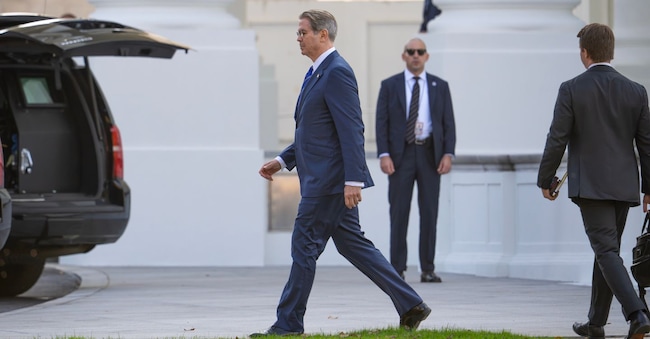
Scott Bessent, the US Treasury Secretary, was forced to leave his home in Georgetown, Washington, and move to a military base after receiving a series of threats from Iran. As early as the end of October, US intelligence had raised alert levels, warning of possible attacks against US citizens, military personnel and politicians around the world.
In recent months, Bessent has spearheaded the US campaign of sanctions and economic pressure aimed at severing Iran’s links with the outside world, forcing the regime in Tehran to capitulate, and securing the reopening of the Strait of Hormuz. The Treasury Secretary himself announced, last August, a sort of ‘economic D-Day’ against Iran, calling for the cooperation of the entire international community to curb the country’s oil and gas sales. This operation, alongside controls on exports and trading partners, has also led to a naval blockade of Iranian ports.
Countries such as the United Arab Emirates and Turkey have complied with Washington’s demands, even cutting off banking channels. Others, such as China, have all but ignored the US administration’s efforts, continuing to buy oil from Iran.
“Secretary Bessent will not be intimidated by the Iranian regime’s threats and remains committed to pursuing the campaign of sanctions and economic isolation: measures which, taken together, are causing the Iranian economy to collapse,” the Treasury Department said. For the time being, however, Bessent will be forced to live inside a military compound, as Secretary of State Marco Rubio, Pentagon chief Pete Hegseth and Stephen Miller, the new White House Chief of Staff, have already chosen to do.
Yesterday, speaking on Veterans’ Day at Arlington Cemetery, Donald Trump said he wanted “a total victory over Iran”, in a war that the president himself has repeatedly declared to be “effectively over from a military point of view”.


