The comparison with the US

Three fronts for post-American Europe

In June 2016, European leaders approved a document outlining the principles and instruments of the bloc's foreign and security policy.

by Adriana Castagnoli

Reuters /Cheney Orr/File Photo

4' min read

4' min read

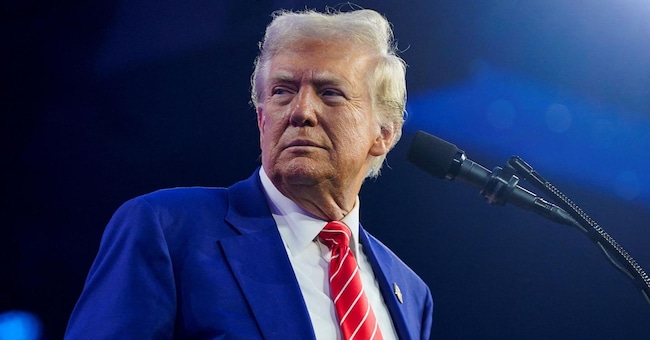
In June 2016, European leaders approved a document outlining the bloc's foreign and security policy principles and instruments. It was the first attempt since the laceration of the Iraq war to codify a comprehensive strategy for the EU, with an emphasis on military, political and economic relations between the US and Europe and the depth of the transatlantic bond. Seven months later, Donald Trump's 'America First' instincts, his lack of commitment to NATO, and low regard for the EU indicated that the president was challenging US foreign policy principles since World War II.

Now, Trump's second term promises to be even more disruptive for US-European military, political and economic relations. Because across the Atlantic, even among those who do not explicitly subscribe to the ethos of 'America First', domestic policy sentiment and the attraction of competing priorities abroad, particularly in Asia, are becoming increasingly strong.

Loading...

A post-American Europe thus appears more and more plausible. But one has to wonder with what outcomes, as global affairs political scientist Hal Brands observes. Will it be a united, democratic, peaceful Europe or a fragmented, volatile and conflictual Europe as it has been for centuries? The EU has relied so heavily on US protection since the early days of the Cold War that it has not developed a culture of independent strategic thinking. The crux of the matter remains which Europeans and the European ruling classes want, whether to achieve maturity as a Union or to continue the skirmishes between unruly small nation states.

The main fronts on which the second Trump administration will test relations with Brussels are three: Ukraine, trade and global scenarios.

In Ukraine, the president-elect is pressing for a peace agreement between Moscow and Kiev, but his terms must not dent Trump's popularity by avoiding the negative effects of the retreat from Afghanistan on Biden. Money matters. Discontent with the European contribution to the transatlantic relationship has been simmering in the US for years. Europe will therefore have to bear most of the costs, and as much for its defence, reaching 3 or even 5 per cent of its GDP. This is a crucial test for the 27. To strengthen its defence capabilities in a chaotic world, the EU must strengthen its collective defence and security beyond national interests.

The second front is economic. Donald Trump, in the announced 'salvo' of tariffs against friends and foes, warned the EU to buy more American oil and gas. Remarkably, President Ursula von der Leyen had already anticipated this option for the EU. The US has long been the largest supplier of LNG and oil to the EU. In the first half of 2024, the US supplied about 48% of the bloc's LNG imports, compared to 16% from Russia. An expansion of these supplies could, however, be a lever to put further pressure on Putin. But crucial for the EU is to break out of the stalemate and backwardness of its economy compared to the US and China. Not only do the United States have large companies, mostly concentrated in high tech, which dominate European companies in terms of size and innovation, but they have increased the gap in real GDP on European countries (a figure: real GDP per capita in Germany in 2023 is 8 points behind that of the US compared to 2000).

The third front are the different quadrants and global scenarios in
which alliances and interests in Washington and Brussels
show cracks deepened by Trump's transactional policy, such as climate agreements, the Middle East and China.

For decades, the transatlantic alliance has been the pillar of European security. But today, Europe's partnership with the United States is at a crucial crossroads. With Donald Trump's return to the White House, there is a real risk that US engagement in Europe could decrease dramatically because the disposition and mood of American domestic politics about US prospects and leadership in the world has changed. The isolationist wing of the Republican Party is on the rise and, according to analysts at the Carnegie Endowment for International Peace, Trump may seek an easy deal on Ukraine since Biden could always be blamed for Kiev's ill fortunes.

Europe must quickly work out a new post-Ukraine policy for relations with Moscow. A deal for Kiev agreed by Putin directly with Washington could include abandoning US support for Kiev to join NATO, limiting or ending aid, and ending sanctions on Moscow. A solution that would fit Putin's mindset of how the world should work, but which would bypass the EU and Kiev.

To remain relevant on the global stage, Europe must reform its dysfunctional institutional structure. Fragmentation weakens its policies and its strength as the world's third largest economy and second largest source of foreign direct investment flows. It makes one wonder that, so far, when the bloc has managed to unite as it did to impose sanctions against Russia after the invasion of Ukraine, it then depends on American personnel and expertise to enforce its policies.

Copyright reserved ©

Brand connect

Loading...

Newsletter

Notizie e approfondimenti sugli avvenimenti politici, economici e finanziari.

Iscriviti