
Air conditioners: three levels of discount on new units
For these works, the rate is 50 per cent for first homes and 36 per cent for other properties

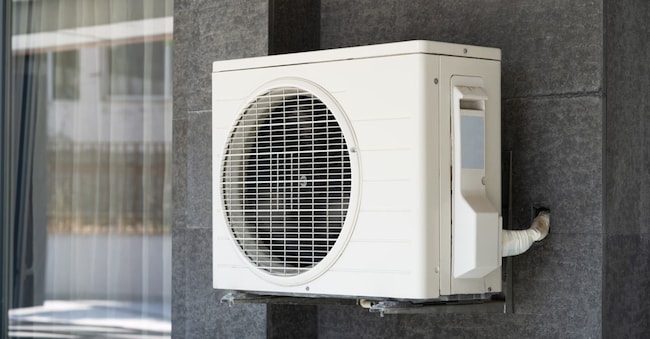
A 50 per cent subsidy for first homes and 36 per cent for other properties. In certain situations, it is also possible to access grants from the ‘Conto Termico’ scheme, which can be as high as 65 per cent. This year’s scorching summer has highlighted the importance of installing air-conditioners, even in situations where they had not previously been used. Consequently, following a slowdown in the early months of the year, manufacturers are expecting a marked recovery in sales.
Increased sales throughout the year
Maurizio Marchesini, president of Assoclima, an association of air-conditioning system manufacturers affiliated with Anima Confindustria, explains: ‘In the first half of 2026, sales of residential split systems were lower than in the same period of the previous year, despite the temperatures. Two factors played a part: the late arrival of the heatwave itself, but also the saturation of installation capacity, which is unable to cope with peak demand during the high season and has led to some installations being postponed until later in the year.” Added to this is the fact that, following this summer’s heatwave, many installations will be carried out as early as autumn and winter, without waiting for the return of the heat. “Historically,” Marchesini continues, “very hot seasons lead to a redistribution of sales throughout the year. For this reason, and given what has been said previously, we expect a positive outlook for the second half of the year and, in all likelihood, the start of next year will also benefit from this trend.”
The renovation grant
Returning to the tax relief schemes, the main options are two tax deductions: the ordinary renovation tax relief and the eco-bonus. Starting with the renovation bonus, the tax relief (spending limit: 96,000 euros) applies to the installation of summer air-conditioning units, provided they are heat pump units, even if they are not high-efficiency models. The work must be carried out on residential properties and there is no obligation to replace the old winter heating system. These restrictions, however, do apply to the eco-bonus. As mentioned, the tax relief is not always 50 per cent. Whilst owners and holders of other real rights over properties carrying out work on their main residence receive 50 per cent, in other cases the rate is capped at 36 per cent.
There is still a significant added benefit: these works are classified as exceptional maintenance and potentially qualify for the furniture bonus (which cannot be claimed in conjunction with the eco-bonus). Provided, of course, that all the standard requirements for home improvement grants are met, such as using a bank transfer with a specific reference for payments.
The Ecobonus
The alternative route is the ‘ecobonus’, which, however, has lost much of its appeal for these types of work, as it imposes stricter requirements but offers no advantages in terms of the percentage of the subsidy. In fact, the tax relief rates are identical to those applicable to standard renovations: 36 per cent and 50 per cent for second homes and primary residences respectively. Although this tax relief is available for any type of property (not just residential ones), it may only be claimed for the full or partial replacement of winter heating systems with high-efficiency heat pumps: technically, the work must comply with the limit values set out in Table 1 of Annex F to the interministerial decree of 6 August 2020. The ceiling for the tax relief (not expenditure) is 30,000 euros.


