The Grand Prix

Tickets up to $500,000 for a sold-out Formula 1 weekend: only possible in Miami

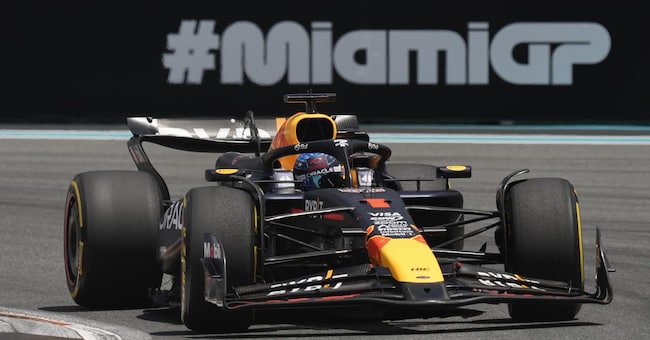
Formula 1 adapts quickly to the different international racing contexts. If the 'old-school' model such as Monza and Spa is increasingly rare, more glamorous events have emerged in recent years that, in the wake of Monaco, have been able to gather an audience more fascinated by the F1 environment than by the race itself. Examples are Singapore, Las Vegas and the next event: Miami

by Massimo Ruberti and Glenda Mecaj

(AP)

7' min read

7' min read

The migration of people and money can change a place: Miami proves it.

From a city that attracted the most marginalised classes, ex-criminals, the unemployed, divorcees and free-spirited people in the 1980s, Miami is still known for the migration of people and money: no longer as a transit destination, but a destination. Human and financial capital has been partly accelerated by the pandemic: in fact, in the 12 months between July 2020 and 2021, more than 220,000 Americans moved to the Florida paradise than to any other city.

Loading...

But this migration, unlike in the past, is not temporary in nature. Established entrepreneurs, creatives with new business ideas, digital nomads, tech experts and investors are the new residents who have chosen to settle in Miami, attracted by the tax advantages such as the non-existence of a personal income tax, the strategic location for international trade especially with Latin America and Europe, the dynamic ecosystem and the innovative environment that facilitates networking opportunities, as well as the high quality of life.

Before the boom during the pandemic, Miami's economy depended mainly on tourism and entertainment, with a poor startup ecosystem, insufficient capital and low innovation. Now the economic reality is opposite, the city has become a digital and technology hub that has also penetrated the cryptocurrency market, with the MiamiCoin and bitcoin salaries. The attraction of new capital has enabled the exponential development of all sectors, from tech to restaurants. All this is part of what has been called by Mayor Francis Suarez the 'Miami Movement' and which has allowed Miami to become to all intents and purposes not only Florida's paradise, but perhaps America's most important city.

Another Grand Prix aiming for glamour: Liberty Media's strategic choice

.

Among the countless investments made in Miami is the construction of the Miami International Autodrome around the Hard Rock Stadium, home of the NFL's Miami Dolphins, to host the Formula One Grand Prix in 2022. This is the result of the strategy of Liberty Media, the American company that aims to further internationalise the Formula 1 championship, strengthening its presence in the US market and in non-European countries, even at the cost of a progressive downsizing of Europe's role in the calendar. A strategy that aims to increase the global visibility of the brand and, consequently, overall revenues.

Choosing Miami as an additional US stop on the calendar responds to precise market logic in that it allows Liberty Media to reach a target audience that is willing to spend more money to attend the Grand Prix. In fact, alongside long-time fans, Formula One is seeing the emergence of a new audience: those who go to the Grand Prix in search of networks and to increase their status. With this in mind, it is not surprising that the Grand Prix organisation itself focuses much more on what happens off the track, with glamorous events, networking spaces and invitations to influencers.

Paolo Aversa, Professor of Business Strategy at King's College London and expert on the economics of motorsport, helps us to reflect on this point: 'Today, Formula 1 Grand Prix are much more than just sporting events: they have become veritable hubs for closing multi-million dollar deals. Each race turns into a giant networking platform, where global brands, sponsors and investors meet, negotiate and sign strategic partnerships. According to estimates, contracts worth an average of around $150 million are signed during a race weekend. Curiously, many of these deals do not directly involve Formula 1 teams: the paddocks and exclusive hospitality areas become elite living rooms, where companies from all sectors make deals, taking advantage of the electric atmosphere and prestige of the event. If 'business-to-business' has always been part of Formula 1's DNA, in recent years the phenomenon has exploded. Credit goes to a new vision of the Grand Prix, transformed into a kind of travelling Super Bowl. In addition to the races, the experience is enriched with concerts, exhibitions and lifestyle events, capable of keeping guests and investors well beyond race Sunday, multiplying opportunities for visibility and negotiations".

On the other hand, 'money talks' and Miami perfectly represents American glitz, with weekend packages even costing several thousand dollars, designed more for those who want to be seen than for those who simply want to watch the race. However, alongside this elitist dimension, there is also a more accessible participation: fans can choose more modest solutions, with grandstand tickets at prices in line with other Formula 1 stages.

Ticket prices and glamour level: the comparison between Miami and Monza

.

Formula 1 offers a wide range of experiences, designed to satisfy very different segments of the public: from the passionate fan who just wants to breathe in the atmosphere of the Grand Prix, to the businessman who is looking for an exclusive experience between comfort and luxury. There are thus various types of tickets: basic tickets, with access to the circuit but not to the grandstands; tickets with numbered seats, which give the possibility of experiencing the weekend from the grandstands; tickets for access to the VIP areas with catering services; hospitality and experience packages offering experiences such as meeting the drivers or other customised activities.

Below is an initial comparison of the options available for the Miami Grand Prix and the Italian Grand Prix in Monza, two events that embody the spirit of F1 in different ways: spectacle and luxury on the one hand, tradition and passion on the other.

CONFRONTO MIAMI - MONZA

Loading...

LE AREE VIP DEL GRAN PREMIO DI MIAMI

Loading...

LE AREE VIP DEL GRAN PREMIO D’ITALIA - MONZA

Loading...

It is clear from the data collected that the pricing of the Miami GP is significantly higher than that of Monza. However, the clear price difference does not apply to lower-end tickets, i.e. those dedicated to fans. In fact, the difference arises for tickets designed for a market segment willing to spend much more, such as VIP Passes and Hospitality, with Miami's prices significantly higher than Monza's.

This difference is justified by the different positioning of the two events. In fact, on one side is Glamour Miami, with a relatively new event, created as a global media spectacle, with a strong lifestyle, showbusiness and high-end networking component, as well as an economic model built to attract international tourism and high-income guests. On the other side is Monza, which is a historic circuit, rooted in the tradition of European motorsport and central to the pure image of Formula 1, as well as Ferrari's home race. This duality today represents one of the keys to Formula 1's global success: being able to attract the passionate fan with 'old school' circuits but also a modern consumer in search of high-end experiences.

But who really watches Formula 1?

The differentiation of market segments that Liberty Media wants to conquer through Formula 1 is a complex challenge that has also generated adverse opinions from the drivers themselves over time. However, it is certain that the strategies implemented by Liberty Media to penetrate new markets and to conquer a diverse audience are successful.

According to the study conducted by Nielsen Sports, Formula 1 reached 750 million global viewers in 2024, an increase of around 50 million compared to 2021. A result also made possible by an increasingly heterogeneous fan base: 41% are women, and the fastest growing segment is young people aged between 16 and 24. It is no coincidence that 25% of new fans claim to have approached the sport thanks to the Netflix series Drive to Survive, confirming the decisive impact of digital content in renewing the image of Formula 1.

Speaking again to Aversa: 'Formula 1 is no longer (just) a sport: it is a global show. Today, the real GP is run off the track. Of the hundreds of millions of fans, about 80-85% don't watch the races regularly: they inform themselves with highlights, social, news, games, and watch Netflix series after the season is over. TV rights matter less and less commercially and for proselytising. Watching the races is a pastime for a few die-hard motorheads, an ageing and possibly dying generation. But no matter. Formula 1's new proselytes are a much younger generation that consumes F1 more continuously, but in small doses. In fact, growing at a dizzying pace are all the side businesses: social media, and royalties on games, gadgets, clothing. Formula 1 has understood that, in the digital era, the important thing is not to watch the race... but to stay connected to the brand and its evocative imagery.

The success is also reflected in the geographical expansion: key markets such as the Middle East (+11%), the United States (+10.5%) and especially China, where interest rose 39% after the Grand Prix returned to the post-pandemic calendar.

The Miami Grand Prix: schedule and rankings

.

Formula 1 arrives in Miami with a crystallised constructors' championship: McLaren leads with a considerable gap over the competition. The two Papaya drivers are also the leading pair in the drivers' championship, albeit with a smaller lead. Max Verstappen absolutely does not want to abdicate and remains only 12 points behind the top. George Russell (-26 points from the top), with a consistent car and excellent qualifying results is proving that he is worth the Mercedes captain's stripes.

At Ferrari, it is better not to look at the classification but to concentrate race by race on performance. Leclerc, the author of a great performance in Jeddah, took his first podium in Sunday's race, in a season that did not start under good auspices. Who knows whether the Sprint format returning to Miami will bring Lewis Hamilton good luck. The British driver, who dominated the Shanghai Sprint, is experiencing a difficult moment from which he will be able to re-emerge with talent and a little patience.

Here are the timetables for the Grand Prix, which will take place in the evening for Italy: Friday at 22:30 there will be the Sprint Qualifying, Saturday at 18:00 the Sprint Race (100 km) and at 22:00 the traditional qualifying. Sunday's race is scheduled at 22:00.

IL CAMPIONATO 2025 POST GP DI JEDDAH

Loading...
Copyright reserved ©
Loading...

Brand connect

Loading...

Newsletter

Notizie e approfondimenti sugli avvenimenti politici, economici e finanziari.

Iscriviti

Tutto mercato WEB