Interview

'Tikehau supporting SMEs for green and digital transition'

Ceo and founders Antoine Flamarion and Mathieu Chabran speak: 'Our role? Connecting companies in need of funding with investors looking for opportunities'.

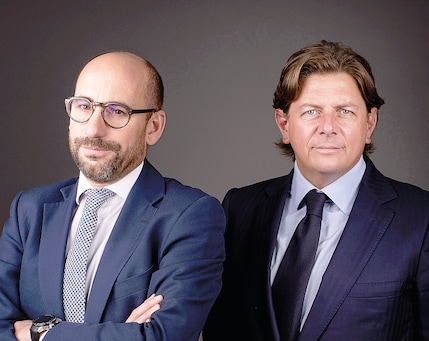
Tikehau Capital. I ceo e fondatori del gruppo: Antoine Flamarion (a sinistra)

4' min read

4' min read

Deglobalisation, new value chains, international diversification and reshoring. And again: green transition, digital transformation, artificial intelligence. For companies, the mix of challenges is epochal and costly. The hunt for resources to finance these changes seems uphill, with no single capital market and banks already supporting 80 per cent of the economy. Instead, there is an alternative route to growth: private equity and private debt. These are the words of Antoine Flamarion and Mathieu Chabran, founders in 2004 of Tikehau Capital, a global alternative asset management group with over 46 billion under management, pioneers in Europe of alternative investments. In this exclusive interview from their headquarters in central Milan, Flamarion and Chabran promise Italian medium-sized companies that a solution for growth can always be found. Among the Italian names that already stand out in their portfolio are EuroGroup, Brandart, Assist Digital, Biofarma, Mtd, Demetra, Ecopol, Milano Fiori...

"Our role is 'connecting the dots': we connect investors and companies, linking companies that need financing - to grow, innovate or advance in the green and digital transition - with investors looking for opportunities. We channel global savings to fuel the growth of medium-sized companies, mainly in Europe. How? We raise capital from global institutional investors and provide funding through dedicated private debt, private equity and real asset funds. Our approach is highly selective and focuses on companies with an Ebitda of at least EUR 100 million'.

Loading...

Companies used to fear private equity... is this no longer the case?

In Italy we have closed 50 deals in private equity, private debt and real assets. We are not a leveraged buyout company: we acquire minority stakes. Our private equity investments can last ten years or more, much longer than the average holding period in the industry. Twenty years ago, when we started, Italian companies were hesitant to accept outside help except when they urgently needed it. Today this mentality has evolved. SMEs now recognise the need for external support to invest in the dual transition - energy and digital - and in AI.

Operations on a global scale: how valuable is the 'global' dimension in these times of deglobalisation?

Being global offers significant advantages: it diversifies our customer base and our investments. Despite the debate on issues of deglobalisation and national sovereignty, markets are still interconnected. Our business is global, we are present in Europe, the Americas, Asia, the Middle East: we have 17 offices around the world with around 800 employees. We position ourselves between global savings on the one hand and industrial companies on the other: we help investors to find the right opportunities, present all over the world. And we support companies to seize opportunities on a global scale.

An example?

We helped an Italian company open a production plant in Mexico, taking advantage of the reshoring trend. The Middle East is growing rapidly, Arab countries are reinvesting oil and gas revenues in renewable energy, innovation and artificial intelligence. So we opened an office in Abu Dhabi and started investing in the UAE: for example, in a luxury packaging company. We are in Asia: we started in Singapore in 2014, followed by expansions to Tokyo, Seoul and Hong Kong this year.

Do investors trust your choices?

When we started operating in Italy, Banca Intesa and Poste Italiane trusted us by providing initial support. Today, 20 years later, we continue to collaborate with them, a testament to the strength and longevity of our partnerships. And we have been fortunate to receive the initial support of important entrepreneurs and family businesses, including the Arnault family and, more recently, Alexandre Van Damme, the main shareholder of AB InBev.

How much do you rely onthe partners?

We are proud of our strong partnership-oriented culture. We have formed several partnerships with major asset management players such as Temasek in Singapore or Nikko AM in Japan, and have launched our private equity strategies together with key partners such as TotalEnergies for our decarbonisation fund, Unilever and AXA for our regenerative agriculture fund, and Airbus, Safran, Dassault and Thales for aerospace and defence.

You want to call yourself an entrepreneur because you risk your capital. Is that so?

Our interests are fully aligned with those of the investors whose capital we raise. They can be assured that we will manage their capital with the same caution and care as we manage ours, as Tikehau Capital invests in each of its funds. When we started in alternative investments, we invested EUR 400,000 in Tikehau Capital. If we had failed, we would have lost all our savings. This approach has remained unchanged over time: Tikehau Capital has a net worth of EUR 3.1 billion, 58% of which is owned by management and employees. This makes a big difference...

Did the switch from negative to restrictive rates also make a difference?

The recent rise in rates has brought an end to the era of zero-cost debt: in essence, the party is over. The ECB may lower short-term rates, but long-term rates are expected to remain high, due to high levels of debt, particularly government debt. Rising rates have also triggered housing crises in China, the US and Europe, and we believe the impact is not yet over.

This year Tikehau Capital celebrates 20 years of solid growth. How did you get started?

When we launched Tikehau Capital 20 years ago it was just the two of us and a few pens. We met in Merrill Lynch in the late 1990s. We were working like crazy, but being in Merrill Lynch gave us the opportunity to witness a huge change that was happening in the US financial markets at the time: disintermediation, supported by the rise of alternative asset managers. KKR, Blackstone and Apollo inspired us, they were getting bigger and bigger and we got curious: they were channelling private sector savings into the real economy. We thought we could do the same in Europe and Tikehau Capital was among the first asset managers to launch private lending on the continent. We did what at the time only banks did.

Copyright reserved ©
  • Isabella Bufacchi

    Isabella Bufacchivicecaporedattore corrispondente dalla Germania

    Luogo: Francoforte, Germania

    Lingue parlate: inglese, francese, tedesco, spagnolo

    Argomenti: mercato dei capitali, ECB watcher, fixed income e debito, strumenti derivati, Germania

    Premi: Premio Ischia Internazionale di Giornalismo per l’analisi economica, Premio Q8 per giovani giornalisti economici

Loading...

Brand connect

Loading...

Newsletter

Notizie e approfondimenti sugli avvenimenti politici, economici e finanziari.

Iscriviti