
TikTok US passes to Americans, but half the profits remain in China
The agreement to divest the US arm of social provides that ByteDance will continue to take a significant share of the earnings
2' min read
2' min read
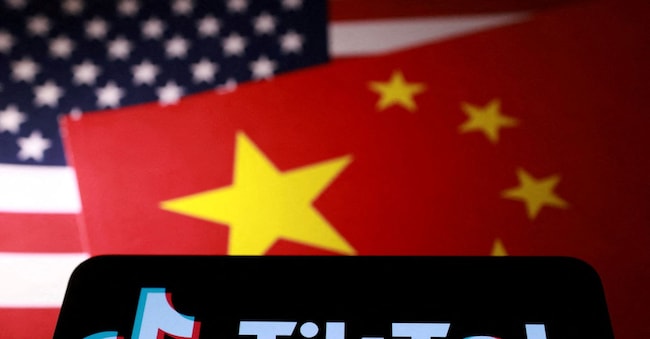
TikTok US becomes American, but apparently the profits will (at least partly) still end up in China. This is according to sources close to the deal that Donald Trump closed in the last few hours. ByteDance, the Chinese parent company that developed the platform, will in fact continue to collect a significant share of the profits generated by the app in the United States even after the majority stake has been sold to a consortium of star-studded investors. The agreement, according to rumours, envisages that the Beijing company will receive a licence to use the algorithm (the technological heart of the platform) as well as a share of the profits proportional to the capital share it will retain.
In more detail, ByteDance should get to keep around 50 per cent of the profits of TikTok US, thanks to a deal negotiated directly by President Donald Trump, who has repeatedly postponed the deadline for the sale imposed by a law signed by his predecessor Joe Biden.
The central node is the algorithm that regulates the platform's content. ByteDance will earn an estimated commission of around 20% of the incremental revenues from the use of this technology. To this will be added around 20 per cent of the profits from the residual capital share.
The US consortium that will take over the majority - consisting of Oracle, Silver Lake Management, the Abu Dhabi fund MGX and other investors - is expected to hold about 80 per cent of the new company. But the distribution of profits explains the large deviation between the value estimates drawn up by analysts (between USD 35 billion and USD 40 billion) and the price assumed by vice-president JD Vance, who last week spoke of a USD 14 billion transaction.
Certainly, the value of the deal is inconsistent with the market. A price that for some observers seems completely unrealistic, so much so that it could be the most undervalued technology acquisition of the decade.


