
The shape of time. What science tells us about ageing: Immaculata De Vivo's lecture in Porto Cervo

2' min read
2' min read
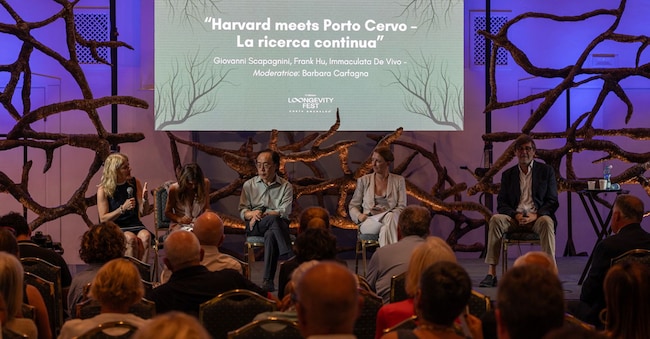
PORTO CERVO - There are places where the word 'longevity' resonates as a mundane euphemism for 'well-being', or worse, for marketing eternal youth. Then there are those who, like Immaculata De Vivo, a molecular biologist at Harvard, make longevity a matter of biological precision, ethics of responsibility and questioning time. Her lecture at the Longevity Fest 2025, directed by Pietro Mereu, had the rigour of an academic seminar and the critical intelligence of a rare intellectual gesture: restoring complexity to a subject often caged between aesthetic laboratory slogans and drawing-room technophobia. Talking about the genetics and epigenetics of ageing in a context as glamorous as it is dispersive, was a courageous operation in its own way, but De Vivo did it with surgical clarity: "We are not hostages to our DNA, but neither are we absolute masters of our longevity. We live between these two extremes', he made clear. Here, then, is the point. Genetics gives us the code, the alphabet with which our cellular life is written, but it is epigenetics - that subtle science that studies how genes are read, switched on or switched off - that tells us how the world imprints itself on the body. "Our lifestyle is a biological calligraphy that shapes the genome", explained De Vivo. "Food, stress, pollution, relationships, sleep. Everything leaves a molecular imprint. Unlike genetics, which is fixed, the epigenome is plastic. It changes, it adapts, it deforms, it can be improved and it can also worsen. It is in this oscillating space that our ageing is played out. Not so much in terms of wrinkles or grey hairs, but as biological time: chronic inflammation, cellular decay, immunosenescence and cognitive degeneration'.
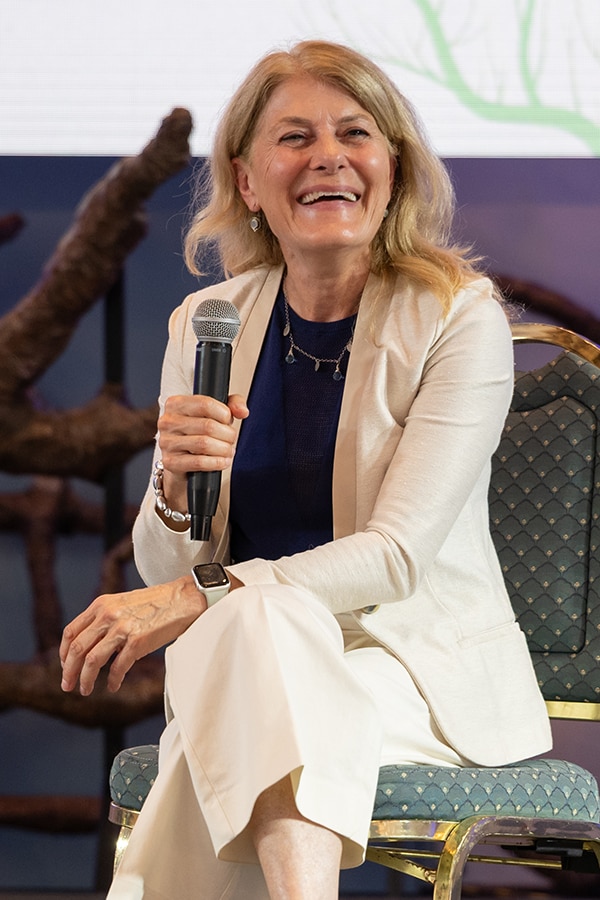
The audience present at the Longevity Fest - promoted by the Costa Smeralda Consortium in partnership with Smeralda Holding - listened in a silence that smacked more of attention than deference. De Vivo gently but decisively dismantled the most toxic narratives of the longevity-business, the idea that there is a universal formula to 'rejuvenate' the body, or that a genetic test is enough to predict one's expiration date. It is true that there are 'epigenetic clocks' - molecular models that estimate biological age based on DNA methylation - but they are not infallible oracles. "It is not a matter of reading destiny in the laboratory," he pointed out, "but of using these tools as feedback: open windows on our biological biography. "Man is his body, and his body is the time he has been through," he concluded. Longevity, therefore, is not a datum, but a force field, a game between structure and context. Genetics deals us the cards, but it is then the environment - and with it our choices, social inequalities, air quality, the history of our traumas - that decides how we play.

