
Tinto Brass: a farewell to the director and master of Italian erotic cinema
The director of *Salon Kitty* and *The Key* has passed away at the age of 93. He began his career with socially conscious films and went on to become a public figure in his own right

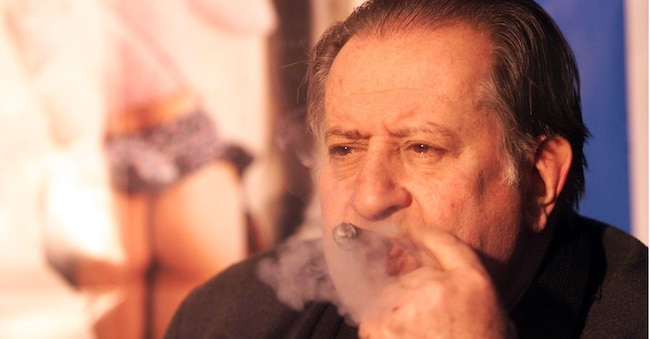
The film director Tinto Brass died this morning at around 10.30 in Rome at the age of 93. The news was reported by his wife Caterina Varzi and his children Bonifacio and Beatrice Brass. For the time being, the family plans to hold a strictly private funeral service.
Born in Milan but having moved to Venice straight away, Brass was one of the most recognisable and controversial figures in Italian cinema of the second half of the 20th century. The nephew of the painter Italico Brass, he grew up in an environment where art and culture played a central role. However, after graduating with a law degree from the University of Ferrara, he chose cinema instead, moving to Paris to work at the Cinémathèque run by Henri Langlois, where he came into contact with the ferment of the French Nouvelle Vague.
On his return to Italia, he worked as an assistant and editor with masters such as Roberto Rossellini and Joris Ivens, learning the trade on the job. His directorial debut came in 1963 with Chi lavora è perduto, an unconventional portrait of youthful discontent that already revealed his impatience with convention and authority. In the 1960s, he directed films such as Il disco volante, Yankee, Col cuore in gola and L’urlo, experimenting with narrative styles and forms far removed from commercial cinema.
The turning point came in the 1970s, when Brass focused his research on relationship between eros, power and transgression. Films such as Salon Kitty and, above all, I, Caligula brought him to international attention, albeit amidst controversy, censorship and heated disputes with producers and distributors. For Brass, sex is never merely provocation, but a narrative device through which to explore the workings of society and the hypocrisies of power.
From the 1980s and 1990s onwards, he definitively established his reputation as a master of cinematic eroticism with the commercial success of La chiave, starring Stefania Sandrelli, and films such as Capriccio, Paprika, Così fan tutte, L’uomo che guarda, Monella and Senso ’45. His female protagonists – full of life and unconventional – became the hallmark of a cinematic style that emphasised desire, individual freedom and a playful take on sensuality.

