
HGVs: the protest is putting pressure on supply chains in the South: goods are at a standstill and shelves are empty
Roadblocks and traffic delays on motorways in Campania; protests from Calabria to Molise. Coldiretti Puglia: cold stores full and perishable produce at risk. In Sicily, restrictions on fruit and vegetable transport have been lifted

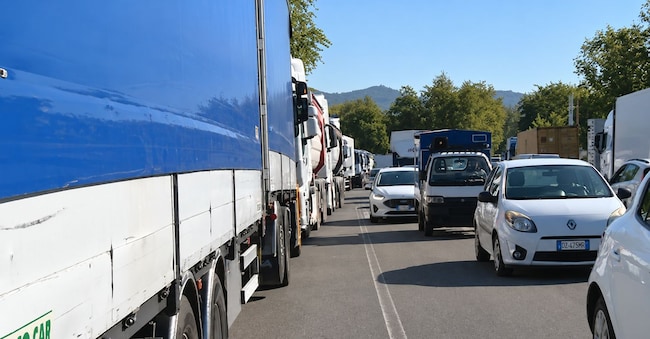
Key points
- The agri-food sector under pressure: products held up and deliveries cancelled
- Campania: traffic jams and delays on the A1 and A30 motorways
- Puglia: 35 lorries heading for Bari to request a meeting with the regional government
- Calabria and Basilicata: new checkpoints on main roads and at city entrances
- Sicily: fruit and vegetable markets reopen, but the port blockade remains
- Bus fuel supplies also at risk; awaiting talks with Salvini
Cold stores on farms are full, lorries loaded with perishable goods are stuck on the roads, and the first signs of shortages are appearing in supermarkets. The lorry drivers’ protest against high fuel prices is putting pressure on supply chains in southern Italy: the difficulties faced by those having to bear the cost of diesel are compounded by those of businesses unable to make deliveries and shops awaiting restocking. The industrial action is affecting motorways, access routes to cities and links to logistics hubs, whilst talks in Milan with the Minister for Infrastructure and Transport, Matteo Salvini, are scheduled for tomorrow.
The agri-food sector under pressure: products held up and deliveries cancelled
The most immediate warning about the supply chain’s resilience comes from Puglia. The regional branch of Coldiretti reports that deliveries have been halted or severely delayed, and that there are operational difficulties at large retail distribution centres. Fruit, vegetables, mushrooms and flowers are piling up on farms; some lorries are already fully loaded but are unable to continue their journeys. As the industrial action drags on, the risk of having to dispose of the goods is increasing. The organisation links this vulnerability to the distribution system’s reliance on road transport: according to Coldiretti, 85 per cent of goods destined for shop shelves are transported by road.
It is a crisis affecting producers, transporters and retailers alike. Farms are having to store produce that loses value as the days go by, whilst missed deliveries are resulting in reduced product ranges in shops. In Molise, the consequences are already evident, particularly in Termoli: according to reports gathered by LaPresse, several supermarkets are experiencing serious supply problems in their fruit, vegetable and bakery sections, with difficulties also affecting other foodstuffs. The main factor is the slowdown in transport within the region and in neighbouring areas, particularly in Puglia.
In Campobasso, lorries and tractors have reached Corso Bucci in the city centre, causing disruption to traffic. Hauliers and farmers are demonstrating together against high fuel prices and the rising cost of living, under the supervision of the police. The placards bear messages highlighting the importance of work and the role of Southern Italy in the national economy.
Campania: traffic jams and delays on the A1 and A30 motorways
In Campania, the protest is affecting the main motorway links, and in the last few hours at the port of Naples, a number of lorries have blocked the Bausan junction, near the entrance to the A1 motorway, causing traffic disruption. Overnight, the junction between the A1 Milan–Naples and the A30 Caserta–Salerno motorways was temporarily closed to traffic coming from Naples. This morning’s reports indicate a two-kilometre tailback between Villa Literno-Pomigliano and the Naples North toll booth, and another two kilometres between the toll booth and Caserta North, heading towards Rome. On the A30, a three-kilometre tailback has been reported between Maddaloni and the junction with the A1, heading towards Caserta. Traffic jams and slow-moving traffic are also affecting Palma Campania, Sarno and Nocera-Pagani. The protest, which began around midnight in the Caianello area, required the intervention of the traffic police and staff from Autostrade per l’Italia.


