
Tlc, alarm Asstel: too many rules on networks 'A brake on innovation and investment'
Asymmetries with web biggies and regulatory burdens at the centre of telco criticism
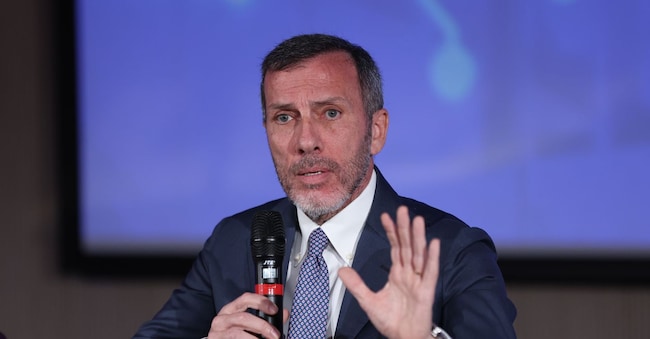
Networks remain the basis of the digital economy, but in Europe those who build and operate them find themselves increasingly caught between growing demand, insufficient economic returns and a regulatory stratification that ends up burdening operators, with platforms enjoying the fruits of investment instead.
This is the core of the study 'The urgency to act: fair rules to grow, invest, compete in digital', presented yesterday at Luiss during the event promoted by the Research Centre in Strategic Change 'Franco Fontana' and Asstel.
The Luiss-Asstel research puts a clear thesis in black and white: the current regulatory architecture is no longer consistent with the digital ecosystem and risks weakening the very link on which fibre, 5G, cloud and, ultimately, European tech sovereignty itself depend. The starting point is a now structural paradox. Between 2019 and 2025, data traffic rose by more than 280% on mobile networks and more than 130% on fixed ones, while between 70% and 80% of network resources are absorbed by a few large digital platforms. But the ability to monetise remains weak: in 2024 the European average mobile Arpu (average revenue per user) stopped at EUR 20.4, less than half of the EUR 42.4 in the US; on fixed the comparison is EUR 17.9 versus EUR 32.8.
"It is necessary to overcome a situation in which telecommunications operators continue to bear public obligations, infrastructure investments and security costs without adequate compensation mechanisms", says Asstel president Pietro Labriola, Tim's CEO, for whom, among other things, we also need a turnaround on the spectrum ("It is necessary to allocate the expiring frequencies with an industrial logic and not merely fiscal, rewarding investment commitments in the country's infrastructures"), as well as "a Telecommunications Decree, or rather a Connectivity and National Security Decree, capable of coordinating all the necessary reforms in an organic manner and fully recognising the strategic value of Tlc". Among the measures, for example, are cited super-deductions or tax credits for investments or even the reform of Golden Power or even the revision of the Agcom 255/24/CONS resolution with the elimination of the constraint of generalised free service, of the constraint of answering with a human operator.
Hence Labriola's peremptory invitation: 'Asstel, together with the trade unions, makes an appeal to get together around a table, with all the institutional players, starting with the government, which in recent years has always listened to us and has also had the courage to take important decisions, so that the right measures can be taken for the sector and for the country: we need to act urgently'.


