
Tlc, Italy fifth in the EU on 5G networks but permits slow progress
I-Com report: in the mobile 144 days for authorisation procedures of infrastructures. Stefano da Empoli (I-Com president): "Retreats or even violations by local authorities on procedures"
There is an Italy trying to travel fast, driven by fibre and 5G. And there is another, slower, held back by stamped papers, endless procedures and a bureaucracy that has not yet realised it is living in the digital era.
These are the outlines of the photograph taken by the study 'Towards the new connectivity' by the Institute for Competitiveness (I-Com): a think tank that carried out this work as part of Futur#Lab: a project in collaboration with Join Group and in partnership with Ericsson, Fibercop, Inwit, Open Fiber, Unidata and Wind Tre. All in order to arrive at an analysis designed to measure how far the country is really running (or not running) towards the promise - still unfulfilled - of ultra-wideband and next-generation mobile networks.
On the technological front, the numbers (referring to 2024 to give terms of comparison with other EU countries) are not all bad. Italy boasts next-generation fibre coverage (Nga, which guarantees at least 30 megabits per second) of 98.8% - better than Germany and France - and a 5G network that reaches 99.5% of the population (the fifth best value at the European level, I-Com recalls, although the number includes both 'pure', stand-alone 5G and that which leverages pre-existing and therefore 'non-stand-alone' 4G infrastructures). But beneath the surface of the figures hides a more opaque reality: coverage with very high capacity networks (Vhcn) remains at 70.7%, the fourth lowest figure in the European Union. And in rural areas, fibre only runs on just over a third of the territory (36.8%). In short, the country is still split between hyper-connected cities and towns and digitally poor areas.
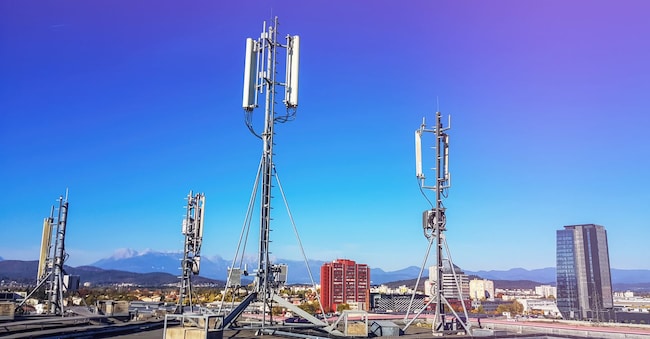
What is holding back the race for cabling and digitisation in the country? The study goes straight to the point about permits. Despite seven years of 'simplification' decrees, administrative obstacles remain the main ballast. An average of three months is needed for a permit for excavations or for the use of public lighting; for a mobile installation 144 days, compared with 67 days under national law (the Electronic Communications Code).
Then there is the whole issue of service conferences - key instruments for coordinating and speeding up the examination of applications (five days to convene and 60 days beyond which silence of consent is triggered) - which are not convened with the necessary timeliness. This results in delayed authorisation processes, compromising the effectiveness of the simplification measures introduced at central level. "According to the findings of the analysis, between 2022 and 2024 the share of unconvened service conferences in relation to the total number of applications was significantly reduced at national level, from 58.8% to 41%. However, there remain critical issues related to specific cases, above all that of Campania and Sicily, where, in the face of a considerable number of requests, the share of convened cds with respect to the total number of requests remains decidedly low," reads the I-Com study.


