Tlc

'Consolidation in the telcos is welcome if it increases investment in networks'

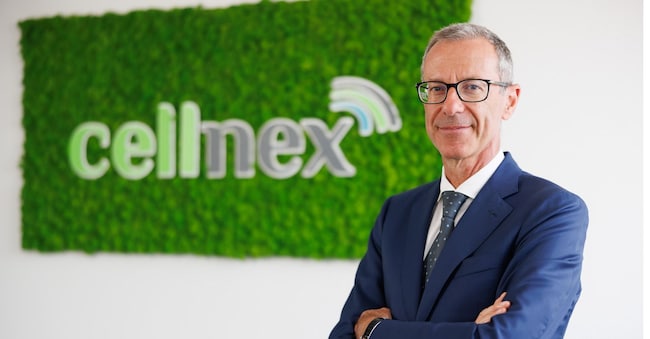
Federico Protto, CEO of Cellnex Italia, one of Italy's leading towercos, speaks

by Simona Rossitto

Federico Protto, ad di Cellnex Italia

7' min read

Translated by AI
Versione italiana

7' min read

Translated by AI
Versione italiana

With the explosion of apps, the continuation of lockdown habits (e.g. smart working, video calling) and the development of AI, existing tlc networks are no longer enough. More investment is therefore needed, and to be able to make investments, consolidation is needed among operators in the sector, not necessarily through M&A. "We are talking - explains Federico Protto, CEO of Cellnex in an interview with Radiocor - about network consolidation, not necessarily as a consequence of corporate consolidations. In Italy there are in fact four mobile networks, too many to be able to sustain the future investments that technology makes possible and the market requires". Protto therefore says he is 'in favour of consolidation, but on one condition: that it creates real efficiencies and that part of these efficiencies is returned to the system in the form of investments, for example in densification'.

Nor does Cellnex fear, as customers shrink, the consequences of consolidation on revenues: "In the short term, consolidation does not jeopardise revenues, thanks to the contractual structure. In the medium to long term, if accompanied by intelligent regulatory policies, it can become an accelerator of investment and growth, further strengthening the role of tower companies as enablers of the country's digital infrastructure".

Loading...


How has the mission of tower companies changed over the years?

The mission of tower companies has changed profoundly over time. If in the beginning - and this applies to all of them - we started out as spin-offs of mobile operators, mainly for financial reasons, today the context is completely different. Today a towerco is to all intents and purposes an infrastructure operator that, at least on the passive infrastructure component, creates fundamental synergies for the system. In Italy, this is particularly evident: the infrastructures of a towerco such as Inwit host mainly Vodafone, Fastweb and Tim; those of Cellnex, mainly, WindTre and Iliad. This means that, although starting with four mobile operators with a network, in fact the infrastructure is organised around two large platforms. Besides these, there are other smaller operators, but more than 90 per cent of traffic passes through here. This model generates synergies, economic and environmental sustainability, and greater efficiency.

So what are the next steps for the sector?

The next steps are essentially two. The first is a further densification of the network. Today there are about 50,000 towers in Italy: are they many or are they few? To answer this, one has to go back to the Covid period. In 2020-2021, during the lockdowns, the use of telecommunications networks - fixed and mobile - grew enormously. The Italian networks held up very well because they were designed with ample redundancies: in many cases they offered even 50% more capacity than demand. From the technological point of view, we had no problems: smart working, distance learning, digital services worked.

After the Covid, was the same traffic caused by the emergency maintained?

Once the emergency was over, we realised that this intensive use had created value. We are not back to 2019 levels. Today, making a remote call, working remotely, using digital services has become structural. Traffic has not decreased; on the contrary, it has continued to grow.

In parallel, applications have exploded: everything now goes through the smartphone. A banal but concrete example: changing phone today means having to reactivate banking apps, insurance apps, school services, digital identities. This gives an idea of how mobile-generated traffic has become central and multiplied by tens of millions of users. In 2019, traffic was still very much browser-based. Today it is almost all app-based. To this will be added artificial intelligence, which will generate additional traffic.

Do we have the necessary infrastructure to withstand current and future growth?

No. And therein lies the problem. If the networks held up in 2020, today traffic has increased further, but the networks have not been developed in an equivalent way. There have been technological renewals, but no real new infrastructure development to absorb the growth in demand. Coverage that was adequate in 2019-2021 is no longer adequate today. Bandwidth requirements are much higher and networks are starting to show difficulties.

What are the main critical issues?

The first concerns traffic symmetry. Networks were initially designed for predominantly download traffic: watching a film, a game, downloading content. Today, with social networks, traffic is much more balanced: uploading videos, going live, producing content. Managing a network with 50-50 traffic is very different from a 70-30 network.

The second theme is indoor. Homes, offices, shops, hospitals: radio signals were not born to penetrate buildings effectively. It used to be compensated with Ethernet or Wi-Fi networks, but Wi-Fi does not have the same performance as 5G and in public places it is often inefficient. The solution is dedicated indoor radio coverage, through systems such as DAS, but today we are still far from widespread deployment. The third issue concerns special coverage: trains, metros, stadiums. Take the Milan-Rome high-speed train: 300 people all doing more or less the same thing at the same time and in rapid motion. Here the principle of statistical multiplexing typical of mobile networks is skipped. You need concentrated and temporary capacity, and that is a huge infrastructural challenge.

What solutions do you see for these problems?

They are resolved by densifying the network: more sites, more towers, more infrastructure along railways, subways, highways, tunnels. This is a natural role for both mobile operators and tower companies. The fourth theme is 5G Stand Alone, which in Italy today is practically at zero. What we see on phones is largely an evolved 4G. The real leap of 5G Stand Alone is network slicing, i.e. the ability to dedicate portions of the network to different services. It is crucial for efficient management, to support new use cases, and to monetise new services.

How can a towerco subject help in that regard?

A towerco is of course a neutral host that provides shared resources to different operators. Infrastructure sharing creates efficiency and frees up resources to be used in innovation and services. As well as applying to physical, active and passive infrastructure, it also applies to spectral resources. The efficient use of frequencies is a key element recommended by the very recent Digital Network Act. This is made possible by the sharing (spectrum pooling) of these frequencies by a third-party operator, such as a neutral host.

In the tlc sector there is a lot of talk about consolidation, especially in mobile. Today the rumours are for a combination of iliad and WindTre, what does a CEO of a towerco like Cellnex think about this?

First of all, let us talk about network consolidation, not necessarily as a consequence of corporate consolidations (M&A). In Italy there are in fact four mobile networks, too many to sustain the future investments that technology makes possible and the market requires. I am in favour of consolidation, but on one condition: that it creates real efficiencies and that some of these efficiencies are returned to the system in the form of investments, for example in densification. This is the logic that the British regulator applied, for example, to the Vodafone-Three case: you can consolidate, but part of the synergies must translate into investment in the network. The antitrust fear is always the same: fewer operators, higher prices. But if consolidation leads to a better, more capillary, better performing network - covered metros, working hospitals, connected trains - then the benefit for the system is obvious.

But consolidation can have a negative impact on tower company revenues..

The issue exists and it is right to address it in a transparent manner. It is true that if two networks consolidate, one could theoretically think of a reduction in the number of sites and thus a potential pressure on towerco revenues. That said, in practice the picture is much more articulated.

First of all, tower companies operate on the basis of long-term, extremely solid contracts, which safeguard revenue stability even in the event of consolidation between operators. Even if there were a rationalisation of networks, it would not automatically result in a loss of revenue.

So consolidation is not a threat to your business model?

Not necessarily. On the contrary, in many cases it can become an opportunity. If the regulator is far-sighted, consolidation is authorised against investment commitments. As mentioned, this is what happened, for example, in the UK: the synergies generated by the merger have to be partly returned to the system in the form of network investments. These investments concern exactly the areas we were talking about earlier: densification, indoor coverage, special coverage, 5G Stand Alone deployment. All activities that directly involve the tower companies.

In numerical terms, how does this mechanism work?

Let us take an example. If total synergies of, say, EUR 300-400 million per year result from a consolidation operation, it is reasonable that a significant part is tied up in new infrastructure investments. A portion of these investments may relate directly to towers and network densification. When fully operational, this can translate for a towerco into several tens of millions of euros per year in additional revenues, spread over time, more than offsetting any rationalisation effects.

In conclusion, can consolidation offset - or overcome - any loss of revenue?

Yes, if managed correctly. The key point is that consolidation should not only be seen as cost reduction, but as a lever to improve the quality of the network. If a part of the synergies is reinvested, the system as a whole grows: the network grows, the quality of service grows and the role of the tower companies grows.

In summary, in the short term, consolidation does not jeopardise revenues, thanks to the contractual structure. In the medium to long term, if accompanied by smart regulatory policies, it can become an accelerator of investment and growth, further strengthening the role of tower companies as enablers of the country's digital infrastructure.

Copyright reserved ©
Loading...

Brand connect

Loading...

Newsletter

Notizie e approfondimenti sugli avvenimenti politici, economici e finanziari.

Iscriviti