
To cope with high cocoa prices room for growth for locust beans
Strong world demand in gluten free: growth opportunities for the Sicilian supply chain. In Italy an average of 35,000 tonnes is produced annually

3' min read
3' min read
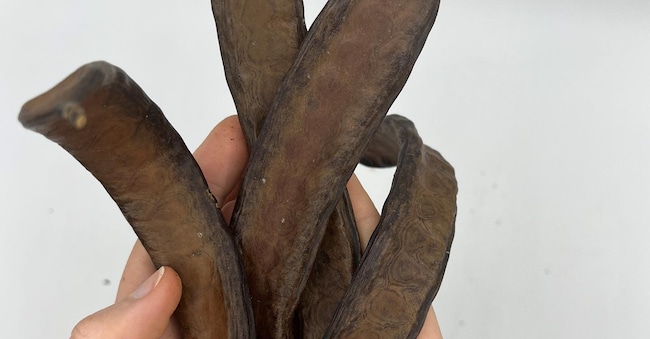
Locust beans are back in the news. First, the search for superfoods and more natural products, then the explosion of cocoa prices (since the beginning of the year + 170% in London and +169% in New York according to Areté) have put the spotlight back on this 'ancestral' legume, already mentioned in the Gospel, from the pulp of which a flour is obtained that is considered an excellent cocoa substitute and from the seeds a thickener widely used in the food industry (indicated on labels as E410). And so over the last three years demand has literally exploded but soon found itself faced with a marked and generalised shortage of the product. This has raised its prices fivefold to over EUR 30 per kg.
Even in Italy, a country which, with its 35 thousand tonnes on average per year (source: Ismea), is competing with Portugal for second place in the world producer ranking, behind leader Morocco. The effects have been disastrous: the skyrocketing quotations have triggered a reduction in demand from food companies, which have turned to cheaper cocoa substitutes and thickeners (such as guar). Result: firm demand, falling prices and great difficulties for carob processors, concentrated in Sicily, from whose provinces of Ragusa and Siracusa 95% of Italian production arrives.
"Lorenzo Antoci, owner of Sicilian Carob Flour, which processes 4 thousand tonnes of pods a year, mostly for the production of animal feed and petfood, and which closed 2023 with a turnover of around EUR 4 million, explains, '2023 was a year of crisis, the likes of which has not been seen since the days of the lira. That human food is the most promising outlet is what many think, not least because of the growing demand for clean-label products and those suitable for coeliacs. But Made in Italy is failing to ride it out.
"In the gluten-free world there is a strong demand for locust bean gum, but in Italy it is impossible to find adequate quantities to meet the needs of the industry, partly because we have not yet managed to establish a supply chain from harvesting to processing,' explains Roberta Prandoni, food developer. But something is moving. A few months ago, drawing on Pnrr funds, a supply chain contract was launched in the Ragusa area, led by the company LGB Sicilia Ingredients, to start 67 hectares of new carob groves by 2026 and network all the actors in the sector.
"I think we need to recognise that carob has its own dignity and not simply consider it a substitute for other ingredients," says Luciana Cipriani, co-founder of Natura Humana, which has patented a process to extract a molasses from it that is used in many low-glycemic index spreads distributed in health food shops and vegan restaurants. A business that has only just started but is growing very fast, and which in 2024 is expected to triple the 80,000 euro grossed last year.

