Art Continued

Paladino receives honorary citizenship, Italy always comes next

The master of the Transavanguardia movement suggests that young Italian talents go out into the world to gain visibility. His next exhibition in Perugia
by Eleonora Sampieri

3. Mimmo Paladino – “I Dormienti”, Fonte delle Fate Poggibonsi ph. Denya Falsetti

3' min read

3' min read

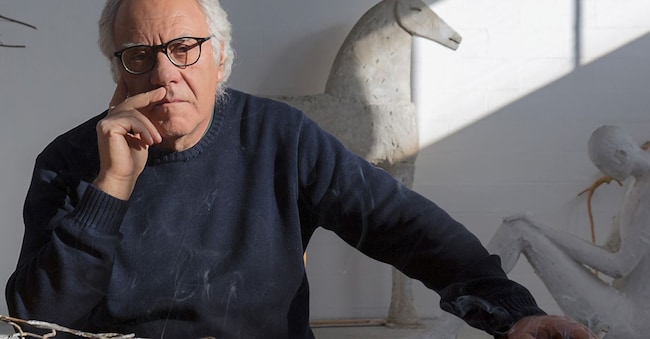
Mimmo Paladino, master of the Transavantgarde, has been awarded honorary citizenship by the Municipality of Poggibonsi, in recognition of the deep bond that unites him to the city thanks to the work "I Dormienti", installed in 2000 at the Fonte delle Fate. The proposal, put forward by Mario Cristiani, president of the association Arte Continua, emphasises how public art can become an engine of territorial regeneration and enhancement, contributing over time to building identity and cultural attractiveness. On the sidelines of the award, Mimmo Paladino shares with Arteconomy his view on contemporary art and the state of the Italian art system.
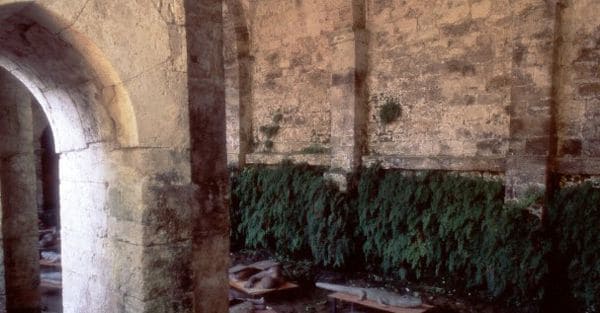
“I dormienti“ di Mimmo Paladino, donata alla città di Poggibonsi e collocata stabilmente presso la Fonte delle Fate, porticato del XI secolo che ricopre una sorgente e una vasca.

During your long career have you had support from artists or curators?

Loading...

I looked at Titian, Piero della Francesca, even Rauchenberg, the works that seemed most akin to my inspiration, even though they are clearly distant in centuries, that is not important.

Can you say that you had no practical support?

No, they don't exist. Curators always arrive when the road is paved, encounters can still happen as for example my encounter with James Putnam with whom I had this memorable experience as the work 'The Sleepers' at the Roundhouse in London, that was a milestone that has remained in the history of my work. Like many other things, one does many works then eventually, something happens and one work becomes more defined and important than another.

During your career, what has been your relationship with institutions and museums?

The first ones to take an interest in my work were institutions that were not Italian but European, then even American and Japanese. So there was a strange awakening about some Italian artists, the Italian institutions came later. There are few museums in Italy, that I remember, that have had exhibitions, while there have been many in many other places. But the real museum institutions on the contemporary, I think, at that time were more in Europe, in Germany, Switzerland and England.

A master like yourself, how do you read the Italian art system? And how has he read it over time?

There is a great distraction, I mean, the Futurists were discovered almost first in America, the Americans showed great museum interest early on.

Is the Italian system able to support the artist?

The Italian system does not support the artist, or rather, it does not support visual art, perhaps it supports 'song' art.

What do you think of young and old artists?

Certainly there are contemporary artists who are interesting to me and artists from the past, even very old ones, who I consider equally contemporary. What to say to a young person? What he rightly has to do is to look beyond what has been there and then go back and look at what was created before him, in some ways art is one big chain. The art of now seems interesting to me, you have to talk about planetary artists now, you have to know in China what they are doing, where there is a great liveliness, as there should be. Even Italian artists have to go to the planet world, to have visibility.

What are the plans for the future?

There will be an exhibition in Italy in a historical museum on 13th century ancient art: the museum in Perugia wants to dedicate an anthological exhibition to me, it will be in November, curated by Costantino d'Orazio, director of the National Gallery of Umbria in Perugia.

Copyright reserved ©

Brand connect

Loading...

Newsletter

Notizie e approfondimenti sugli avvenimenti politici, economici e finanziari.

Iscriviti