
Over 700 'craftsmen of the future' from 43 countries at Satellite
Tomorrow the 15th Salone Satellite Award ceremony

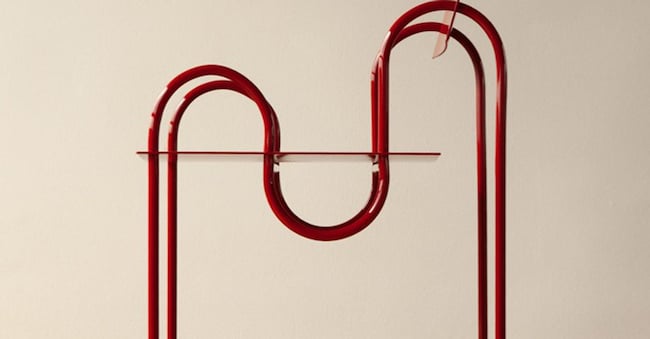
The insistence on manual skills, a common thread in recent years, has become a structural element of the historic platform of young designers.
Marva Griffin, founder and curator of the Salone Satellite, emphasises this in her typical tone of voice, firm and passionate: "We realised when selecting the guys for the Satellite that, in the end, it always came back to there, to the manual component of their prototypes, which is crucial for innovative and quality production. Now more than ever, precisely in this high-tech era'. It is to be believed: this is the 27th edition and the Salone Satellite hosts in pavilions 5 and 7 of Fiera Milano Rho the talent of more than 700 under-35 designers from 43 countries, flanked by 23 international design schools and universities.
The point of pride of the event is not only to celebrate the finished object, but above all to recognise the paths that generate and accompany evolution.
Traces of this background, which fuses experimentation and manual techniques, can be found in the personal journey of Emad Lajevardi. With Persian roots, based in Frankfurt, Emad recounts the origins of his challenge: "I asked myself what would happen if a single line could remain free and independent while becoming the very foundation of the body of a chair. This gave rise to, among other things, 'The Stitch chair', almost a sculpture made of steel tubes and sheets, a complex operational challenge that fascinates when viewed from all angles, as if a rhythmic thread intertwined the seat and back in a circular geometry'.
Baiba Soma, who is of Latvian origin and studies in Holland, has tried her hand at "Echoing roots", an extremely fragile structure composed of 770 glass tubes, hooked together to create the final luminous form. "An object that reinterprets the art in glass by exploring its potential, a play of light and reflections that enhances the idea of a distant memory," Baiba Soma emphasises. "In fact, it goes back to the ancient Latvian pagan art of straw sculpture-decoration, which is slowly disappearing. Every year a new one was woven, burning the old one and chasing away negativity'.

Brand connect


Newsletter RealEstate+
La newsletter premium dedicata al mondo del mercato immobiliare con inchieste esclusive, notizie, analisi ed approfondimenti
Abbonati