
Tod's and the allegations of caporalato: how it came about and what top management risks
The position of the Marches group is worsening: for the public prosecutor's office the top management is responsible for the exploitation of labour. At the moment it is the most serious case: not guilt but 'malice' is being contested

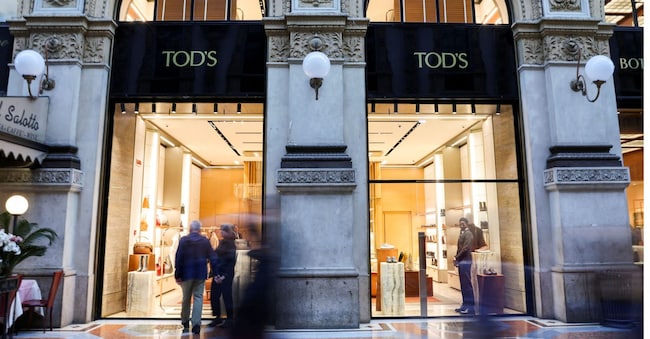
While the Court of Cassation rejects the request of the Court of Milan on the territorial jurisdiction for the receivership of Tod's - and just as the government is working on a bill already approved in the Senate to 'protect' the reputation of Made in Italy companies - the Milan Public Prosecutor's Office is registering three directors of Tod's and the company itself in the register of suspects on the basis of law 231, on charges of caporalato.
The three are Simone Bernardini, Operations - Footwear and LG Trade Compliance - BOM Manager, Mirko Bartoloni, Supply Chain Industrial Director, and Vittorio Mascioni, Compliance specialist - Time and Method. The investigators allege violation of regulations on working hours, safety and hygiene, underpayment of EUR 2.75 per hour and not commensurate with the hours worked, workers forced to live in degrading housing conditions. These are all situations already visible in other supply chains, which have already been put under commission by decision of the Court of Milan (the last big brand involved was Loro Piana). But that of Tod's is shaping up to be a more serious case: here the audits warning against exploitation and lack of safety had been carried out, and the reality had been put on paper. The company did not take this into account. That is why the fault alleged against the other brands was changed to 'wilful misconduct'.
For the first time, the company and three internal managers are under investigation. They face up to six years imprisonment (up to eight in the case of threats and violence).
Tod's is charged with 'serious organisational fault' bordering on 'wilful misconduct', the absence of 'adequate models' to prevent the crime of 'caporalato' by top management. In particular, the outsourcing of the 'audit' service to the company Bureau Veritas, specialised in risk analysis, whose inspections would have revealed 'numerous indications of exploitation'. Tod's would have equipped itself, in the face of this evidence, with prevention tools of only 'cosmetic' value: it commissioned the audits without taking them into account.
Tod's, according to the public prosecutor, allegedly exploited at least 52 workers from 6 different factories active in the footwear, leather goods and clothing supply chain of the Marche-based giant. Prosecutor Paolo Storari therefore asked Milan's gip, Domenico Santoro, to order the interdictory measure of a "ban on advertising goods and services" for six months. The hearing is set for 3 December.


