
Agreement on the price of processing tomatoes for Northern Italia
Reference price at 137 euro per tonne. Anicav: difficult agreement but a sense of responsibility prevailed. We hope to recover the supply chain dialogue also in the Centre-South. Confagricoltura Piacenza: many critical issues remain open

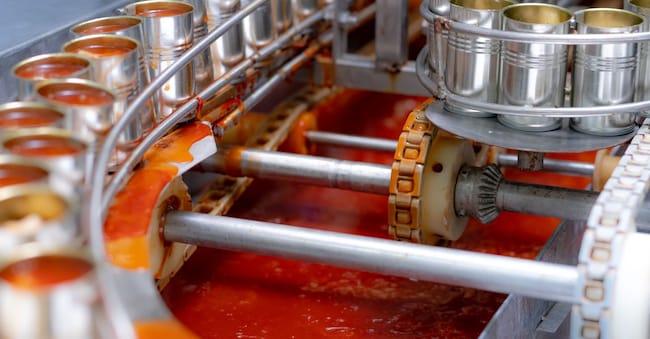
Closed the Framework Agreement for the tomato processing campaign in the Northern Italy Basin, which provides for an average reference price of 137 euro per tonne including services and bonuses related to harvest time.
According to Anicav, it represents an important result to protect and safeguard the balance and centrality of the industrial tomato chain. it was a very complex negotiation, but despite the tensions and difficulties that characterised the discussion, the parties' sense of responsibility prevailed,' says Bruna Saviotti Coordinator of Anicav's Northern Basin Territorial Committee. The Agreement focuses on the quality that has always characterised our production'.
"In a difficult moment such as the one we are currently experiencing, which sees our sector extremely vulnerable in the international competitive scenario, cohesion is the only response that an important supply chain such as the processing tomato sector can give. - says Marco Serafini, p president of Anicav - We hope to recover the supply chain dialogue also in the Centre-South in order to reach, even in this basin, the definition of an agreement. The processing tomato in Italia is a unitary reality, which must be read and governed in its complexity, while respecting the specificities that characterise the two processing basins'.
"the evaluations to be made are strictly economic: we need to decide whether it is really worthwhile to carry out the planned planting or to reduce it, despite the transplanting intentions,"precises Confagricoltura Piacenza. The closure of the agreement was necessary to ensure a clear mapping of the areas and to allow the planning of transplanting and harvesting activities'. But the result 'reflects a contractual balance that is not favourable to the agricultural side, also in the light of the production pressure that was determined in the phases preceding the negotiations'. According to Confagri, in fact, the difficulties recorded in other sectors fuelled a forecast increase in the areas invested in processing tomatoes, an element that affected the negotiation, strengthening the position of the industrial side.
"The agreement reached does not satisfy the agricultural companies either in terms of price or qualitative conditions,' commented the president of Confagricoltura Piacenza, Umberto Gorra. 'We are faced with a result that suffers from a production pressure also built on the difficulties of other sectors and is the result of an initial phase in which there was a lack of adequate coordination of the agricultural side. Under these conditions, this was probably the possible drop point, but it remains an outcome that highlights a weakness in our ability to influence the negotiations'.

