
Too many social media? Young people risk feeling less connected to their bodies
A study by the Universities of Florence, Pisa and Toledo shows that problematic social use can increase body detachment and immersion in fantasy

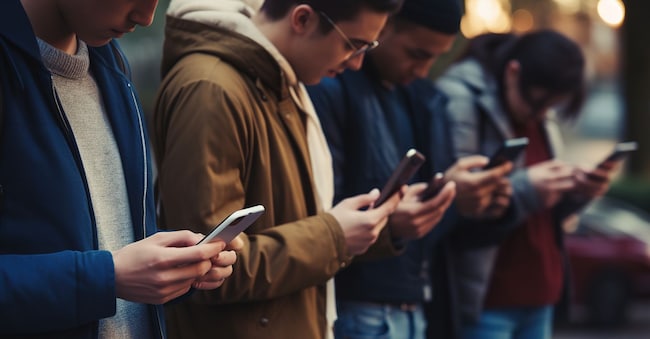
Feeling less in touch with one's body, paying less attention to its sensations, perceiving oneself more distant from one's physical experience. The problematic use of social media does not only affect attention or mood: it can promote detachment from bodily experience over time. This is what emerges from a study published in the Journal of Behavioral Addictions, entitled "A 2-wave study on the associations between dissociative experiences, maladaptive daydreaming, bodily dissociation, and problematic social media use" and signed by Silvia Casale of the University of Florence, Simon Ghinassi of the University of Pisa, and Jon D. Elhai of the University of Toledo in the United States.
The search
The research was conducted on 216 Italian university students aged between 18 and 33 at two points in time, four months apart, between 2023 and 2024. More than half of the participants said they spend at least two hours a day on social media. Instagram was the most used platform, followed by TikTok, and to a lesser extent by X and Reddit."What the research clarifies for the first time is the direction of the link between body dissociation and problematic use of social - explains Simon Ghinassi - The results suggest that it is not feeling one's body as a stranger that leads one to lose control over one's use of social. The opposite happens. It is the compulsive use of so-called appearance-based socials, for example Instagram, that, over time, would lead to an increased detachment from one's body'.
The platforms
"The functioning of social platforms - based on the editing and manipulation of self-images - pushes one to represent oneself through a modified version of one's body, to temporarily identify with an idealised image of oneself and, at the same time, to look at oneself from an external perspective, as if one were an observer of oneself. Over time, this third-person view can foster a detachment from one's own body and fuel experiences of dissociation,' adds Silvia Casale.But this is not the only 'side effect' of problematic social use. Favouring concentration on imaginary worlds to the detriment of real ones is in fact another possible consequence. This is a phenomenon known as imaginative absorption: the tendency to get carried away and immerse oneself in one's fantasies leading to a reduced awareness of one's surroundings. Again, according to the study, the 'antidote' is to promote a more conscious use of social media, considering the possible negative effects on one's relationship with one's own bodily experiences and the world around one.
Brand connect


Newsletter Scuola+
La newsletter premium dedicata al mondo della scuola con approfondimenti normativi, analisi e guide operative
Abbonati