
Too much holiday homework, and teachers adding to the list via the online register whilst schools are closed
Summer homework remains an educational institution that the Italian school system seems unable to do without: in addition to a workload that pupils consider excessive, the bad habit of setting extra homework during the holidays also persists

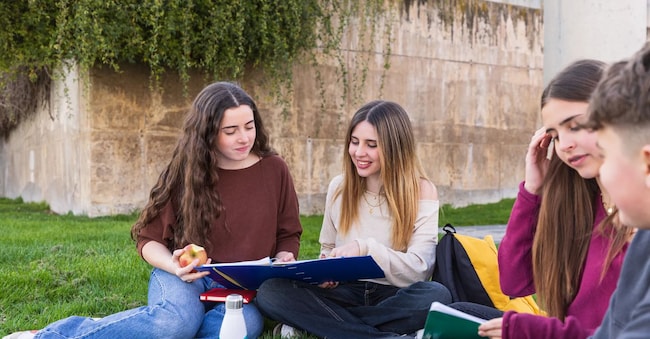
A familiar scenario: once again this year, half of all secondary school pupils have been literally swamped with homework, and most have continued to receive assignments even after the final bell, thanks (so to speak) to the electronic register. This is what has emerged from Skuola.net’s survey on holiday homework, carried out as we reach the halfway point of the summer holidays, gathering feedback from around 1,000 pupils in lower and upper secondary schools. This year, around 3 in 4 secondary school pupils received exercises to complete during the long break: a figure in line with last year’s findings, but one that stems not so much from the generosity of teachers as from the lack of continuity in the transitions between lower and upper secondary school, as well as between the first two years and the final three years of upper secondary school.
Placements often arrive when schools are closed
Unfortunately, however, there is more to the story: completely disregarding Minister Giuseppe Valditara’s recommendations, only 40 per cent of those surveyed had received all their assignments by the last day of term. For the remaining 35 per cent, some additional assignments were sent out later via the electronic register, whilst 25 per cent even received the majority of their holiday homework in this way. “Restricting teachers’ use of the electronic register outside school hours,” notes Daniele Grassucci, director of Skuola.net, “is now becoming an absolute necessity because, it seems, the recommendations remain just that: it is unacceptable that pupils and families should have to spend their school holidays constantly checking the register for fear that a teacher might wake up and set homework to be completed in time for the return to class.”
“Shopping lists” that could ruin your summer
Furthermore, if you take holiday homework seriously, the resulting workload is certainly demanding: 49 per cent consider it ‘very demanding but manageable’, whilst a further 25 per cent even go so far as to describe it as excessive or unmanageable. Only 21 per cent describe the workload as being in a satisfactory balance, and just 5 per cent consider the homework to be genuinely light.
In the middle of summer, few can truly say they are at peace
Perhaps this is one of the reasons why, having reached roughly the halfway point of the summer holidays, the girls and boys interviewed say they are still quite behind schedule. Only one in ten has now completed – or is nearly finished with – their summer work, whilst a further 20 per cent have got past the halfway mark. The largest group (42%), however, has not yet reached the halfway point, and more than one in four (28%) admit to having done very little or not even having opened their books and exercise books yet. Despite this, optimism prevails: more than seven in ten students are confident they will start September with all – or almost all – their homework finished, whilst just over one in four fear they will return to school with a significant portion of their work still to be completed.
AI is even making its way into holiday homework
One of the most interesting findings from the 2026 edition of the Skuola.net Observatory concerns the use of digital tools, which is becoming increasingly widespread. Only 22 per cent said they intended to tackle their homework exclusively using ‘analogue’ methods. All the others plan to make use of technology: 40% mainly through traditional resources (online searches, specialist websites and note-taking platforms), 20% primarily through Artificial Intelligence, whilst a further 18% use both chatbots and traditional web resources interchangeably. In practice, almost eight out of ten students will incorporate at least some technology into their summer homework.

Brand connect


Newsletter Scuola+
La newsletter premium dedicata al mondo della scuola con approfondimenti normativi, analisi e guide operative
Abbonati