Interview with

"Instrument that promises to revolutionise

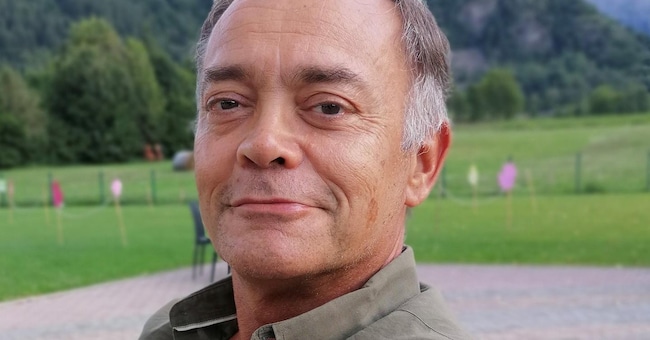
by Filomena Greco

3' min read

3' min read

'The legislation stands and is clear, the Gse rules are available, it is time to go'. With these words, Sergio Olivero of the Polytechnic of Turin captures the opportunity represented by energy communities, for private individuals and companies.

What are the timeframes and steps required to start a Cer?

Loading...

The Gse portal to collect expressions of interest was opened in April, a window that will close on 21 March 2025. So there is little time and one must move quickly.

What opportunities are there?

First of all, the fact that in addition to incentives on self-consumed energy, the legislation provides for a capital contribution of up to 40 per cent for the construction of plants in Cer located in municipalities of less than 5,000 inhabitants. The funds are intended for municipal administrations, but also for companies and citizens, the condition being that the energy community is established before the plants are connected. Therefore, it is necessary to work to have a clear idea of the type of governance and constitute the Cer, whoever wants to join later can do so.

Which organisational models do you think are best?

Cer can have a scope of action equal to market zones: the sense is not to set up too small Energy Communities, aiming instead to create Self-Consumption Configurations (Cau) that virtually share energy but report to a single legal entity, the Cer proper.

What are the most strategic aspects of this opportunity?

Market Zones' are complex realities, but thanks to artificial intelligence and advanced IoT systems, they can be managed efficiently with just a few people and a lot of technology. Just a couple of years ago this would not have been possible, but today IT is coming to our aid. Cau Clusters imply a major change in business models for energy management, which will lead to the establishment of virtual energy utilities, managed by digital platforms, with low running costs, high efficiency and the ability to create value. Value that, given the mutualistic nature of RECs, will have to be redistributed throughout the territory. From 2025 they will be able to sell energy, balancing services and grid flexibility.

How are the big energy players doing?

Larger companies and multi-utilities are trying to defuse a time bomb because Cer is an alternative to current business models. Beyond the strategies developed by each company, in the short to medium term the big players will have the opportunity to interact on an equal footing with the RECs, modifying their business models in a new context in which the citizen, the SME, and the municipality are placed at the centre of the energy transition. A form of 'energy democracy' that has Cer as its technical-organisational-managerial engine.

What are the effects on the market?

Cer will be key players in reducing and stabilising energy costs by creating value for the territory, it will also be truly possible to combat energy poverty with inclusive logics.

What will he be able to do as a driver?

I believe that drivers can be the companies, which see in Cer both a means of reducing the payback time of their investments in plants and a tool to generate virtuous ethical effects on the territory (with effects on sustainability budgets). Let us remember that the share exceeding 55% of the incentive in Cer set up by SMEs must be allocated to social purposes: in the case of well-balanced Cer, this is a few tens of thousands of euro per year (for 20 years) for each mw installed of new plants.

Copyright reserved ©
Loading...

Brand connect

Loading...

Newsletter

Notizie e approfondimenti sugli avvenimenti politici, economici e finanziari.

Iscriviti