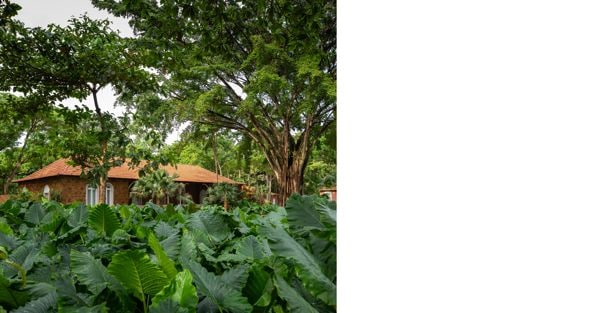
Destination Principe: discovering the smallest island in the Gulf of Guinea
Choose as your destination a fragile ecosystem, where high-end service coexists with the conservation of the local area and where luxury is balanced with moderation.

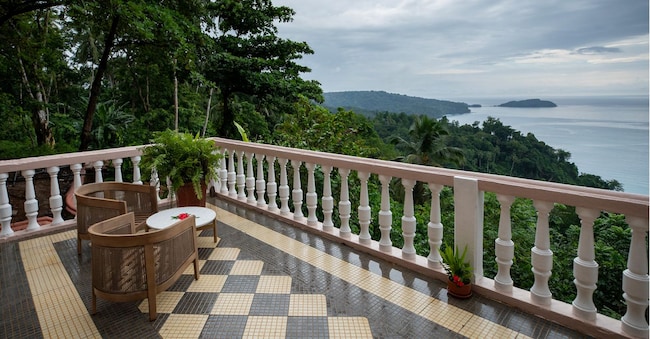
To reach places few others do, to travel with expert guides, to embrace the rhythm of the landscape, and to spend a few days immersed in ecosystems that do not belong to us and cannot be quickly consumed.
Of the two main islands of São Tomé and Príncipe, a small island nation in the Gulf of Guinea off the coast of central-western Africa, Príncipe is the smaller and more secluded. Measuring just 136 square kilometres, it can be reached by a short flight from São Tomé and seems to belong to a ‘minor’ geographical context only at first glance. In reality, this little corner of the Atlantic has been the setting for some of the world’s great stories: Portuguese colonial expansion, the agricultural civilisation centred on cocoa, the scourge of slavery and even a chapter in the history of modern physics. In 1919, the English astrophysicist Arthur Eddington observed the solar eclipse right here that helped to confirm Einstein’s general relativity. On Príncipe, the small scale amplifies everything: the forest, the sea, memory, vulnerability. The island has been a UNESCO Biosphere Reserve since 2012, but the most interesting aspect is the very nature of its protection. The reserve encompasses the entire land area of Príncipe, the surrounding islets and a vast marine area: the island and the sea around it become a single protected entity.
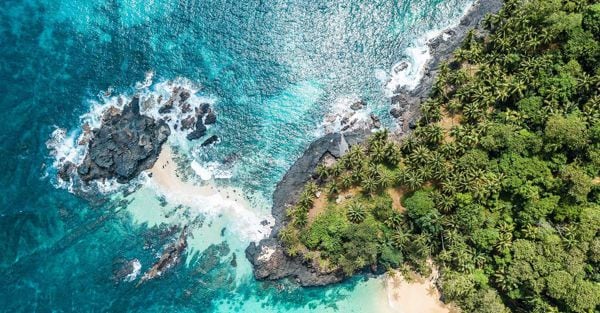
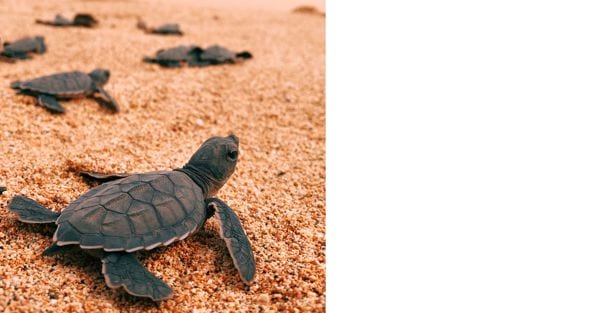
Its origins date back to ancient times. According to UNESCO, Príncipe is the oldest of the oceanic volcanic islands in the Gulf of Guinea, having been formed 31 million years ago. It is home to mountainous terrain, steep cliffs and patches of primary rainforest. All around, the ocean is home to turtles, cetaceans, seabirds and coral reefs. It is not hard to see why the term ‘African Galápagos’ is often used when talking about this place: its geological isolation has transformed the island into a miniature evolutionary laboratory, where many species – from flora to marine fauna – exist only here, or almost exclusively here. Nature is not merely a backdrop. It is the very essence of the journey, its reason and its measure. The landscape, however, tells a different story too. The archipelago, reached by Portuguese navigators in the 15th century, was a colony until independence in 1975 and soon became an agricultural outpost of the empire. The volcanic soil first favoured sugar cane, then coffee and, above all, cocoa. From this economy arose the roças, large colonial estates – self-sufficient worlds comprising manor houses, churches, hospitals, workers’ villages and warehouses. These are captivating yet not innocent examples of architecture, as they are linked to slavery, exploitation and forms of forced labour. Today, some lie abandoned, others are still inhabited, whilst others have been restored as places of hospitality, material culture and remembrance.
It is against this backdrop of natural and historical layers that Príncipe Collection operates today – the hotel group rooted in the vision of South African entrepreneur Mark Shuttleworth, who has established a model here based on conservation, local agricultural supply chains and high-end hospitality. It is a delicate undertaking. On such a small island, every new opening faces an obvious dilemma: attracting high-end travellers without turning the place’s rarity into a fleeting experience. Here, conservation is not a side issue, but the very condition that gives the journey its meaning.
The opening of Belo Monte in June adds a new chapter to this unique landscape: the hotel has been created by restoring one of the roças on the island, nestled in the rainforest and overlooking Banana Beach, a small bay of white sand framed by lush greenery. Rather than a conventional resort, it has the feel of a grand tropical mansion: elegant buildings scattered amongst courtyards, lawns, terraces, a swimming pool and a library. Inside, high ceilings, leather armchairs, chandeliers and candelabra combine to create a luxurious yet homely atmosphere.