Major works

Turin-Lyon Tav: the pact for sustainability and future challenges

Telt organises an event in Paris with construction companies: illustrating good practices already in place on construction sites and setting 8 new challenges. The Turin-Lyon Tav is committed to sustainability with a pact that includes care for workers, respect for the environment, anti-corruption, economy and safety at work. The companies involved present good practices and future challenges

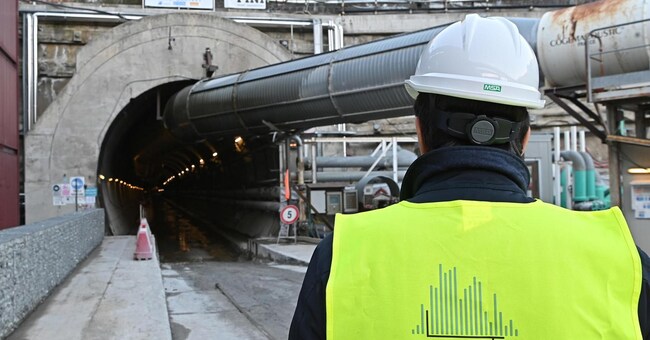
ANSA/Alessandro Di Marco

4' min read

4' min read

"The high-speed railway (Tav) Turin-Lyon is one of the greatest infrastructures under construction of our time". This is how Telt, the French-Italian public promoter in charge of the construction and in the future of the management of the line, which also includes the Moncenisio base tunnel between France and Italy (57.5 kilometres long, 12.5 of which are on Italian territory), defines it. And it was precisely Telt that organised an event in Paris on Tuesday 30 July, at Casa Italia, to present good sustainability practices (present and future) involving the Turin-Lyon maxi construction site and, in particular, the Mont Cenis base tunnel construction site.

"Our ambition is to create an exemplary construction site that respects the environment and people's health. An exemplary construction site from the point of view of sustainability. We want to become a symbol for the development of this infrastructure,' emphasises Daniel Bursaux, President of Telt. All the major construction and engineering companies that are involved in various ways in the construction of the Tav and the Mont Cenis tunnel attended the Paris event with their representatives. Among others: Itinera, Eiffage, Vinci, Webuild, Implenia France, Italferr, Setec Group. In total, the Tav has 11 companies working on 10 construction sites.

Loading...

The Sustainability Pact

.

In Paris, Telt, as principal, and all the companies involved renewed the sustainability pact for the Turin-Lyon Tav. "The commitments made by the companies in the integrity and sustainability pact signed when the contracts were signed are transformed into actions," Telt summarises.

The pact is based on five major themes: safety of workers (up to 4,000 workers are envisaged); respect for the environment; anti-corruption; economy (because the work must also produce benefits for the territories and local companies involved in the construction site, as suppliers); safety at work.

One of the most challenging objectives will be the recycling of excavation materials, with the aim of reaching 60% of the materials extracted from the mountain being sent for recycling, as well as the defence of the biodiversity of the areas affected by the work. During the forum, the companies then illustrated their projects on environmental protection and the circular economy, worker safety, maximising the impact on the territory, and the fight against corruption.

Rise in costs

.

At this point, however, it is necessary to take a step back and recall that, within the space of a week, the Turin-Lyon Tav has received two pieces of news of opposite sign. One went from the satisfaction that accompanies good news to a realistic acknowledgement of the far from positive evolution of accounts and prospects. On Wednesday 17 July 2024, the European Commission had announced the allocation of funding for projects linked to the Connecting Europe Facility programme allocating EUR 700 million to the construction of the cross-border section of the new high-capacity railway between France and Italy. The following Friday, Telt's board of directors ratified the cost increase together with the need to postpone the completion of the work to the end of 2033. In comparison with a certified expenditure forecast of 8.6 billion euros, this comes to 11.1 billion, an increase of almost 30%. It should be specified that this is the total cost of the work, for which there is an EU contribution covering about half of the value between design and execution.

The Contractor-Company Paper

Returning to the Paris event, a paper was also circulated for the occasion, written jointly by companies and clients, which identifies the good practices already in place on construction sites and launches 8 new operational challenges on which companies will be measured in the coming months. In addition to compliance with the environmental management system and a commitment to safeguarding the territory, biodiversity and natural resources, the companies on the Turin-Lyon project already have many solutions in place:

1) Technical innovation to improve the safety of workers in underground work, through new prototypes with remote guidance (e.g. Webuild's Axel robot at La Maddalena in Chiomonte and the robot for lining ventilation shafts in Avrieux - Dodin Campenon Bernard);

2) Introduction of eco-responsible systems, using sustainable and energy-saving materials in the construction and operation of site offices;

3) collection and closed-loop management of water and its maximum reuse for site operations (construction, vehicle cleaning, wetting of site roads and cooling of machinery);

4) transparent reporting of sustainability indicators, within the life cycle of the work;

5) Coordination with local authorities to maximise the impact on communities (training of workers, recruitment, hospitality management of workers, etc.).

Looking to the future, the paper sets some important goals. Here they are broken down by macro-themes.

Environment:

increase electric and low-emission construction vehicles by at least 30 per cent to promote decarbonisation and further reduce energy consumption during base tunnel construction;

introduction of at least +10% energy from renewable sources, through the exploitation of geothermal energy and the installation of solar panels;

participation in at least one species protection project proposed by the Public Promoter and signing of the International Convention on Biodiversity.

People:

Introduction of an artificial intelligence system to minimise interaction between workers and heavy machinery by increasing safety standards;

creation of a training area to prepare workers for site activities;

provide workstations with ergonomic facilities for the protection of workers during tunnel lining operations.

Legality:

participation in the creation of an ethics committee of the Lyon-Turin companies with a whistleblowing mechanism common to all construction sites.

Territory:

40 extra hours of training, in addition to the compulsory ones in synergy with local authorities, for workers in order to enhance skills, increase safety and train young workers

Copyright reserved ©
Loading...

Brand connect

Loading...

Newsletter

Notizie e approfondimenti sugli avvenimenti politici, economici e finanziari.

Iscriviti