
The Tour de France kicks off: $900 million inducement, $54 million for Florence
The world's most famous stage race starts with three Italian stages: 780,000 people are expected in Florence, with increases in hotels and short-term rentals

3' min read
3' min read
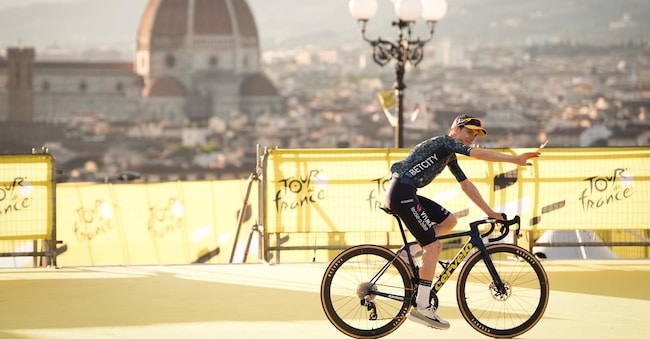
Saturday sees the start of the Tour de France, for the first time with three all-Italian stages. In fact, the Grand Boucle starts in Florence, touching on Rimini, Bologna and Turin, where it will find queues of fans along the entire route;
It is no mystery that the Tour is one of the most fascinating and followed sporting events in the world, which this year will skip Paris, in the throes of preparations for the Olympics, and close the last stage in Nice, not far from the Italian border.
The 3,492 kilometres of racing with an altitude difference of 52,000 metres will attract more than twelve million spectators with an estimated economic impact of more than 900 million dollars. This is a downward figure that only takes into account the attendance in the stage cities and not the attendance distributed along the route. This expenditure is dominated by catering, which accounts for 47% of the total, followed by hospitality (34%) and transport (19%), confirming the fact that cycling has a high experiential value linked to local resources.
Accounting for the economic impact of the Tour is Data Appeal, an Almawave Group company specialising in the collection and processing of data collected on the web. The data was presented by Mirko Lalli, founder of the company, in the context of Becycle, the Pitti Immagine event dedicated to cycling as a lifestyle, whose first edition was held at the Leopolda in Florence on the very eve of the Tour's departure.
That of the Tuscan capital, where the bet on the yellow race had become a topic of contention in the recent electoral campaign, seems in the end to be a choice that pays off, with an estimated economic fallout of $54 million and the arrival of 780,000 people for the occasion.


