
Tour de France: Pogacar also breaks Pantani’s record on Alpe d’Huez
On Sunday, the Tour will finish in Paris on the Champs-Élysées to celebrate Pogacar’s fifth yellow jersey

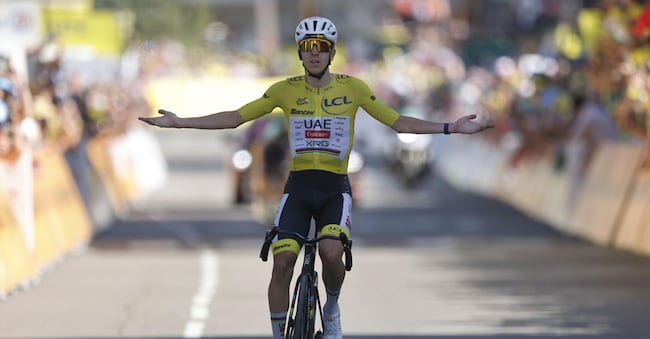
Another extraordinary feat, another victory (his fifth in this Tour), another memorable chapter written by Tadej Pogacar on Alpe d’Huez – the Maracanã of the Grande Boucle – which will go down in cycling history.
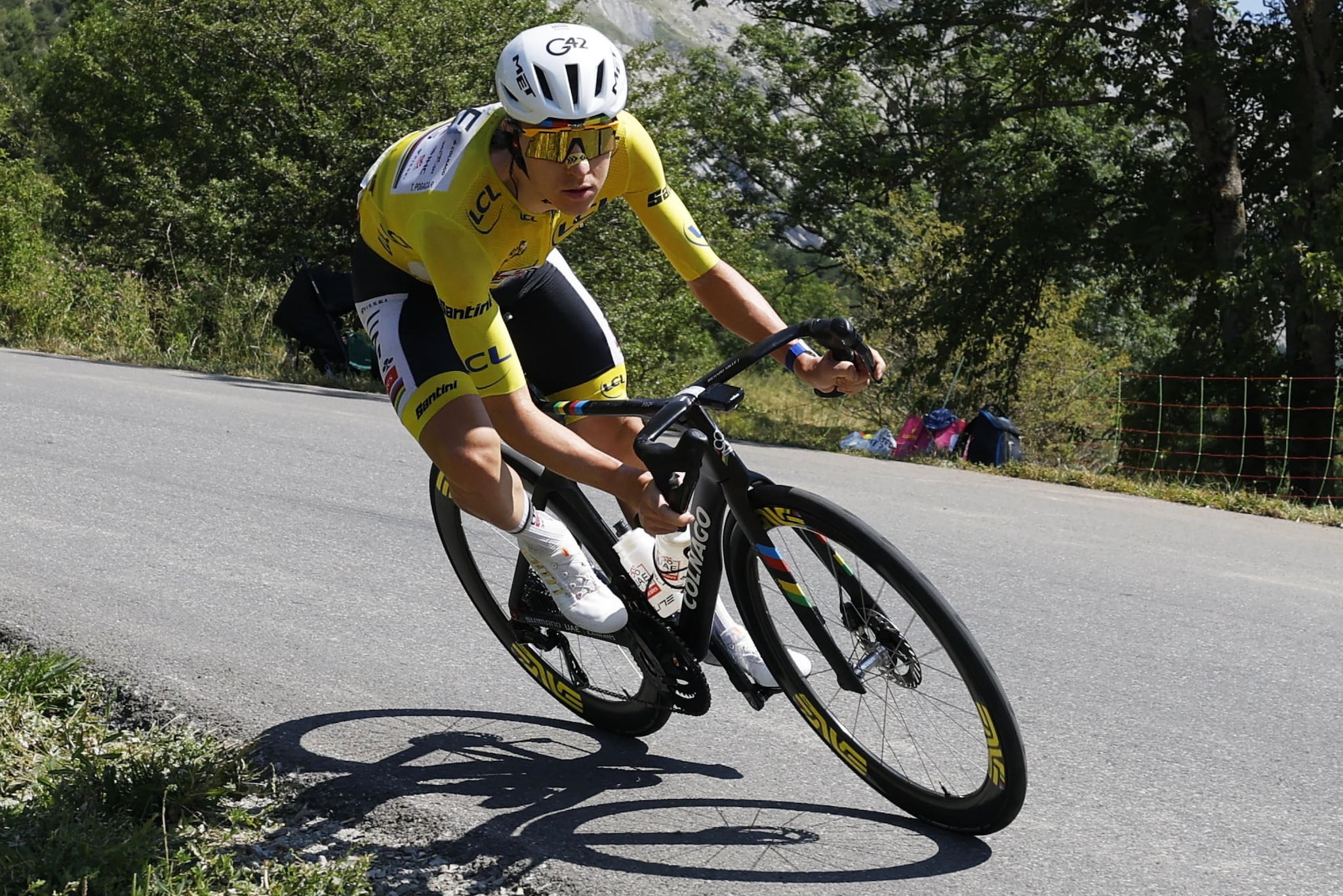
It’s hard, with this champion who’s smashing every record (including Marco Pantani’s climbing record, which had stood since 1995), it’s hard not to slip into rhetoric. But with Pogacar, on his 26th victory at the Grande Boucle, there’s no need to shy away from piling on the superlatives. We must acknowledge that this Slovenian rider is in a league of his own. A league that places him not only above the riders of his own generation, but also above many champions of the past. Comparisons across different eras generally don’t hold up, but in terms of the sheer number of victories, the only one who can still hold a candle to him is the giant of giants: Eddy Merckx, who is, not coincidentally, remembered as the ‘Cannibal of Cycling’.
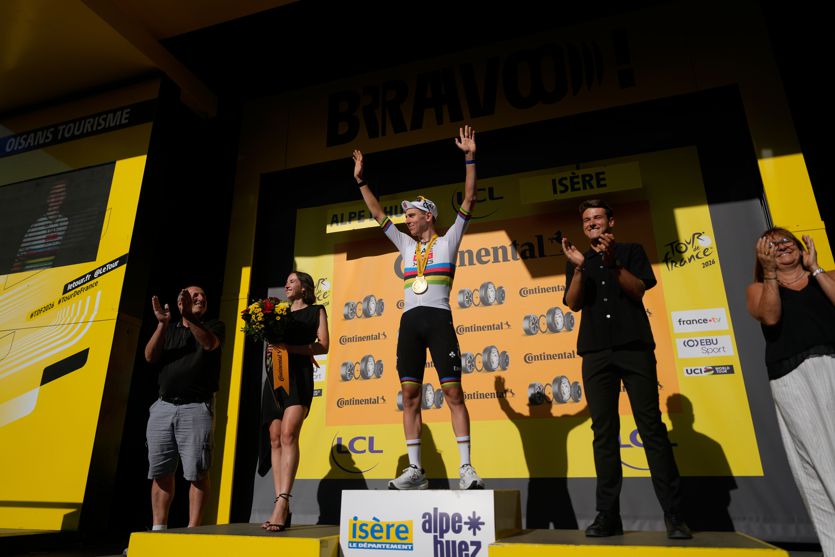
But even this dominance – bearing in mind that Pogacar is only 27 – is looking seriously shaky. The Belgian faced some formidable opponents along the way and always had to fight tooth and nail to achieve his goals. The Slovenian, now the undisputed master of this Tour, overwhelms his rivals with such disarming ease that the climb up Alpe d’Huez (13.8 km at an average gradient of 8 per cent) a mere hill for youngsters, a leisurely ride for amateur cyclists.
With no teamwork whatsoever, the Slovenian broke away after less than a kilometre, catching up with the day’s breakaway riders at the front with a lead of two and a half minutes. With a relentless charge over nearly 12 km, hairpin bend after hairpin bend (21 in total), Pogacar reeled them in one by one like naughty boys who’d run away from home. A sporting masterpiece set against a backdrop of crowds that sent shivers down your spine. On either side, the fans – not always the most well-behaved and having had a few too many beers – squeezed him into a tumultuous corridor. Then, just under two kilometres from the finish line, Pogacar first caught Sepp Kuss, then Lenny Martinez and finally Richard Carapaz, who had already won the previous day.
It seemed as though Tadej had eased off. As though he was content simply to have, once again, left his rivals in the general classification in the dust. Any other yellow jersey holder would have done just that, but not Pogacar, who, when he senses the finish line banner approaching, becomes a predator. And indeed, with about 900 metres to go, he put in another burst of speed. A lethal surge. Too powerful for anyone. Martinez finished second and Carapaz third. Presumably, had they worked together in the breakaway, Tadej would have had a bit more trouble catching them. But these are mere details that pale in comparison to the Slovenian’s overwhelming competitive dominance – as usual, he didn’t even seem particularly tired.


