
Sardinia: tourism is growing, but the sector needs to be expanded and accessibility improved
This is the finding of the report “Tourism in Sardinia: between growth in visitor numbers and regional concentration”, produced by the Confindustria Sardegna Research Centre

Key points
Tourism in Sardinia is growing, but not always. This is because, whilst the overall picture is positive, there are still challenges and areas for improvement. This picture, which builds on the positive figures for the first eight months of 2026, is outlined in the report “Tourism in Sardinia: between growth in visitor numbers and territorial concentration”, produced by the Confindustria Sardegna Research Centre. ‘The provisional figures recently presented by the Region of Sardinia indicate 3.32 million arrivals and 13.83 million overnight stays in hotels and non-hotel accommodation – excluding private rentals – between January and August,’ the report states, ‘ an increase of 4.0 per cent and 4.6 per cent respectively compared with the same period in 2025, representing approximately 606,000 additional overnight stays.”
Spending rises between January and September
The study highlights that, between January and September, spending recorded through Mastercard transactions rose by around 10 per cent, whilst passenger numbers at the island’s three airports increased by 9.25 per cent.
“The results observed are just the tip of the iceberg. In 2025, 63.2 per cent of visitor numbers were concentrated in the months from June to August alone, whilst between November and March the figure stood at just 3.8 per cent – the report goes on to state. The length of stay also varies significantly: 4.94 nights in the high season compared with 2.21 in the winter months.” Against this backdrop, with strong growth in May and a more modest increase during the summer, “it is clear that we need to attract new visitors and give them reasons to stay longer”.
The seaside tradition
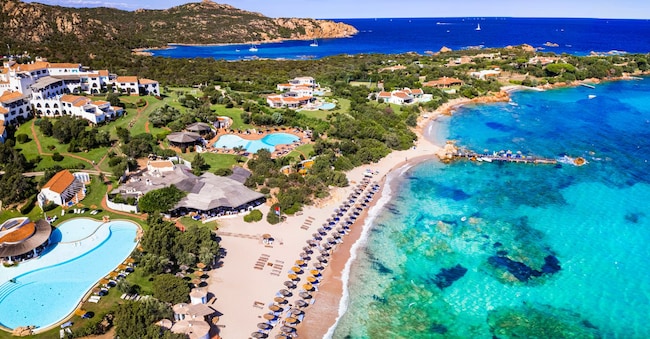
‘The problem is, in fact, clearly linked to the almost exclusively seaside nature of tourism in Sardinia, which is clearly evident from the equally strong geographical concentration of visitor flows – it is emphasised –: in 2026, 93.3 per cent of accommodation places will be located in coastal municipalities, whilst in 2025, non-coastal municipalities accounted for only 7.2 per cent of arrivals and a mere 4.1 per cent of overnight stays. Even amongst the coastal municipalities themselves, the ten most visited account for over half of the island’s total tourist overnight stays.” As a result, tourism activity outside the most popular destinations is still on too small a scale ‘to sustain a sector capable of generating income and employment throughout the year’.
Expanding the supply chain
Research by the Confindustria organisation’s think tank suggests expanding the supply chain, even though this step ‘requires high-quality, recognisable, bookable and genuinely accessible products’. ‘Local festivals and events can promote communities and their local produce; on their own, however, they are not enough to generate sustained tourist demand,’ the report emphasises further. We need archaeological and cultural sites that are actually open to the public, organised environmental and food-and-wine experiences, suitable accommodation facilities and reliable services. Where suitable venues and expertise exist, conference tourism can also help to attract visitors outside the summer months’.

