
Tourism in Lazio: training and skilled labour to face the post-Jubilee revolution
The regional tourism sector is growing but remains unstable, with increasing fixed-term contracts and a severe shortage of qualified personnel, pushing for new training policies.
by Andrea Marini
 Aggiungi Il Sole 24 Ore
ai preferiti su Google

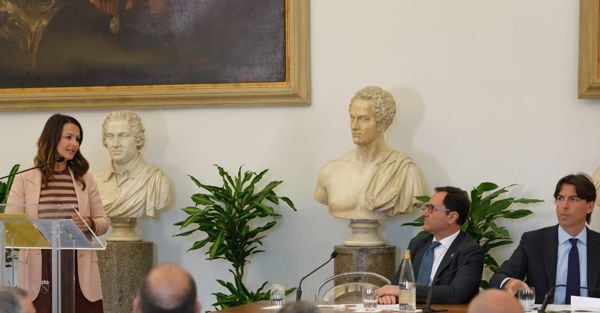
The tourism labour market is facing a revolution. And this is especially true in Lazio, which is benefiting from the long wave of the Jubilee, which has accelerated many processes. This is a scenario in which it is becoming essential to strengthen staff training. This is what emerges from the research presented yesterday at the Campidoglio during the event "Roma al Lavoro - Orientamento, Formazione e Occupazione nel settore del Turismo" (Roma at Work - Orientation, Training and Employment in the Tourism Sector), promoted by beneficiando (Bilateral Tourism Board of Lazio) and Università Roma Tre. During the event, Roma Capitale and the bilateral signed a Memorandum of Understanding aimed at strengthening employment and vocational training policies in the tourism sector.
job data
According to the "Territorial Observatory 2026", based on data from the Ministry of Labour's compulsory communications on the first half of 2025, more than 1.66 million job activations in tourism will be recorded in Italy (+0.2% on 2024, and +15.5% on 2022), of which about 175,000 in Lazio alone, slightly down (-0.2%) on 2024, but 26% higher than in 2022. The research highlights a labour market structure where term contracts account for 73.8% of activations at a national level and in Lazio they stand at 81.1%. Certifying greater instability in the tourism sector is the increase in daily contracts, which in the Lazio sector reach 44.2% (27% in Italia).
The Untraceable Professions
The evolution of tourism professions up to 2035 predicts that 41% will grow in the coming years, while 34% will gradually decline. Digital, organisational and relational skills, together with the ability to integrate sustainability, data management and design of the tourism experience, will be the main drivers of change. However, the adaptation of the hotellerie to the needs of digital nomads shows an impact of 81.7% in 2035, while the shortage of qualified personnel in Lazio's accommodation services reaches a "worrying 90.7%", the research points out. The opposite is true for less qualified professions, which show a clear downward trend. Another category strongly exposed to risk is that of maintenance personnel.
The Training Agreement
The councillor for schools of Roma Capitale, Claudia Pratelli, emphasised: we need to 'promote quality work, fight precariousness and contractual dumping, and enhance professionalism and skills'. "The memorandum of understanding expands and strengthens our strategy of collaboration with territorial institutions in the field of employment and qualified training," said Ebtl president, Tommaso Tanzilli. "Over the last three years, employment in the sector in Rome has increased by 5.5 per cent year on year, while in the three-year period before Covid the increase was 1.9 per cent. However, we want these jobs to be more qualified and better paid,' stressed the councillor for Tourism of Roma Capitale, Alessandro Onorato.

