
Tourism, Rome generates 13.3 billion in wealth
The 2024 results calculated by Sociometrica on Istat data. Milan is confirmed second, followed by Venice and Florence. On the South weighs the model of short-term rentals

3' min read
3' min read
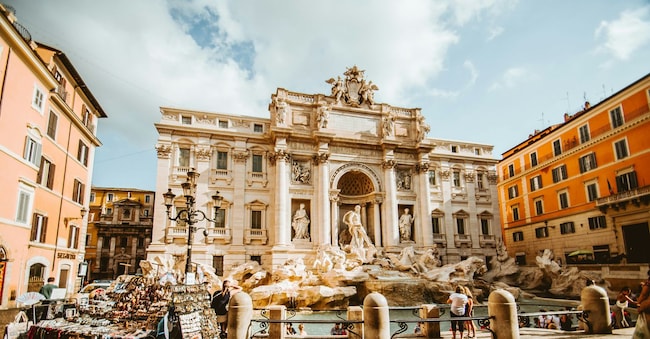
Tourism, the cities beat the sea: the 2025 edition of the report 'The wealth of tourist municipalities', produced by Sociometrica for Il Sole 24 Ore, confirms the Italian scenario photographed in the last report in 2023, calculating on the basis of official presences (Istat data), and the estimate of the 'submerged' ones linked to short rentals, the tourists' expenses for accommodation, transport, trade, cultural services and everything else. In 2024 Rome will therefore be the first Italian municipality in terms of added value generated by tourism, with 13.3 billion euro (it was 8.5 in 2022). Second is Milan with 4.7 billion (they were 3.6 in 2022), followed by Venice with 3.4 (they were 3), Florence with 3 (they were 2.5), Rimini and Naples with about 1.5 billion each (stable compared to 2023). A podium unchanged from the last survey.
To complete the top ten, the presence of the Venetian municipalities of Cavallino-Treporti (with 1.4 billion in wealth produced), San Michele al Tagliamento (also 1.4 billion) and Jesolo, linked to the strong hospitality offer, including non-hotel accommodation such as campsites, should be noted. Bologna closes the ranking with 1.2 billion.
The Cities Model
."In a general growth trend, which sees the total added value rise from 115.5 billion in 2023 to 117.1 in 2024, the supremacy of a city like Rome is confirmed, which is not only 'touristy' in the strict sense of the word, but also capable of attracting a whole induced activity linked to other spheres, from business to sport: In the last ten years, hotel innovation, investments in this sector and in technologies, together with the more general economic dynamics, also supported by public investments, have favoured the city," explains Antonio Preiti, curator of the study, professor of destination management at the University of Florence. The cities' 'multi-range' offer is rewarded, which includes culture, sports, music shopping, work, training and a lively interest all year round.
Beach destinations
.A reading confirmed by the numbers of tourist presences in the major destinations surveyed in the period between 2014 and 2024. The city with the most significant increase is Bari (+125.1%), followed by Bergamo (+117.4%) - the Italian capital of culture with Brescia in 2023 -, Como (+97.9%), Lecce (+93.8%), Trieste (+93.5%), Bologna (+92%), Verona (+84.6%), Rome itself (+80%), Bolzano (+68%), Bressanone (+64.1%). "Cities, Alpine resorts and northern lakes are growing on the one hand. On the other hand, seaside resorts suffer. Of the ten destinations with the worst tourist performance between 2014 and 2024, eight are seaside destinations. In particular, Grosseto and Cattolica show significant declines, equal respectively to -14.4% and -12.6%, negative also Rosolina (-6.9%), Ischia (-6.3%), San Vincenzo (-2.4%) and Orbetello (-1.7%), all the way to Rimini (-0.8%), the symbol of Italian seaside tourism," Preiti further observes: "These data suggest a strong need for a strategic rethinking of the offer of traditional seaside resorts, incentivising investments not only in infrastructure, but also and above all in new experiential tourism products, digital innovation and environmental sustainability"..
Short-term rentals
.On the wealth production of tourist destinations also weighs the phenomenon of short-term rentals. The Sociometrica study estimates that 32,287 accommodation units will be offered on digital platforms in Rome in 2024, up from 18,966 in 2021. In Milan 18,491 (from 12,658), in Florence 12,167 (from 8,318), in Naples 9,444 (from 6,609), in Venice 8,102 (from 7,474), to name the cities with the most presences. "It is a phenomenon driven by the model of second homes in the South, which previously had perhaps an informal circuit and which with the platforms are now being put on the market. They are a problem in big cities because there are no longer houses for workers and students. In small towns they generate an economy that lives 3-4 weeks a year: they don't create business, they don't create income like a hotel can, they remain an income,' Preiti explains: 'Syracuse has 3,177 homes offered on platforms against 61 hotels, Olbia has 2,958 against 68, Alghero 2,336 against 45, Sorrento 2,007 against 82. It is a model that does not generate wealth. It has been emerging for a few years now but now it is exploding".


