
Tourism, the industry is worth a billion euro
Calabrò: 'It represents a strategic asset for the development of territories, contributing in a concrete way to competitiveness and growth'
by Enrico Netti
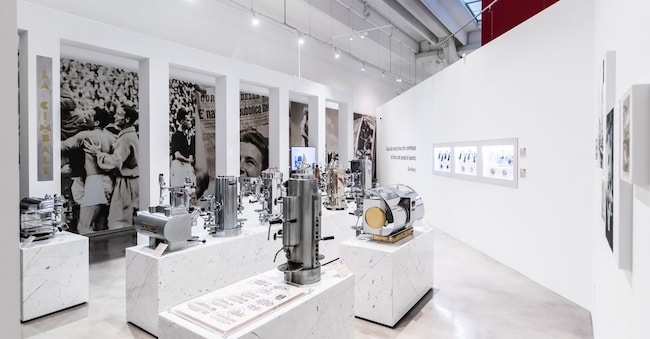
It is a total immersion in the past, in the origins of manufacturing, industry, food and wine. A voyage of discovery of 'how we were' through period advertising and equipment, accounting machines and lathes, invoices, catalogues and price lists, ending with period patents, technical drawings, specifications and much more that has made it to the present day. All of this is kept in the business museums throughout Italia that guard this amarcord of made in Italy, which in 2025 were visited by about 5.4 million people, 42% of whom came from abroad. An important share of tourists who have chosen the route, the experiences offered by industrial tourism, a strand that favours deseasonalisation, many times minor destinations and generates a turnover of one billion euro, according to data from the Museimpresa Observatory prepared by Nomisma to bring out the potential of business museums and archives in addition to industrial archaeological sites.
"The data from the Observatory on Industrial Tourism document a fast-growing phenomenon, with over 5 million visitors by 2025 and an overall impact of €1 billion on the national economy, with widespread repercussions on numerous production and employment sectors," said Antonio Calabrò, president of Museimpresa, an association that represents over 160 companies of all sizes with a museum. "These data clearly illustrate the economic, social and cultural value of museums and business archives, and show that industrial tourism is no longer a niche phenomenon. It is the confirmation that Italia's industrial heritage represents a strategic asset for the development of territories, capable of holding memory, innovation and tourist attractiveness together, contributing in a concrete way to the competitiveness and growth of the country'.
According to Nomisma's analysis, in 2025 there were 5.4 million visitors to industrial tourism sites in Italia, 42% of whom were foreigners. The expenditure generated by these flows - including admissions, collateral activities, catering, transport and shopping - produced a direct economic impact of 383 million euros. Considering also the indirect and induced effects along the economic chains involved, industrial tourism generates an overall value of 1 billion euros for the Italian economy, with an economic multiplier of 2.6: every euro spent by visitors in fact produces 2.6 euros of spin-off for the country system.
"The impact analysis developed for Museimpresa reveals an astonishing capacity for economic multiplication of industrial tourism: every euro spent by Italian and foreign visitors to museums and business archives generates a total of 2.6 euros in the national economy," notes Emanuele Di Faustino, head of Industry, Retail and Services at Nomisma. This is proof that we are not just dealing with places for the preservation and enhancement of the excellence of Made in Italy, but with real activators of the supply chain that feed multiple sectors from culture to hospitality, from transport to retail, generating over 8 thousand jobs throughout the peninsula".
The Museimpresa Assembly was hosted in the spaces of the Gazometro in Rome, and was an opportunity to highlight the cultural and symbolic significance of contemporary industrial heritage sites. Indeed, the choice of Rome's Gazometro as the venue for the proceedings highlighted the potential of spaces historically linked to industrial production in becoming environments dedicated to innovation, cultural dialogue and the enhancement of Italy's manufacturing memory. "We are delighted to host the Museimpresa assembly at Eni, an important opportunity for a meeting and exchange of ideas between organisations that share a commitment to promoting corporate culture. Museums and company archives are in fact places of knowledge, dialogue and participation, capable of recounting the profound link between companies, people and territories," said Lucia Nardi, Head of Eni's Corporate Culture and Vice President of Museimpresa.

