Taxation and tourism

Tourist tax, new municipalities introduce it. Revenue 2025 over 1.1 billion

It is in force in almost 1,400 municipalities and many have increased the rate. The record cases of Milan and Lazise

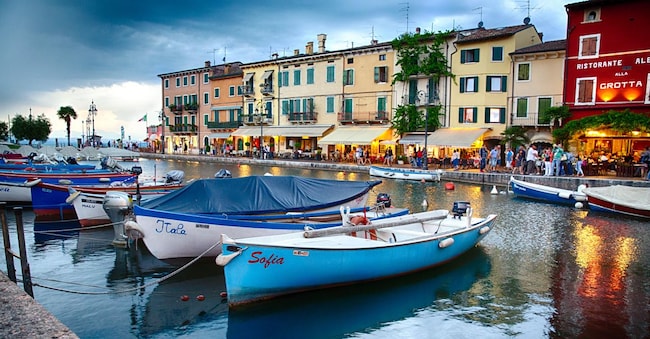
EFDR4G Low Angle View of Small Boats in the Harbor after Sunset, Lazise, Lake Garda, Veneto, Italy Alamy Stock Photo

4' min read

Translated by AI
Versione italiana

4' min read

Translated by AI
Versione italiana

Race to the double for the tourist tax. In just five years, revenue has risen from EUR 628 million in 2022 to over EUR 1.2 billion forecast for this year. A trend marked by the growing number of municipalities that have adopted the 'purpose tax' and in parallel by those that have increased their rates. By the end of the year, the tax will be in force in 1,411 municipalities, 24 of which are new entries. They are Avellino, Latina, Scandicci, Foligno, Aprilia, Moncalieri, Treviglio, Santa Sofia, Entracque, Borgomanero, Citerna, Altopascio, Sassuolo, Chiesina Uzzanese, Tavernola Bergamasca, Casciana Terme-Lari, Ponte San Nicolò, Acerra, Sinnai, San Donà di Piave, Portogruaro and Fossano, Trani, Bisceglie. To date, these are the ones, but others are discussing the matter.

There are 53 administrations that have adjusted the values upwards or extended the period of application as of 1 January. Most of them are provincial capitals, including Milan, Naples, Turin, Livorno, Bolzano, Catania, Perugia, Imperia, Salerno, Trieste, Olbia, Lecce, Oristano and Campobasso, but

Loading...

also important cultural, mountain and seaside tourist destinations such as San Candido and Jesolo, San Remo and Assisi, Castelsardo, Arona, Alghero, Diano Marina, Santa Margherita Ligure, Spoleto and Porto Sant'Elpidio. Some destinations extend the period of validity of the tourist tax such as, for example, the municipality of Minori where, from 2026, the tax will have to be paid at any time of the year. There is also a

multiplicity of other destinations, such as, for example, Terrasini and Cassino, Meta and Castelfiorentino, Portopalo and Reggello, Barano d'Ischia and Cetona, Casamicciola Terme as well as the Unione Montana Valle Maira

and the Unione Montana Feltrina, which have decided to increase the tariffs in force in 2026.

This is what is revealed in the 2026 edition of Jfc's National Observatory on tourist tax, which Il Sole 24 Ore publishes exclusively. With regard to revenue in 2026 Jfc has prepared 2 scenarios linked to the evolution of the war in Iran. If the geopolitical situation normalises by the end of April, the revenue will grow by 11% to about 1,278 million. "If the conflict ends in the summer, we will lose a share of high-spending customers from the Gulf," explains Massimo Feruzzi, sole director of Jfc and editor of the study. Pan-European customers in the summer might prefer other destinations besides Italia, and some Europeans might come to Italia in the autumn months'. In this case, revenue will be around 1,129 million (-1.8%).

This way along the Peninsula

Analysing the 2025 trends on the territory, there are four locomotive regions. In first place is Latium with over 300 million (+1.6%), followed by Lombardy with a revenue of 158 million (+37.8%), Tuscany at around 136 million (+11.8%) and Veneto with over 117 million (+11%). Among the cities of art, Rome stands out, where the 'tourist tax' in force in the capital is worth 288 million, a stable figure. In Milan, as a result of continuous increases, the revenue has reached 109.3 million (+43%) and is estimated to reach 113.5 million by 2026, also due to the Olympics effect. Florence easily overtook Florence at 82.7 million (+8%) while Venice for the first time saw a slight drop (-3%) in takings to 38.6 million.

There were several double-digit increases, and among the tourist resorts the best performer was Lazise, a destination on Lake Garda on whose territory there are three amusement parks: Gardaland resorts, Movieland and Caneva aquapark, which attract visitors from all over Europe. In 2025, the municipality saw a 60% increase in revenue from the tourist tax, which reached 3.6 million. There was also an excellent increase (+55%) in nearby Bardolino, with over 3.3 million euro in takings, while Caorle was close to +60% at 6.6 million. Cervia and Cavallino Treporti also did well. The latter has large open-air villages in the area with thousands of beds. "We note how the strong increase in Lazise is due to an increase in rates for 5- and 4-star hotels as well as in non-hotel accommodation facilities," explains Massimo Feruzzi. "The situation is similar in Caorle where rates have almost doubled, especially in the 3- and 4-star categories. In Bardolino, on the other hand, there has been a tax increase of 50 cents in all structures'. The main Alpine resorts see a growth of no more than 10 per cent in the best case. Cortina d'Ampezzo, for example, collected 2.6 million (+7.6%) less than half of Castelrotto.

How is the revenue spent?

All these resources are not earmarked for 'tourism-related interventions' as provided for in the law that reintroduced the tourist tax in 2011. Jfc has asked the municipalities for the real destination, an account of the use of these funds. 'The situation is disarming,' Feruzzi continues. 'Several local administrators would like to use, and many do, these revenues as current expenditure, in a way that is definitely not in line with the legislator's intentions. In many municipalities, sporting and other events have been organised, as, for example, in Cortina. Others, such as Abano Terme, focus on the maintenance and management of services, and in Rimini the focus is on public transport.

Copyright reserved ©
Loading...

Brand connect

Loading...

Newsletter

Notizie e approfondimenti sugli avvenimenti politici, economici e finanziari.

Iscriviti