
Towards the Conclave, why Parolin is given as one of the favourites for the nomination
A moderate diplomat in the sign of the innovator Francis, he is probably the cardinal best known to the 133 voters

2' min read
Key points
2' min read
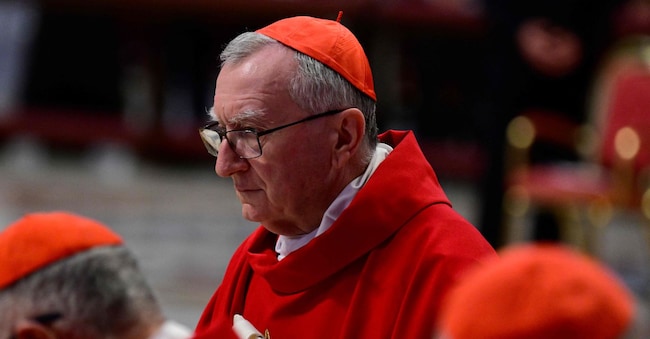
He will preside over the Conclave. This is not in itself an advantage over the others, but it certainly makes him more visible, in a 'guiding' role that he has in fact long had in the Vatican and that goes beyond his role as Secretary of State (now formally lapsed). Cardinal Pietro Parolin, 70 years old, a Venetian from Schiavon, a diplomat of long standing, in the twelve years he has been 'prime minister' of the Holy See under Francis has always avoided prevaricating the role, and Bergoglio himself has not infrequently sidelined him compared to others. But he has interpreted the role with discretion, and this has allowed him never to lose his footing. Now on the eve of the opening of the Sistine Chapel the 133 cardinals voting (quorum down to 89) remains perhaps the strongest candidate to succeed Francis.
Pope XII was also elected Secretary of State, a very rare occurrence
.A fact not taken for granted, indeed. Secretaries of State have very rarely been elected pontiffs, with the exception of Eugenio Pacelli in 1939 who took on the name of Pius XII (he was also Camerlengo), precisely because of their role as government officials, a life spent between apostolic nunciatures and internal offices, and moreover with little pastoral experience, i.e. leading a diocese. And in fact Parolin has never held this post - his name was mentioned several times over the years both for Milan and previously for Venice - but times change, and even some diplomats - as was his case - also move into pastoral territory, and gain field experience of various kinds.
More time for cardinals to get to know each other before the Conclave
There are two elements that could favour him. The first is that all the cardinals know him. In fact, among them the 133 have had few opportunities to meet, they come from even very distant places, there is often a language barrier, and it is for this reason that it was decided to start the conclave on 7 May instead of 5, to give more time for personal contacts during the general congregations. The other is more political: he is considered a moderate, and as a diplomat he has a fair amount of prudence, which some consider important after a pontificate with strong innovative connotations such as Francis'. A 'right-wing Bergoglian', some simplify by borrowing categories from politics, although he would not be the only one with these characteristics. Finally, a strong element is his international character - above all the great esteem in which he is held by the Beijing government, which was absent at Bergoglio's funeral - which is important in a phase of strong geopolitical tensions.


