
Towards the green light to use drones for phytosanitary treatments in fields
So far it has not been possible to use them for precision farming. Faraglia (Masaf): guidelines ready for an initial trial phase lasting three years

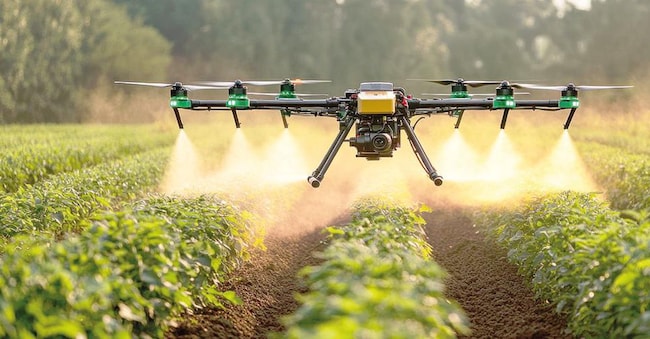
Drones for spraying plant protection treatments in fields. Guidelines could arrive by the end of next May that - in effect - would open up a three-year experimental phase. This was stated to Il Sole 24 Ore by Bruno Caio Faraglia, director of the Masaf Plant Protection Service. The draft of the bill - on which the four ministries of Health, Agriculture, Transport and the Environment will have to converge - has already been prepared. Then the text must be stamped by the State-Regions.
For the agricultural sector, grappling with extreme weather conditions, increasingly stringent rules on the use of crop protection agents and - in some areas - inaccessible geographical conditions, this would be a long overdue breakthrough.
The guidelines are actually delayed by a month (as of the date of publication of this newspaper): they were in fact scheduled to be issued in March, as the final step in the implementation of Article 6 of the Simplification Bill, which came into force on 18 November last. This bill - revolutionary for the sector - opens up the possibility of experimenting with phytosanitary treatments "by means of remotely piloted aerial systems" (a possibility granted until now only to research bodies), as an exception to the general ban on aerial spraying, effectively sanctioning the overcoming of a regulatory knot (common to many European countries) that has kept the sector in check for years.
Once the drone has been recognisedas a 'precision agriculture tool', the guidelines - in compliance with Enac regulations, the National Action Plan (NAP) and EU Regulation 2019/947 - will define operating methods, permitted products, areas and authorised crops.
"The use of drones in the fields represents one of the most dynamic sectors of innovation for precision agriculture," comments Stefano Boncompagni, manager for the Emilia Romagna Region of the Phytosanitary and Production Defence Sector, who at Macfrut will coordinate a meeting in which the results of the experimental tests with drones carried out on onions, tomatoes and vines in the areas of the region affected by the flood will be presented.

