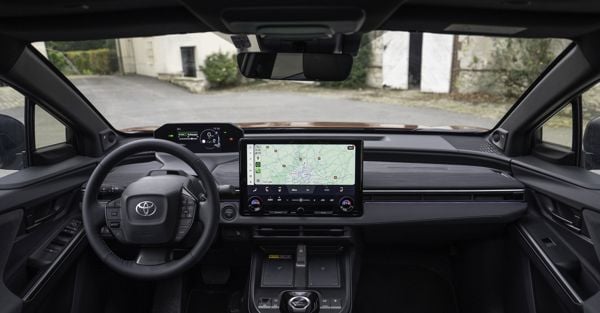
Toyota C-HR+: the new electric face of the Japanese brand
Based on the bZ4X platform, it offers up to 609 km WLTP range, optional all-wheel drive and very high aerodynamic efficiency

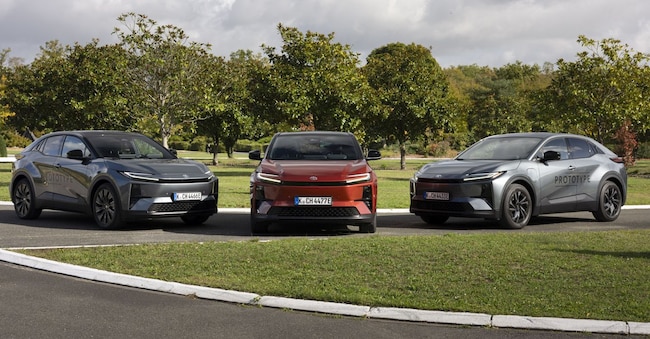
Toyota takes a decisive step towards electrification with the new C-HR+, a model that marks the Japanese manufacturer's concrete entry into the battery car market. While remaining faithful to the full hybrid philosophy, the Aichi-based manufacturer is opting for a more cautious but strategic approach to the electric transition. After the experiment with the bZ4X, now comes a more mature proposal aimed at a wider public.
The C-HR+ measures 4.52 metres in length and has a wheelbase of 2.75 metres, and is positioned exactly between the classic C-HR (4.36 metres) and the bZ4X (4.69 metres). The model is based on the Toyota bZ4X platform, adapted to offer an ideal balance between comfort, agility and performance.
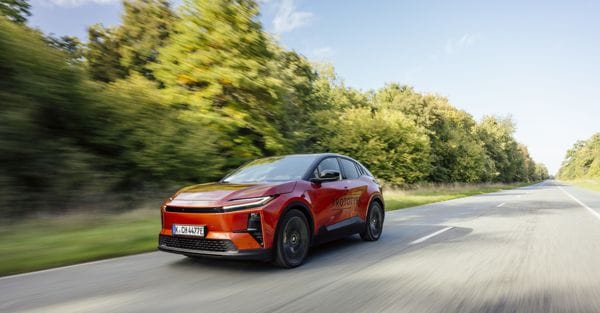
Two battery variants are on offer: a 57.7 kWh (54 kWh net) battery and a larger 77 kWh (74 kWh net) battery. The entry version, with front-wheel drive and a 123 kW (167 hp) motor, offers a range of up to 456 km WLTP. With the larger battery, also with front-wheel drive but with 165 kW (224 hp), the claimed maximum range is 609 km WLTP, one of the highest in its class. The more powerful variant, with all-wheel drive and two electric motors with a combined output of 252 kW (343 hp), accelerates from 0 to 100 km/h in 5.2 seconds and offers a range of up to 546 km WLTP.
Toyota emphasises that efficiency is the result of special aerodynamic care, with a Cx coefficient of 0.26, and the presence of the standard heat pump, which optimises thermal management even in cold weather conditions.
One of the distinguishing features of the C-HR+ is its ground clearance of 18.5 centimetres, which is higher than the average for electric cars. AC charging is up to 11 kW for front-wheel drive versions and 22 kW for the Premium AWD. DC charging, on the other hand, all support up to 150 kW. The battery can be pre-conditioned in three different ways: manually, automatically via the navigation system or by setting a specific charging time.