
Toyota doesn't stop, new engines for hybrids and e-fuel
Presented together with Mazda and Subaru. Objective: to decarbonise internal combustion engines by making them compatible with alternative energy sources

2' min read
2' min read
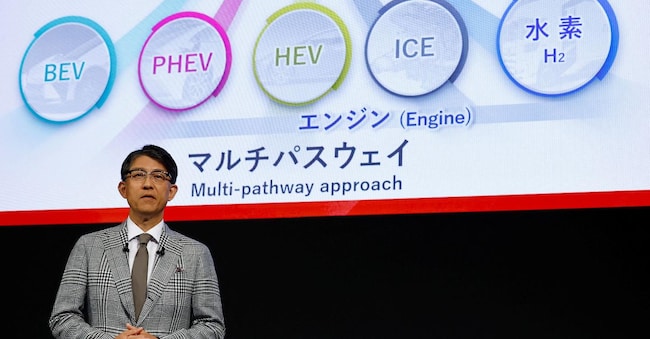
Toyota on Tuesday unveiled next-generation engines that can be used in hybrid and biofuel-powered cars. The aim is to meet stricter emission standards and reinforce the strategy of not just offering electric vehicles in the range.
During an event with Subaru and Mazda, the world's largest car manufacturer by volume showed 1.5-litre and 2-litre engines under development, with significantly reduced volume and height compared to current engines.
"With these engines, the three companies aim to optimise integration with electric motors, batteries and other electric drive units," the three manufacturers said in a joint statement. Toyota owns about a fifth of Subaru and about five per cent of Mazda. The three manufacturers said they intend to decarbonise internal combustion engines by making them compatible with alternative fuel sources such as e-fuel and biofuels.
Toyota by choice is lagging behind on electric vehicles, but the slowdown in demand this year has allowed it to benefit from increased sales of cars with hybrid engines, based on petrol-electric interaction. The renewal of its conventional engine technology in this context mirrors a similar move by Mercedes-Benz, while BYD is expected to unveil a new hybrid technology with lower fuel consumption soon.
The Japanese manufacturer said that the new 1.5-litre engine will achieve a volume and weight reduction of 10 per cent compared to the current 1.5-litre engines used in cars such as the compact Yaris. The new 2.0-litre turbo engine will have similar performance compared to the current 2.4-litre turbo engines used in larger models such as 6- or 7-seat SUVs. Chief technology officer Hiroki Nakajima did not disclose when Toyota will launch models equipped with these engines.


