
Tpl, Bologna and Bolzano lead the way in hydrogen bus fleets
By 2026 Tper will have 127 vehicles on the road in the capital of Bologna and 10 in Ferrara. South Tyrol's Sasa invests 30 million

4' min read
Key points
4' min read
South Tyrol and Emilia-Romagna are leading the energy transition in the tpl (local public transport) sector by investing in the development of hydrogen-powered bus fleets. Leading the change are the respective transport companies: Sasa (Bolzano) and Tper (Bologna and Ferrara). With almost 600 employees, 80 lines served and more than 15 million kilometres travelled each year, Sasa is now the leading bus operator in South Tyrol. For years the company has been committed to a path towards decarbonisation based on technological neutrality - from battery electric buses to hydrogen or hybrid drive (hydrogen/electric) buses - in order to respond effectively to the different operational needs of the urban, suburban and extra-urban services it provides.
The Solaris Case
.In 2013, Sasa was one of the first companies in Italy to invest in hydrogen technology, introducing five H2 buses into its fleet, thanks to the Chic (Clean hydrogen in European cities) project launched by the European Union. Since then, the company has progressively expanded its fleet, which today consists of around 400 vehicles (40 of which are zero-emission), and has built up an important wealth of technical expertise and relations with local and international partners. Specifically, the South Tyrolean public company owns a fleet of 17 hydrogen vehicles, which will soon become 25. In addition, Sasa plans investments of about EUR 30 million, partly financed with NRP funds, which include the expansion of the existing hydrogen refuelling station in Bolzano, the construction of a hydrogen refuelling station at the Merano depot and the hydrogen valley project (in association with Alperia) for the development of a hydrogen production site in Bolzano Sud.
The Tper case
.The ecological transition of its vehicle fleet is a path that Tper has been pursuing for some time. Tper, Emilia-Romagna's main public transport company, is controlled by the Region with 46.13 per cent of the shares and by the Municipality of Bologna with 30.11 per cent. Between now and 2030, the company has planned investments of more than 430 million euros in innovation and sustainable mobility: in addition to renewing the fleet with increasingly comfortable and green buses, there is also the constant development of infrastructure to support decarbonisation and the improvement of digital payment and infomobility systems.
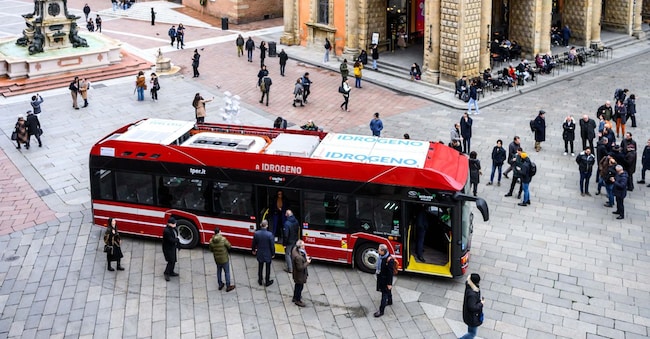
With the arrival last February of the first hydrogen-powered buses, also purchased with funds from the Pnrr, the range of eco-sustainable transport solutions that Tper is introducing in all areas of its service is expanding. By 2026, 127 hydrogen-powered buses will be running in Bologna and 10 in Ferrara. These vehicles, manufactured by the Solaris group, will also be present in other Italian cities: Venice, Modena, Mantua and Pescara. At Tper's request, the Solaris buses for Bologna and Ferrara will be supplied in two different configurations, the three-door and the two-door, suitable for use on urban and suburban lines respectively.
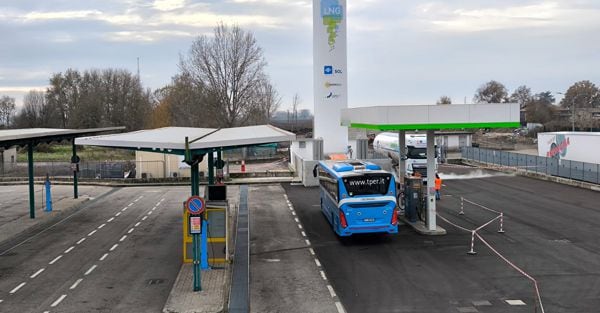
On the ecological side, the hydrogen bus is entirely zero-emission: by combining hydrogen and atmospheric oxygen in the presence of a catalyst, i.e. without thermal combustion, the fuel cell generates the electricity needed to drive an electric motor, producing water vapour as the only emission. On the production side, Solaris and Iveco Bus are the market leaders in Italy when it comes to the sale of zero-emission buses: together they will cover around one third of national demand in 2024.


