
Trade: how the EU and China are trying to revive dialogue
Meeting between Trade Commissioner Maros Šefčovič and Chinese Minister Wang Wentao; the parties aim to achieve ‘tangible results’ by October. In the first joint statement signed since 2019, four areas for cooperation were listed: trade and investment balance, export controls, intellectual property protection, and WTO reform
from our correspondent Beda Romano
 Aggiungi Il Sole 24 Ore
ai preferiti su Google
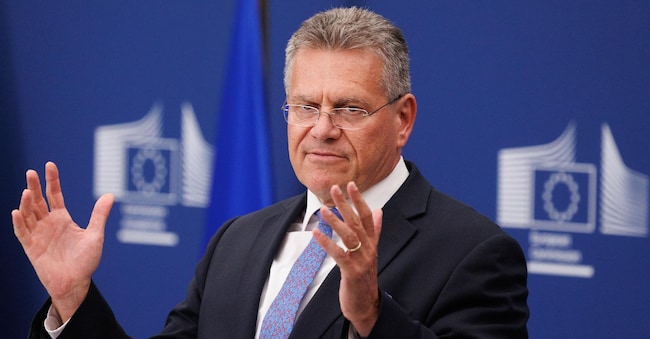
BRUSSELS – Ten days after the last EU summit, which focused on the serious trade tensions with China, Trade Commissioner Maros Šefčovič and his Chinese counterpart Wang Wentao met to revitalise bilateral relations. According to the European representative, the parties aim to achieve ‘tangible results’ by October by drawing up a roadmap that will enable them to tackle together the extraordinary economic imbalances between the European Union and the Asian giant.
During a break in talks with his Chinese counterpart here in Brussels, Commissioner Šefčovič described the discussions as ‘intense, focused and constructive’. The two political leaders agreed to sign a joint statement – the first since 2019 – in which they set out the four areas in which they wish to make progress: balanced trade and investment, export controls, the protection of intellectual property rights, and reform of the World Trade Organisation.
According to the Commissioner, the joint statement reveals “a new convergence” between Brussels and Beijing “on common challenges”. Technical discussions will take place in the coming weeks to draw up a roadmap. A further meeting between the two leaders is already scheduled for October in Beijing, Commissioner Šefčovič said. The parties have also agreed to establish “a joint monitoring mechanism” for trade flows. Should specific thresholds be exceeded, political negotiations would be triggered.
“Furthermore, both sides agreed that measures and initiatives aimed at improving market access could help to rebalance trade relations,” the statement continues. “The discussion focused on possible tariff and non-tariff measures.” This is significant because Brussels has long accused Beijing of unfair competition. At the same time, Commissioner Šefčovič welcomed China’s commitment not to jeopardise Europe’s supply of rare earths.
In recent years, China’s trade surplus with the European Union has grown significantly. In 2025, it stood at around 360 billion euros. These statistics are particularly worrying because they highlight a twofold trend. On the one hand, we are seeing a marked increase in Chinese exports to Europe (particularly in the automotive sector). On the other hand, Chinese imports from Europe have remained virtually stable.


