
Traditional TVs and platforms, the battle shifts to TV screens
With the approval of the new Guidelines on prominence, Agcom is taking action to ensure greater visibility for Services of General Interest and thus for Rai, Mediaset, La7 and other public and private broadcasters on the screens of connected devices

Key points
Whoever thought that the battle between incumbent broadcasters and digital platforms was only played out over content, can now have proof that there is another watershed: the first screen of connected TV. As of now, perhaps, the real battleground between the Ott and legacy TV. It is no longer a challenge over 'what we watch', but also over 'how we get to watch it'.
The access node
In fact, Agcom has approved 'the new Guidelines to guarantee the prominence of audiovisual and radio media services of general interest (SIG), which replace the previous Guidelines, adopted with Resolution No. 390/24/CONS in direct application of the provisions of Article 29, paragraphs 1 and 2, of the Consolidated Law on the Provision of Audiovisual Media Services'. At the heart of the wording explained in the Agcom statement is 'prominence': an English word that, in fact, translates all the tension - political, economic and cultural - of traditional television to regain, or at least defend, its place on the screens of smart TVs, box sets, dongles, car stereos and whatever else will be connected to the Internet, starting with the new models coming out.
The dispute between TV and Netflix & Co.
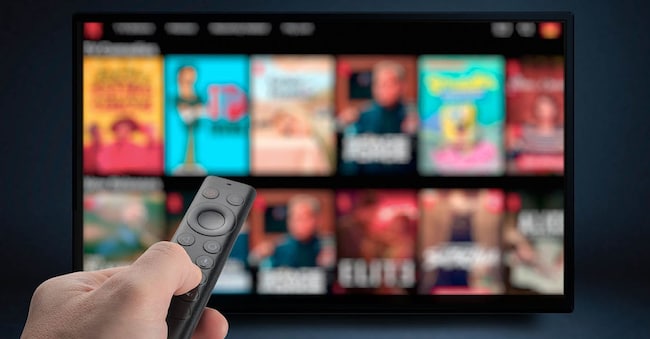
Behind the technical terminology, there is an issue that concerns anyone who turns on a television today: in a world where the remote control no longer has any numbers and the initial screens of smart TVs lead, with a quick glance and click, to Netflix, Amazon Prime or YouTube, where do Rai, Mediaset, La7 and all national and local radio stations end up? Agcom's indication is clear: traditional TV and services of general interest (the so-called SIGs) must be guaranteed a pre-eminent position and privileged access to the user interfaces of connected devices, because their business is concretely at risk from digital automatisms and the logic of apps that put platforms at the centre of the viewing experience, relegating generalist, public and historical information to the back of the queue.
Manufacturers one year to comply
Il provvedimento non arriva senza polemica: il voto contrario della commissaria Elisa Giomi e la lunga consultazione, caratterizzata dalle resistenze passate di produttori di dispositivi e giganti del digitale come Samsung e Google, attestano quanto il tema sia divisivo. A ogni modo, Agcom ha ridefinito ridefinisce le regole del gioco. Già a giugno è entrata in vigore la previsione della precedente delibera 390/24/CONS con l’obbligo di inserire nella schermata iniziale delle smart Tv l’icona della Tv digitale terrestre. A valle della nuova delibera approvata due giorni fa da Agcom - e dopo 12 mesi dalla pubblicazione e dunque presumibilmente nel 2027 essendo la pubblicazione prevista con ogni probabilità con il nuovo anno - i produttori di device e delle smart Tv dovranno adeguarsi e nella home page delle smart tv dovranno apparire, oltre all’icona blu che richiama il digitale terrestre, le app dei cinque principali broadcaster italiani (Rai, Rti Mediaset, La7, Sky Italia, Warner Bros Discovery Itali
Not only TV: the novelty also extends to car radios and car infotainment systems, with the inclusion of all analogue and digital broadcast radio services, from the canonical FM and AM to DAB, recognised as a public and universal service, essential even in emergency situations. The measures will be compulsory for new devices, leaving freedom of customisation for display modes, in line with the European regulation on media freedom. For devices already purchased, an automatic update will instead be triggered, which will be the responsibility of the device manufacturer or software provider.


