
Paths of emotion on the slopes of Vesuvius
For centuries a source of awe and wonder, home to unspoilt nature, villas and castles, scientific observatories and archaeological remains
4' min read
4' min read
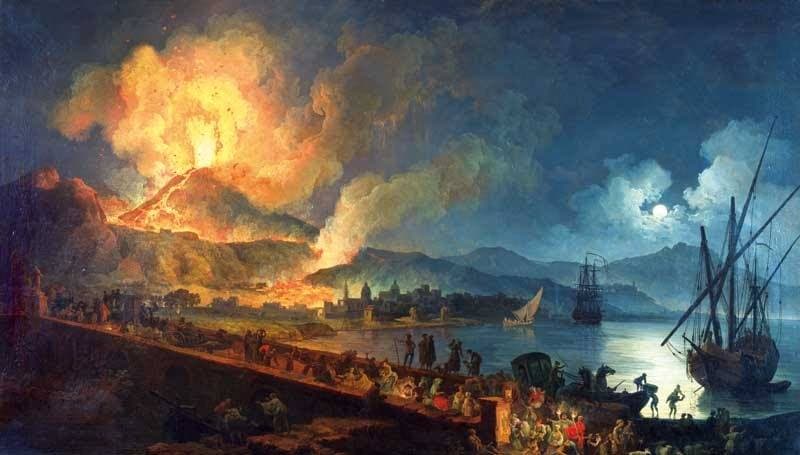
"The cloud was rising, we did not know for sure from which mountain, since we were looking from afar; only later did we learn that the mountain was Vesuvius... As if from an enormous trunk the cloud soared into the sky and expanded and almost put out branches. I think, because at first a vigorous breath of air, intact, pushed it up, then diminished it abounded to itself...': these sentences are taken from the first written document dedicated to the Neapolitan volcano, signed by Pliny the Younger, who in a letter to Tacitus describes the terrible eruption of 79, nicknamed 'Plinian' precisely because his naturalist and philosopher uncle, Pliny the Elder, lost his way and the cities of Pompeii, Herculaneum and Stabia were destroyed.
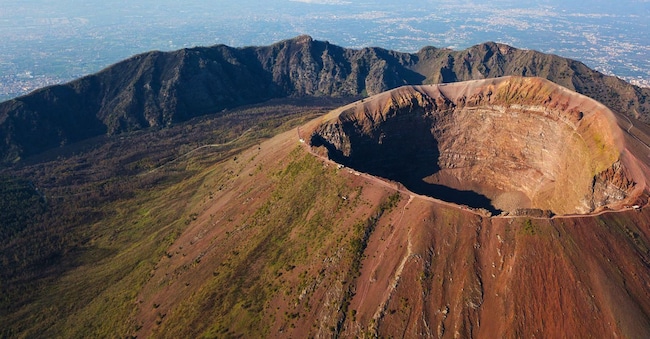
The ascent to this truncated cone-shaped totem of nature, whose summit stands at an altitude of 1,277 metres, while the crater currently boasts a diameter of 450 metres and a depth of 300 metres, can only be literary before being physical: writers have always been willing to take risks to get a closer look at its mouth, whether silent or smoking, in order to draw 'fire' for the purposes of their reports. Goethe even climbed it three times, finding himself walking under a shower of lapilli: 'Having reached Resina by carriage, I began the ascent among the vineyards on the back of a mule,' he wrote in his Viaggio in Italia, 'I continued on foot over the lava of '71, already covered with fine but tenacious moss, and proceeded along the side of the flow. I left the hermit's hut to my left, high above, and finally climbed, a truly improbable effort, the cone of ash. The summit was two-thirds below the clouds'. Giacomo Leopardi, too, loved this icon of the South, and condensed its mischievous and extraordinary essence in the incipit of La Ginestra, o fiore del Deserto: "Qui su l'arida schiena Del formidabil monte Sterminator Vesevo, La qual null'altro allegra arbor nè fiore, Tuoi cespi solitari intorno spargi, Odorata ginestra...". Impressive, vivid, is also the description given by Curzio Malaparte in La pelle (The Skin): 'And there, in front of us, all wrapped up in its purple cloak, Vesuvius appeared to us. That spectral, dog-headed Caesar, seated on his throne of lava and ash, smashed the sky with his forehead crowned with flames, and barked horribly... The shaft of fire that emerged from his throat sank deep into the celestial vault, disappeared into the supernal abysses'.
In the Valley of the Giant
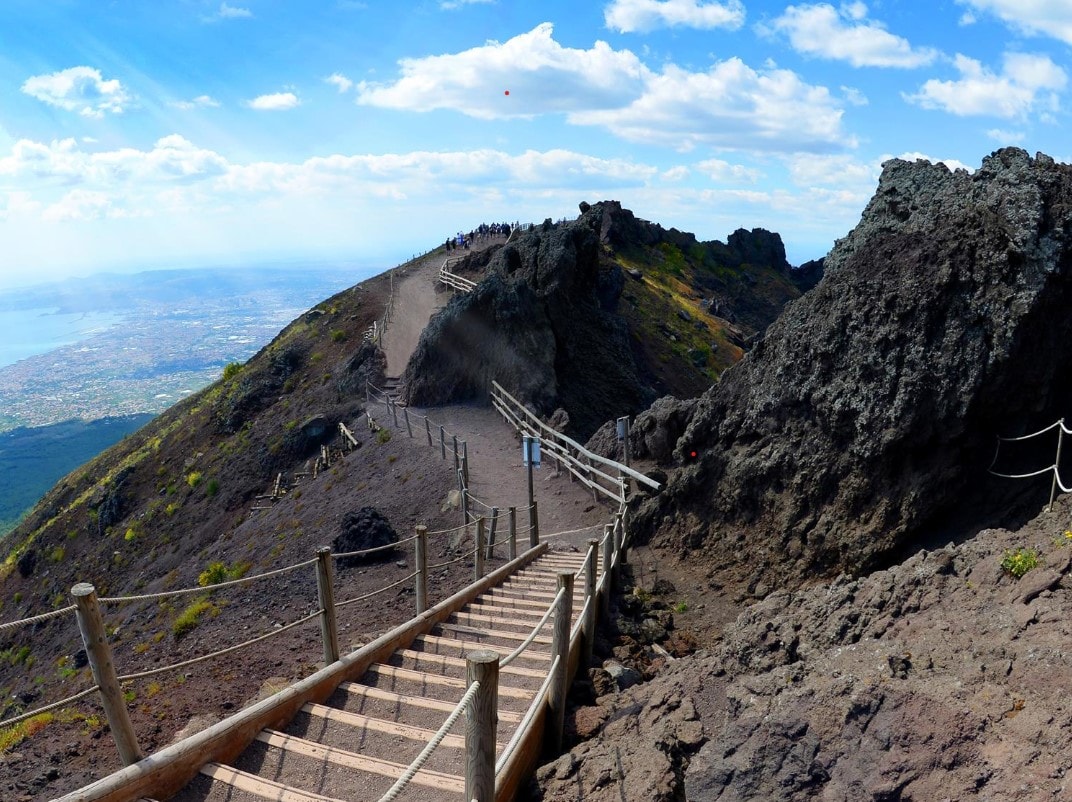
.Literature in hand, you are truly ready to face the scenic pathos of the Valle del Gigante where the volcano is embedded, divided between the Valle dell'Inferno and the Atrio del Cavallo, the spectacle of the undulating, rugged slopes, the deep furrows and radial valleys sculpted by erosion, all the way to the vertiginous walls of the cone that plunge steeply into the mysterious belly of the crater. This slow and exciting approach trek takes place in the safety of the paths prepared by the Vesuvius National Park, eleven for a total of 54 kilometres, enjoying an unparalleled visual perspective: advancing on the Gran Cono path, in particular, means embracing the whole of Campania with a single glance, as far as Lazio. Path number 2 is also suggestive from a botanical point of view, but not only: starting from the Palazzo Mediceo di Ottaviano, one enters a dense thicket of pines, chestnuts, Neapolitan alders, holm oaks, locust trees, observing the tiny lesser spotted woodpecker. When you reach the junction with other ascending paths carpeted with flowering broom and drystone walls from the Bourbon era, you take continuous turns overlooking the thirteen Vesuvian towns. Among them, we reach Boscoreale for its Antiquarium, in which the daily life of the area's inhabitants before the eruption of '79 is witnessed, with archaeological finds from Roman patrician villas, while in Ottaviano we reach the castle rebuilt in 1567 by Bernardetto de' Medici and visit the sanctuary of San Michele Arcangelo, where people have always prayed to appease Vesuvius. Instead, in Sant'Anastasia one goes to see the copper smiths, especially to the forge of the Porritiello family that has been forging beautiful and eternal pots for almost a century.
Events not to be missed
.Fear up here has also been exorcised with music, and so the coming summer will offer an opportunity to attend performances of tammurriate, fronne 'e limone, canti 'a figliola, expressions of music from the oral tradition held, for example, at the Festival of the Four Altars, in Torre del Greco in June, and at the Festival of the Lucerne in Borgo Casamale: here in the autumn you can taste the Catalanesca del Vesuvio, a grape variety brought to Naples by Alfonso I of Aragon in the 15th century. Also sublime is the Pomodorino del Piennolo del Vesuvio, a PDO quality that encompasses ancient cultivars and local biotypes, which can enhance local cuisine at the traditional La Casa Rossa in Ercolano or by the creative young chef Giuseppe Molaro at his Michelin-starred Contaminazioni.
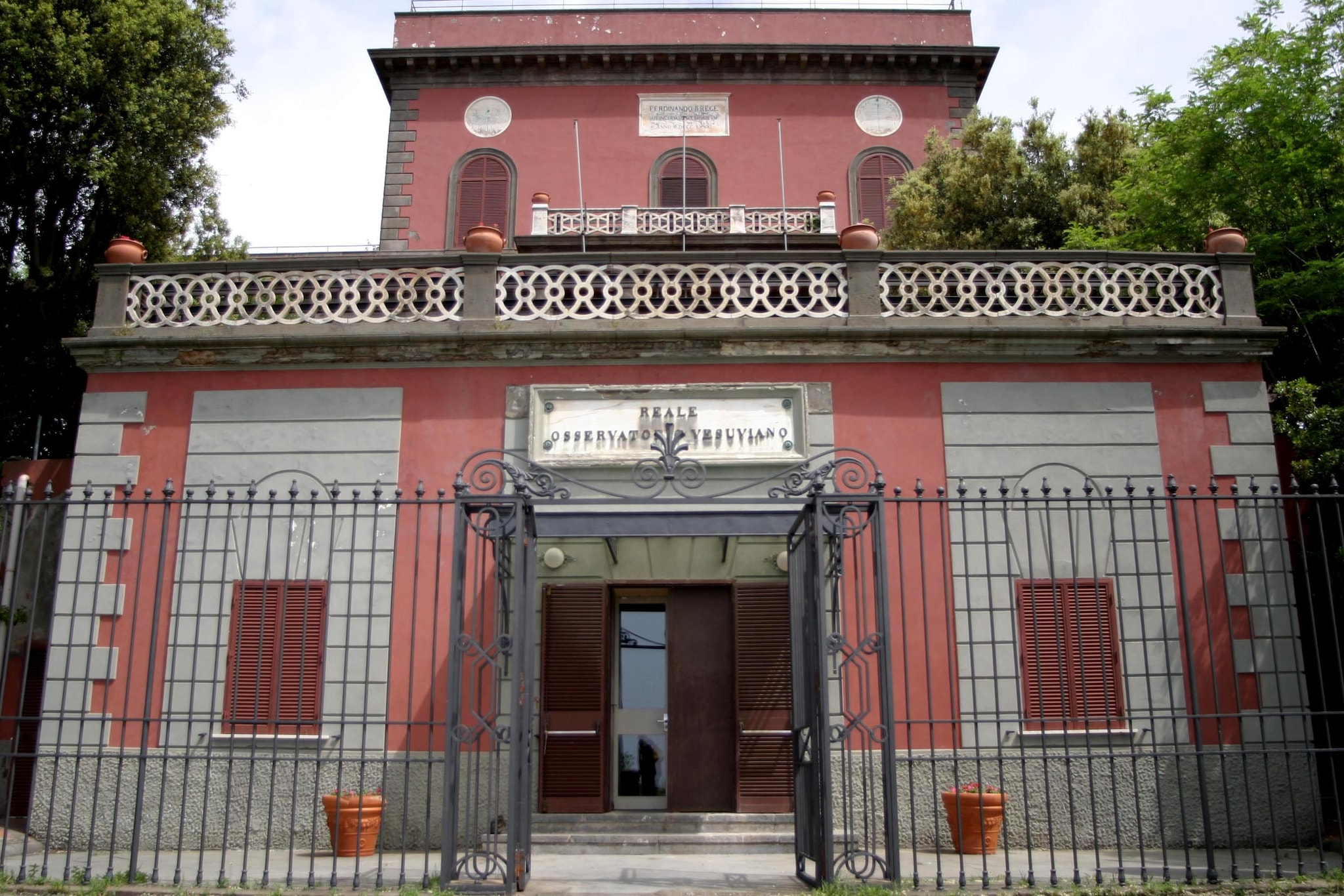
Getting away from the magnetism and syncretism of the volcano will be difficult: better to watch it once again in the elegant, historic neoclassical building of the Vesuvius Observatory, above the Colle del Salvatore in Herculaneum, which looks a bit like a temple dedicated to the volcano.

