
Trains, Intercity tender with three lots: trade unions on the warpath
Filt Cgil, Fit Cisl, Uiltrasporti, Ugl Ferrovieri, Fast Confsal and Orsa Ferrovie sent a joint note calling for a single lot. The MIT had presented the report in recent days: it guarantees maximum competition
by Rome Editorial Staff
 Aggiungi Il Sole 24 Ore
ai preferiti su Google
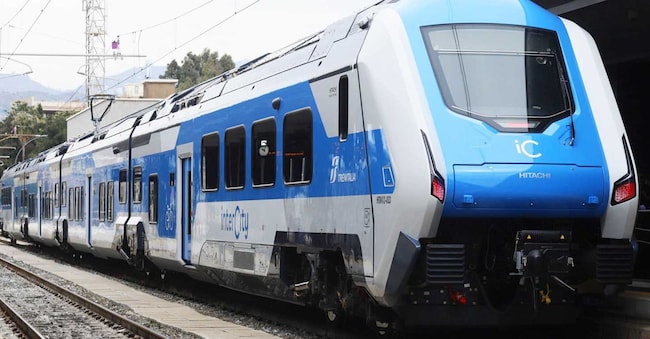
"Employment and contractual repercussions" but also "legitimate concerns of female and male workers about an uncertain future". The trade unions Filt Cgil, Fit Cisl, Uiltrasporti, Ugl Ferrovieri, Fast Confsal and Orsa Ferrovie sent a joint note on 5 May to stigmatise the 'report presented by the Ministry of Infrastructure on 24 April 2026' on the three-lot tender for Intercity trains and 'call for its immediate revision' with 'a single-lot tender'.
The tender for the Intercity service
In the crosshairs is the 'Report on the tender lots', the dossier with which the Ministry of Infrastructure, together with Invitalia, has built the architecture of the future tender for the awarding of Intercity services, scheduled by June and intended to cover a fifteen-year horizon. More than one hundred pages have already been sent to the Transport Regulatory Authority for its opinion.The approach chosen by the MIT goes in the opposite direction to that advocated by the unions: maximum openness to the market and service unbundled into three non-equivalent lots, with the declared objective of stimulating competition "in favour of quality and efficiency". Four scenarios were analysed, from the single lot to the more open model: the choice fell on the latter.
The protest
The demand is clear: 'Provide for a single-lot tender'. And the warning is equally explicit: 'In the absence of changes, all necessary initiatives, including public demonstrations, will be put in place in the coming days'. On the table, the unions explain, is the risk that 'the fragmentation of the service' will compromise 'an essential infrastructure for territorial cohesion', with effects on quality, investment and economies of scale. On the employment front, then, the division 'could favour contractual dumping phenomena', hence the request to make the application of the Ccnl Mobility-Railway Activities binding throughout the chain.
The three lots
Three perimeters have been drawn. The first, the heaviest, includes Milan-Liguria, Sicily-Milan, Sicily-Rome and the Tyrrhenian routes, with 64 connections and about 12.9 million train-kilometres. The second covers the Adriatica and the Naples-Puglia and Rome-Puglia axes, with 36 connections and 8.5 million train-kilometres. The third, more contained, covers Ancona-Rome and the Dorsale, with 26 connections and 4.9 million train-kilometres. The ball is now in the hands of the Transport Regulatory Authority, which will have to submit its opinion.

