
Dynamic pricing on Frecce from 2026: how to save money by planning your journey
High-speed rail marries dynamic pricing: lower fares if you buy in advance, stop a fixed quota of discounted tickets

Key points
From 1 January 2026, Italy's High Speed will change its skin. After a test phase, on the Frecce of Trenitalia dynamic pricing, a model that links the ticket price to the demand trend, will come into effect. In other words, the train starts to behave like an aeroplane and adopts its pricing flexibility. At stake is not only the question of discounts and offers, but precisely a structural change in the way the price of travel is formed.
The principle: time matters
The mechanism, it works on the anticipation of the reservation. The earlier one buys the ticket, the less one is likely to pay for it. Conversely, as the departure gets closer, and if demand increases, the price goes up. It is not an automatic system, but operates according to how many people are looking for that train, on that day, at that time. Result? The price stops being a 'given' figure and becomes a variable.
Addio fixed discount quotas
Until now, the system was based on a predetermined number of reduced-price tickets, linked to the different commercial fares. It mattered little whether one travelled on a Tuesday or Friday, at seven in the morning or late afternoon: the percentages remained the same. As of 1 January 2026, this is no longer the case and supply has adapted to demand. If a train fills up quickly, the lowest fares are reduced; if it remains empty, the discounts increase. The industrial objective is clear: to increase the fill rate by using fare leverage. And thus shift some travellers to less popular days and times of day, reducing empty seats and better distributing demand throughout the week. This makes it easier to find low prices on trains on Tuesdays or at off-peak times, while Fridays and peak departures tend to cost more.
Restricted perimeter
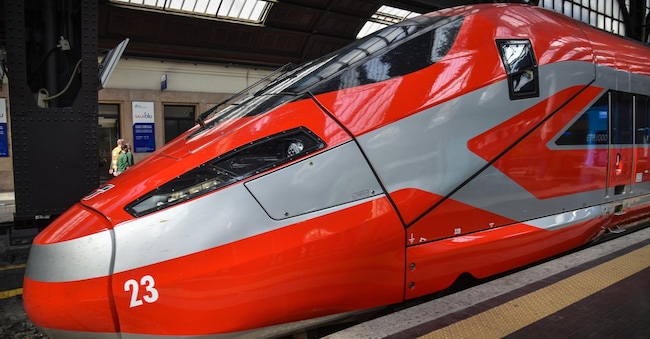
The new dynamic pricing system does not apply to the entire railway perimeter. Intercity and regional trains, which continue to follow different logic because they are supported by public subsidies, remain outside. The new model only applies to Frecce and thus to the part of the trains that lives off the pure market. The price changes are determined by software, similar to those used in air transport. But it is not a system left to itself. The indications of the algorithm are filtered and managed by the marketing department, which decides how to modulate the fares and with what limits.
The price cap node
It is precisely on the limits that a delicate game is played. The Ferrovie dello Stato group assures that there are maximum limits, designed to avoid uncontrolled surges during periods of very high demand, such as holidays or summer. To counterbalance this, there is also competition. Today limited to a few operators, but potentially destined to expand, also with the entry of foreign players such as Sncf. A factor that contributes to keeping price levels under control. So what ultimately changes for travellers? The message is clear: planning ahead is becoming increasingly convenient. From 2026, even on the railways, the bargain will be snatched away by planning ahead.

