
Transformers: no to tariffs on electrical steel
Producers sound the alarm: production in Europe is insufficient, so we risk being forced out of the market
by Luca Orlando
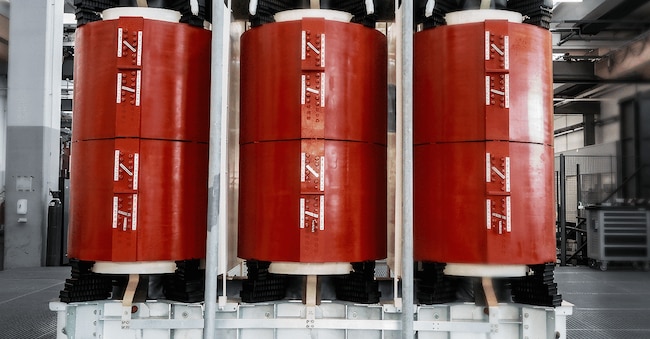
‘The Chinese are already there, ready at customs; they’re just waiting for that.’
Cristiano Palladini, CEO of TMC – a company with a turnover of 200 million euros and 550 employees, and one of Italy’s leading transformer manufacturers – paints a bleak picture.Together with other companies, as well as Italian and European associations, he is trying to counter the introduction of tariffs on imported electrical steel. While the leading European producer of this material, the giant Thyssenkrupp, is advocating for these protective measures, the downstream sector, which uses it to manufacture its own products, fears the risk of being forced out of the market. ‘Current consumption of this material – explains the entrepreneur – is now far higher than European production, and transformer manufacturers are therefore forced to buy from elsewhere as well. And if tariffs were to be imposed on the material and semi-finished products, our competitive edge against foreign products would be seriously jeopardised.”Rising imports from abroad are, moreover, clearly evident in the baseline figures of the Brussels analysis, which indicates that import volumes have more than doubled over the last four years, from 120,000 to 250,000 tonnes. A natural consequence, explain the transformer manufacturers, of growing demand driven by the electrification of the economy, against a backdrop of largely inadequate continental production. Meanwhile, Thyssenkrupp, citing precisely this pressure from imports, temporarily suspended production at two of its French sites at the end of last year. The transformer sector is a broad industry, estimated to employ 150,000 people in Europe, with a turnover of 11 billion, a sector in which Italia holds a significant position, accounting for 20% of total production. This sector has been experiencing strong growth for years, in step with the drive towards electrification sweeping across Europe, a shift that requires an increasingly widespread use of distribution and transformation technologies. ‘Electrical steel accounts for an average of 30% of a transformer’s production costs,’ explains Palladini, ‘and if the rumoured 50% tariffs were to be confirmed, our companies would find themselves caught off guard, facing cost increases in the region of 10–20%.”
This initiative is also being pursued on a broader scale vis-à-vis Brussels through the T&D Europe association (Transmission and Distribution, the suppliers of energy network technologies), which brings together 650 companies, 450 factories and 200,000 employees.“A clear, shared position,” explains Marco Vecchio, secretary of Anie Energia, “because the grounds for these tariffs are entirely questionable. Thyssenkrupp, which has for years enjoyed protection linked to the introduction of a minimum import price in Europe, has not increased its production in any way in recent years, and our estimates suggest that the market is short of over 200,000 tonnes a year – volumes that companies clearly have to purchase from outside Europe. That is why we are calling for these tariffs not to be imposed. Alternatively, we would ask that they also be applied to finished products, which would otherwise enter Europe on significantly more favourable terms.”
The process, which began on 27 March with the announcement of the launch of an investigation into possible safeguard measures, is still ongoing, and although informal indications suggest these measures could be introduced as early as July, in reality, the Commission is still conducting a series of visits to companies operating in the sector to assess the situation on the ground. “We must bear in mind,” summarises Palladini, “that as Europe shifts towards electrification, transformers become a strategic asset, crucial for development and the energy transition: do we want to hand this sector over to China as well?”


