
Transparency in new university recruitment processes: ANAC is also involved
Minister Anna Maria Bernini and Authority President Busia have signed a two-year agreement to implement the recruitment reform

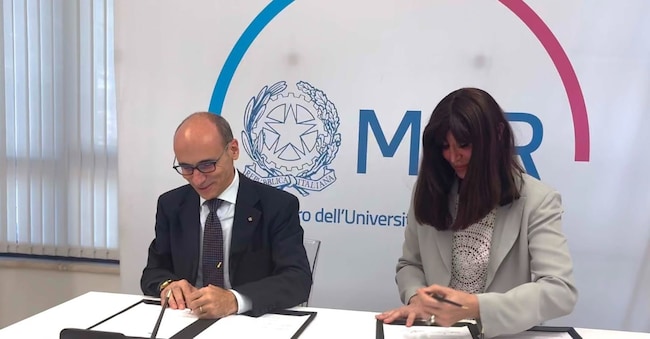
To support the reform of university admissions, by preventing corruption and promoting transparency, the Anti-Corruption Authority is also stepping in. This follows a two-year memorandum of understanding signed yesterday by the Minister for Universities and Research, Anna Maria Bernini, and the President of ANAC, Giuseppe Busìa, concerning the implementation of the university recruitment reform set out in Law 129/2026.
The agreement
The collaboration will focus in particular on drawing up the principles and general guidelines for the ministerial decrees implementing the reform which has superseded the National Scientific Qualification (ASN) system. These guidelines and principles will define the requirements regarding academic output and scientific qualifications for entry into university selection procedures, the criteria for inclusion on the national lists of examiners, the grounds for exclusion, and the procedures for the random selection of examination boards, in accordance with the principles of openness and transparency.
Common objectives
“With the reform of university admissions,” explained Bernini, “we have established a system based on clear national rules, higher standards of selection and greater accountability for universities. The agreement with ANAC is a key element of this process: autonomy must always go hand in hand with transparency, integrity and the prevention of conflicts of interest. ‘We are working,’ he added, ‘to offer researchers and lecturers procedures that are increasingly credible, impartial and merit-based, thereby strengthening trust in university institutions and ensuring that quality remains the guiding principle of recruitment.’
For his part, Busia emphasised that ‘to prevent the risk of favouritism in university recruitment, we need transparency in calls for applications, objective assessment criteria and selection panels chosen in such a way as to avoid conflicts of interest’. “Through this protocol,” he continued, “we are supporting the Ministry of Universities and Research in this drive for transparency and prevention, reinforcing what has already been set out in the Three-Year Corruption Prevention Plan.” To overcome the influence of university power brokers and tailor-made calls for applications,” highlighted the president of ANAC, “we need truly open selection processes and clear criteria regarding research outcomes and publications, putting an end to all behaviour that undermines the credibility of the committees’ assessments. We must ensure full accountability and avoid conflicts of interest so that those responsible for selection assess teaching and research abilities objectively, rather than the candidate’s proximity to them.”
The hurdles facing universities
The agreement also provides for the development of tools to help define the anti-corruption and transparency measures that universities will be required to adopt in their Integrated Activity and Organisation Plans (PIAO).

Brand connect


Newsletter Scuola+
La newsletter premium dedicata al mondo della scuola con approfondimenti normativi, analisi e guide operative
Abbonati