
Transport: with the high-speed Koralm-Bahn Carinthia becomes Europe's new logistics hub

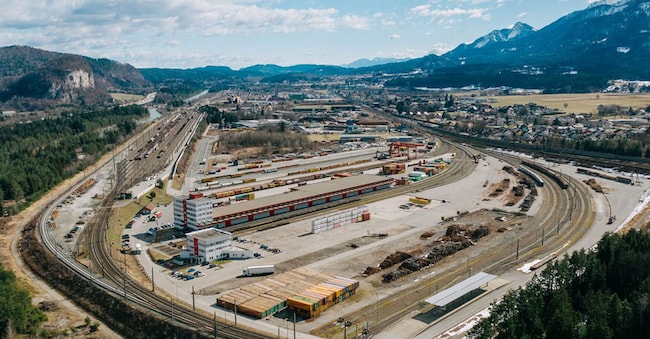
The future of Europe runs at 250 km/h between the Styrian Alps and the Carinthian lakes. This is where a new economic and logistical axis is taking shape that is destined to change the course of the competitiveness of the Old Continent.
With the commissioning of the new Koralm high-speed railway line, Austria is redesigning its economic geography and Carinthia is bidding to become one of the most important logistical hubs in Central Europe.
A six billion euro infrastructure, 130 kilometres long and with 50 kilometres of tunnels, directly and quickly connects Graz and Klagenfurt, cutting journey times from three hours to 45 minutes.
From 14 December next, the route will also be open to passenger and freight traffic, while from March 2026 the WESTbahn company will introduce its 250 km/h trainsets between Vienna and Villach, completing the high-speed connection in the south of the country. A change that goes far beyond mobility: the new line represents the missing piece of the Baltic-Adriatic corridor, a strategic axis connecting Poland, Austria and Italy.
An economic engine for the Alps-Adriatic region
The project marks the birth of an economic macro-region uniting Styria and Carinthia, an area with 1.8 million inhabitants and 770,000 employees. A metropolitan area that is the second largest in Austria and is destined to become an engine of industrial and logistical development in the heart of Europe.
According to the Carinthian regional government, the Koralm-Bahn will make it possible to transfer an increasing share of freight traffic from road to rail, with an estimated saving of 60,000 tonnes of CO₂ per year. It is also a step towards the economic and environmental integration of the Alps-Adriatic area, with direct benefits for north-eastern Italy. In fact, the railway in particular strengthens the connections between the Upper Adriatic ports and central European markets, with a potential increase in intermodal traffic and a reduction in logistics costs. The new line is in fact designed to integrate the different modes of transport, favouring the shift of goods to rail and supporting the transition towards low-emission logistics. In this scenario, the railway infrastructure becomes a flywheel for sustainable development, capable of making the Austrian region more attractive for companies and investors, in its new role as gateway to the markets of Northern Europe.
Fürnitz, the new logistics platform of Southern Austria
One of the biggest beneficiaries of the new arrangement will be the intermodal terminal in Fürnitz, already a strategic node of the Baltic-Adriatic corridor. The Logistik Center Austria Süd is preparing for an expansion plan with new areas for advanced logistics, packaging services, light assembly and goods consolidation. Objective: to strengthen the value chain in Carinthia and to attract productive investments. Moreover, by 2029, the completion of the second tube of the Karavanke tunnel - the motorway and rail link between Austria and Slovenia - will further improve the resilience of goods flows and the multimodal connection to the Adriatic and Balkan ports.
Manufacturing and green economy
The increased accessibility and reduced timeframes will also favour the establishment of manufacturing and high-tech companies, attracted by a region that combines modern infrastructure, innovation policies and high quality of life. Carinthia, already one of Austria's most dynamic poles in the field of environmental technology and microelectronics, aims to strengthen its role as a laboratory of green economy and intelligent logistics, balancing competitiveness and sustainability. The new Koralm-Bahn is not just a cutting-edge engineering project, but a symbol of a Europe that is investing again in physical connections and economic cooperation, focusing on modern infrastructure, quality of life and policies to attract entrepreneurs. In the mosaic of corridors connecting the Baltic to the Adriatic, Carinthia is ready to play the leading role, strengthening its role as a bridge region between the Mediterranean and Central Europe.

