
Travel retail, slower recovery. High price effect on spending

3' min read
3' min read
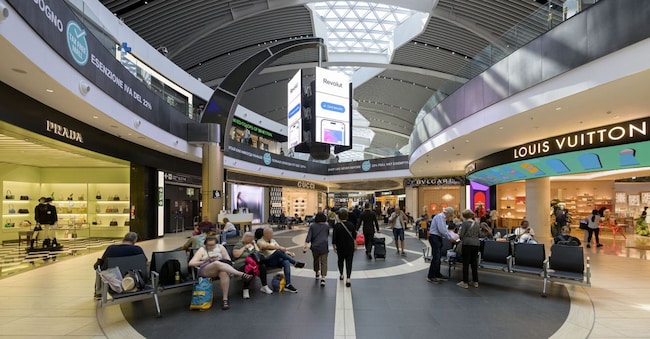
While airports are preparing for the peak of passengers for the Christmas festivities with operations that have almost recovered to pre-pandemic levels - the US has just opened the dances in these days: 80 million air transport passengers are expected for Thanksgiving - travel retail, on the other hand, has not yet touched pre-Cvid spending volumes. There are several reasons for this: the still slow recovery of Chinese travel, the vertiginous increase in prices that has been recorded even in the Duty Free spaces, making them less competitive than some players, even online, who in the post-Covid years pushed sales with significant discounts. And then the buying habits that make shopping on the move sometimes obsolete in the eyes of those accustomed to a multi-channel approach often not guaranteed by travel retail.
The weight of prices sinks beauty spending
.According to an analysis by consultancy Kearney for the Tax Free World Association on Iata and Generation Research data, between 2019 and 2023, the global travel retail market lost $9 billion in value, dropping from $86 billion to $72 billion and registering a -16% decline. A similar decline (-15%) was recorded in average spend per passenger. Among the categories, there was a -31% drop, from 38 billion to 26 billion, in purchases of perfumes and beauty products - which, however, remain in the lead among the favourite categories of shoppers, with fashion in third place - and wines and spirits (-14%). "The categories that have shown the biggest drop in purchases," comments Marina Catino, partner at Kearney, head of Strategic Operations and Beauty for Italy and one of the authors of the survey, "are fragrances and cosmetics and wines and spirits: in general, the problem concerns the most discretionary goods. Fashion and accessories proved more resilient, regardless of whether they are affordable or luxury goods'.
Travel retail key to luxury sales
.Precisely for luxury personal goods - whose sales in 2024 experienced a slowdown - travel retail seems to be the sales channel with the highest potential, despite the negative signal coming from the forthcoming closure of the Fondaco dei Tedeschi in Venice, which belongs to Dfs, the travel retail company of the Lvmh group: according to the Altagamma Monitor Bain between 2023 and 2024 has kept its share of sales in the luxury market constant (4% of EUR 363 billion) but in 2030 it could reach 4-6% of a luxury personal goods market estimated at between EUR 460 and 500 billion, or fluctuate between EUR 18 billion and EUR 30 billion depending on the performance of the high-end. Returning to travel retail as a whole, Kearney's research shows how the issue of prices weighs heavily on "missed purchases": it is a deterrent in 36% of cases for those who have not bought clothing and accessories, in 38% of cases for beauty and fragrances and in 47% of cases for watches and jewellery. "The new generations pay much more attention to price," continues Catino, "and the convenience factor has disappeared: outside the travel retail areas it is now possible to find discounted products, a wide range of offers and personalised shopping.
Europe, spending grows in value: +6.5% over 2019
Narrowing the focus on Europe, which in the post-Covid years has been a primary travel destination, although it has not fully recovered traffic from Asia, the travel retail situation is better: according to the Atri Observatory's European estimates, travel retail has grown by 11% in value compared to the same period in 2023 and by 6.5% compared to 2019. "The market remains dynamic, even if, above all on the 2019 numbers, inflation has an impact," explains Stefano Gardini, president of the Italian Travel Retail Association (Atri). At the Italian and European level, we see a desire among passengers to seek out both luxury brands and lesser-known brands that offer a special shopping experience'. According to Gardini, one of the main values around which the shopping experience revolves is 'people: products are increasingly sold through the relationship established between sales assistant and passenger'. Travel retail, which according to Atri worldwide will touch 117 billion in value in 2030, in Italy has also benefited from the lowering of the tax free shopping threshold introduced in February 2024: 'It has brought many benefits on sales of fashion, beauty, jewellery and watches. Now we are waiting for duty free on arrival, a measure that would have an important impact at European level'.

