
Two-temperature journeys: seven seaside destinations with opposite weather choices
An atoll in the middle of the blue or a fort on the English Channel, the Pacific reef or the Baltic beaches. At both ends of the thermal scale, from the Cook Islands to the Azores.
6' min read
6' min read
According to the latest report of the European Travel Commission, climatic events will continue to change travellers' habits throughout 2025. A pleasant average temperature is among the first criteria used when choosing a destination (17 per cent of bookers), exactly on a par with the attractiveness of a place. A distinction that until recently was not contemplated in the travel planning phase, but now - thanks to ever higher average temperatures from June to September - is breaking through in the choice phase. Warm seas, cold seas: two different approaches to the same theme, only the perspective changes. The search, in any case, remains on unconventional destinations, experiencing places far from the usual routes. So here is a selection of destinations at opposite ends of the temperature scale, from Europe to the Caribbean, in the heart of the Pacific Ocean or in the middle of the English Channel.
It is just between Portsmouth Harbor and the Isle of Wight that sits a former Victorian fort, built of granite in 1878 with six-metre thick walls, to protect England from the invasions of Napoleon III's armoured ships. The Spitbank Fort, once an impregnable garrison, is now a hotel/island with nine suites and a variety of restaurants, bars, spa and thermal pool. A World Heritage Site, with a 360-degree view of the English Channel, from here the feeling is of watching over the whole of England and its seas. Reaching it is already a journey: fly from Portsmouth International Airport - where the welcome in the Royal Clarence Departure Lounge is a concentrate of luxury experience -, board a small aircraft for a short transfer, or take a private helicopter that lands directly on top of the fort. The suggestion is to make a stop, either on the outward or return journey, in Portsmouth, to climb to the top of the 170-metre Spinnaker Tower, visit the Portsmouth Historic Dockyard and take a stroll along Southsea Beach.
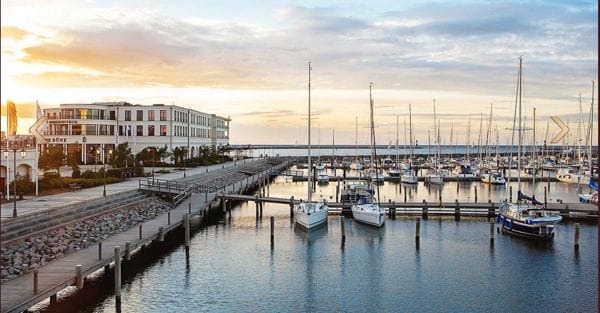
Crossing the English Channel and moving to the continental coast, another destination for those who don't like the heat is in that part of Germany that faces the Baltic. Warnemünde is the furthest point of the city of Rostock, lying on the estuary of the Lower Warnow, with a shoreline dotted with Belle Époque-style villas and fishermen's half-timbered houses converted into boutique hotels. Walking along the town's promenade, Alter Strom, one arrives at the beach, which is organised with king-size sunbeds with raffia covers to find shelter from the wind blowing over the dunes at the foot of the lighthouse, not far from the house where Edvard Munch lived in the early 20th century. As luxury houseboats spread out, the suites of the Yachthafenresidenz Hohe Düne hotel overlook the sea, while in the indoor spa, with views of the yacht marina and the waves, Thai treatments and massages are reserved. On the rooftop you can dine at Der Butt, chef André Münch's Michelin-starred restaurant: not to be missed are the prawns with peas, passion fruit and cashew nuts and the artichoke turbot with mango and citrus fruits, which they pair with a Gelber Muskateller Ried Steinbach Fürst 2020, from the Austrian Tement company.
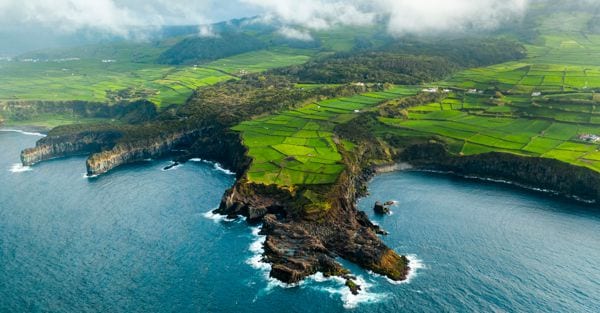
For a wilder experience, another unconventional destination is São Miguel, in the Azores archipelago. Here, the day begins - at least for the more daring - with a dip in the icy waters of the small bay of Praia do Pópulo, in Ponta Delgada. Then it's off by boat to spot whales and dolphins, to the volcanic islet of Vila Franca do Campo with its placid lagoon, 500 metres from the coast. A few kilometres west of São Miguel, an easy trek reaches the paradise of the twin lakes Sete Cidades, also of volcanic origin. From the Miradouro, the Grota do Inferno extends: now the dormant craters are like natural pools surrounded by hydrangeas. On the island, one stays in the privacy of the countryside at the SENSI Azores Nature and Spa, a farmhouse that has retained its ancient soul, including villas and suites with private pools and patios overlooking the ocean. Dinner is at the MôMô Restaurant, which uses organic and permaculture-inspired ingredients sourced from local suppliers.
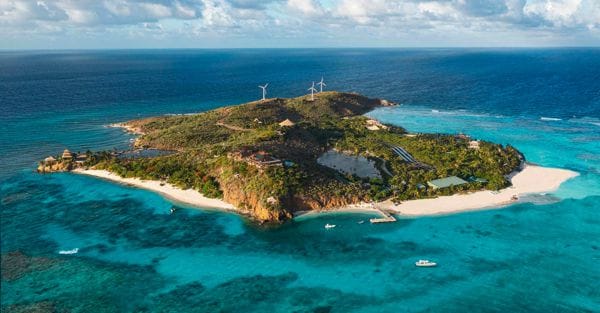
Change of scenery and temperature. Those who love the summer for sunshine and long baths can reach beyond the Mediterranean to destinations of discovery. A British Overseas Territory owned by entrepreneur Sir Richard Branson, the 30-hectare Necker Island is an oasis of tranquillity in the Caribbean, fringed by coral reefs and white sandy beaches. It can only be reached by landing at one of the nearby airports by private jet and a short boat or helicopter ride. Here, it is possible to reserve a Balinese-style suite with a dedicated 24-hour butler, but it is also possible to book the entire island. During their stay, the 48 guests (the maximum capacity, plus 6 places for children) have access to spa treatments, participate in safaris, or sign up for the annual exclusive Necker Cup tennis tournament, hosted by Branson himself, where some of the legends of racquetball participate.

