Environment

Trees and food: when reforestation saves lives

This is taking place in Burkina Faso thanks to a project by Wownature and Etifor (University of Padua): 9,500 trees have been planted in an area the size of Milan’s historic centre

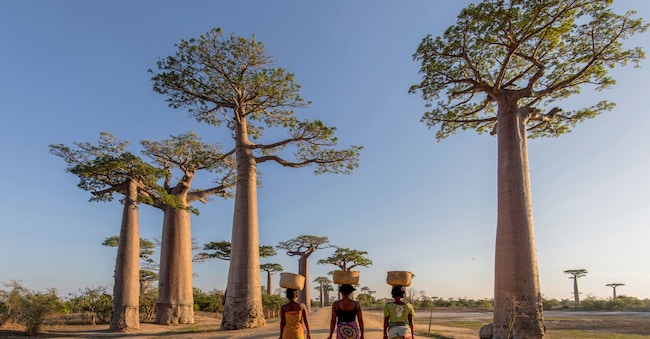
Alberi di baobab Julio Sacristan/ADDICTIVE STOCK - stock.adobe.com

3' min read

Translated by AI
Versione italiana

3' min read

Translated by AI
Versione italiana

A social reforestation project carried out in the Sahel region of Burkina Faso – specifically in the rural district of Garango and the municipality of Boussouma – made possible by Wownature, an initiative of Etifor, a spin-off from the University of Padua. The figures are significant: the project has planted 9,500 trees, including moringa, baobab, shea and néré – species that are particularly resilient to climate challenges and classified as ‘superfoods’ due to their extraordinary nutritional value.

An area as large as Milan’s historic centre

The area in question is extensive and covers a surface area comparable to that of Milan’s historic centre. It is of great social value because, in Burkina Faso, the climate crisis is accelerating desertification, soil degradation and prolonged drought: a tree is a treasure, not only from a climate perspective but also from an economic one, as it provides a source of independent income through the products that can be sold.

Loading...

The work is carried out by the Union des Femmes de Garango (UFG), which promotes non-timber forest products such as shea, baobab, moringa and néré, transforming them into a supply chain that combines natural cosmetics with food security. For personal care, the range includes raw shea butter, with its emollient, restorative and protective properties; baobab soap to nourish the driest skin; baobab oil with powerful antioxidant properties, and moringa oil, rich in omega-6 fatty acids and vitamins A and C.

In terms of nutrition, the moringa plant forms an integral part of the village’s daily diet: the fresh leaves and long green pods are cooked in traditional dishes to combat malnutrition, whilst the sugary pulp of the néré and baobab fruits provides an immediate source of energy and vitamins.

The project and its significance for women

The project has used reforestation as a veritable natural pharmacy. Acute malnutrition in the area has fallen from 6.9 per cent to 4.5 per cent, enabling around 500 children to escape this critical condition, whilst chronic malnutrition has fallen from 22.5 per cent to 19.8 per cent. “Trees are life,” said Zouré Clarisse, president of the UFG. “Without trees, we women cannot even cook, as we use firewood. Many children and women have been saved from malnutrition thanks to this forest.”

The economic and employment aspects are also significant: the UFG employs around 500 women, divided equally between the shea supply chain and agroforestry projects, and operates a modern, solar-powered processing unit equipped with crushing machinery, mills and collection tanks. Economically speaking, incomes have risen by 32 per cent and production has reached five tonnes per year of finished products. “We have improved both quality and volume,” emphasised Clarisse. “Thanks to this project, many women have become self-reliant, have escaped poverty and are able to support their families properly by selling shea at the price they set themselves. Attitudes have also changed: we’re talking about women who used to live in villages so remote that they could go as long as ten years without leaving.”

The protected area acts as an active green barrier: the trees stabilise the soil, prevent erosion and create a humid microclimate that allows native vegetation to regenerate naturally. The sustainability cycle follows specific stages: the community forest nursery, where seedlings are grown and tended; agroforestry, that is, the planting of mature seedlings, which are integrated into cultivated fields by intercropping them with cereals during the rainy season and with pulses during the dry season, thereby optimising water use; moringa seedlings are also distributed directly to people’s backyards for family consumption.

The future

“This project demonstrates that scientific reforestation cannot be separated from its social and economic impact,” added Federico Corrò, project manager at Wownature. “ When we combine technical planning and biodiversity conservation with the creation of real value for host communities, trees cease to be mere numbers on a map and become living, resilient ecosystems. This model of multifunctional reforestation, based on women’s empowerment, international certification of local supply chains and active efforts to tackle the climate crisis and malnutrition, should not be viewed as an isolated case. It is a structured Nature-based Solution.”

So what does the future hold? “My dream,” concluded Clarisse, “is now to strengthen the supply chain by building a large factory and expanding the sales network.”

Copyright reserved ©
Loading...

Brand connect

Loading...

Newsletter

Notizie e approfondimenti sugli avvenimenti politici, economici e finanziari.

Iscriviti