
Trend or Trash: how to distinguish real digital trends from online noise
The new volume by Raffaele Bifulco and Anna Paterlini published by Il Sole 24 Ore, in bookshops from 22 May and on newsstands for one month from 23 May 2026

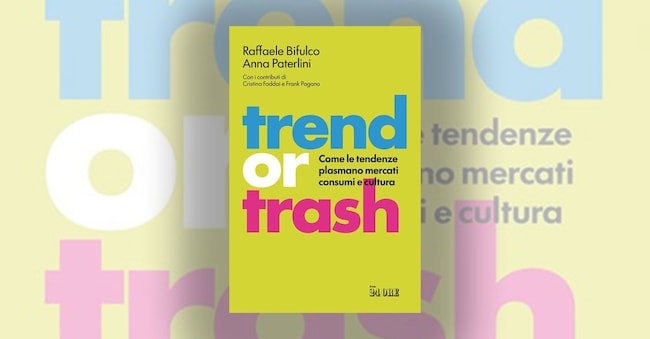
In the age of endless scrolls, viral memes and aesthetics that are born and die in the time of a reel, understanding what is really a trend and what is simple digital noise has become increasingly complex. It is from this reflection that Trend or Trash was born. Come le tendenze plasmano mercati, consumi e cultura, the new volume by Raffaele Bifulco and Anna Paterlini published by Il Sole 24 Ore, in bookshops from 22 May and on newsstands for a month from 23 May 2026.
An essay that traverses the languages of contemporaneity to analyse how algorithms, digital platforms and internet culture have transformed the very concept of trend, making the boundary between authentic cultural phenomena and mere passing fads increasingly fragile.
Through examples ranging from memes to '-core' phenomena, from digital micro-communities to the attention economy, the authors recount an ecosystem dominated by speed and overproduction of content, in which everything can go viral but almost nothing really manages to settle into the collective culture.
The book deals with central themes of the present day such as the fragmentation of attention, the role of algorithms in the construction of contemporary languages, the relationship between identity and social platforms, the transformation of advertising and the risk of communication being increasingly crushed by emotional immediacy. At the heart of the analysis is the paradox of our time: being exposed to an infinite number of signals without really being able to interpret them.
According to the authors, in fact, the real crux is not to chase what appears in the feed, but to understand the cultural, social and economic tensions that generate contemporary phenomena. A reflection that concerns not only the world of communication and marketing, but more generally the way in which we construct meaning, belonging and imaginary in the digital era.

