NorthEast

Trentino, growing number of efficient buildings

80% of the energy performance certificates issued since 2010 concern buildings in class C or lower, with class A and A+ growing

by Barbara Ganz and Valentina Saini
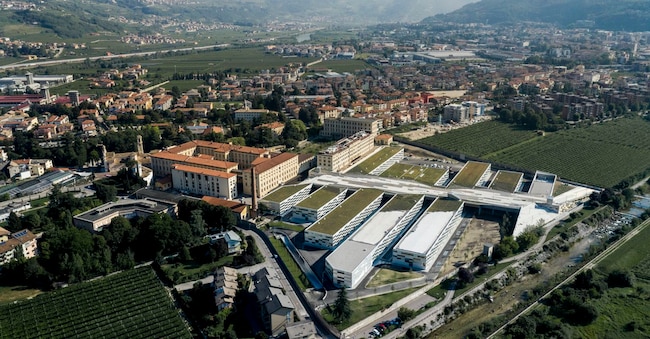
Gli spazi. Be Factory, polo produttivo di Progetto Manifattura a Rovereto, dove opera Habitech

3' min read

3' min read

There is a desire for energy requalification in Trentino. According to data from Odatech, an energy qualification and certification body based in Rovereto, 80% of energy performance certificates issued since 2010 concern buildings in class C or lower, and only 5% involve buildings in class A or A+. However, the trend is growing: from 3.4% in 2019, class A+ certificates rose to 8% last year.

This was also due to the 110% Superbonus, which in Trentino affected some 9,200 buildings. But that is not all. In this province that has been betting on higher education and research since the 1980s, the awareness of the new challenges for the sector, including the need for sustainability and generational transition, is strong. Andrea Basso, president of Ance Trento, explains: 'We are a small territory, but one that strives to be at the forefront. We were the first in Italy to create the Polo dell'edilizia 4.0, an initiative to bring together the associations in the area, builders, the business world and other players'.

Loading...

Sustainability

.

Innovation is seen as an essential enabler, not only to generate immediate benefits for those who live or work there, but also to make the sector, historically among the least green and with the greatest impact in terms of climate-changing emissions, sustainable. Basso cites heat pump boilers, equipped with an ad hoc electric photovoltaic mechanism, as an example. "In general, new processes and solutions are becoming increasingly widespread, even in the redevelopment of existing buildings.

New technologies are also behind new design tools that allow efficiency and savings on the time variable, which is crucial for keeping costs under control. But there must be professionals prepared to use these tools in the company and, like other sectors, the construction industry is struggling to find new employees.

Skills

.

Basso emphasises the centrality of openness to change and innovation to cope with the ongoing transformation, which is profound. And in this regard he cites Building Information Modeling, which allows optimising the planning, realisation and management of constructions through software. "Bim must become inescapable, also because from 1 January 2025 it will be compulsory for all public contracts above one million euro," he points out.

Challenges are not lacking, therefore, but construction seems to start from a good position in Trentino. Where the inclination towards the use of natural materials, starting with wood, the use of renewable energy, and the consideration of quality of life as an important value, have been innervating the sector for some time. Undoubtedly being an autonomous province, with a public administration that tends to think in the medium and long term, and to dialogue with the private sector, favours the evolution of the sector. As do the incentives, of which Basso emphasises the importance for energy requalification actions, also in view of the European 'green homes' directive. The Autonomous Province attributes 40 per cent of its climate-changing gas emissions to public and private buildings and estimates at least 50,000 energy-intensive buildings in its historical centres.

The case

.

An example of Trentino's ability to create a system by focusing on innovation and sustainability is Habitech. Which, says its general manager Francesco Gasperi, "was established in 2006, when the Province defined a technological district uniting two major themes, that of construction and that of the environment, placing sustainability as the driver". 100% private, Habitech has two souls: one consortium and the other consultancy. "We are a market leader in the application of sustainability in building interventions or neighbourhoods. From 2007 onwards, we have accompanied real estate and developers in reorienting their portfolios first from a sustainability perspective and now from an ESG perspective".

Habitech works with clients, project teams and contractors to apply all sustainability issues, such as the protection of water resources, the use of certain materials, the focus on circular economy, decarbonisation and healthy spaces. Habitech works with partners all over Italy, in particular with branches of international funds in Milan, but also abroad. Its 118 partners, 109 of which are private, include the University of Trento and the CNR. For Gasperi there is no doubt that innovation with a view to sustainability is and will be increasingly vital for the construction industry. "There is increasing attention to this from contractors. The fact that Brussels has launched actions such as the Green Deal and the European taxonomy has certainly been a driving force'.

Copyright reserved ©
Loading...

Brand connect

Loading...

Newsletter

Notizie e approfondimenti sugli avvenimenti politici, economici e finanziari.

Iscriviti