
Triumph Bonneville T120 Black (model year 2026): how does the most classic British motorbike ride?
For 2026, the Bonneville T120 Black is primarily getting an update to its electronics

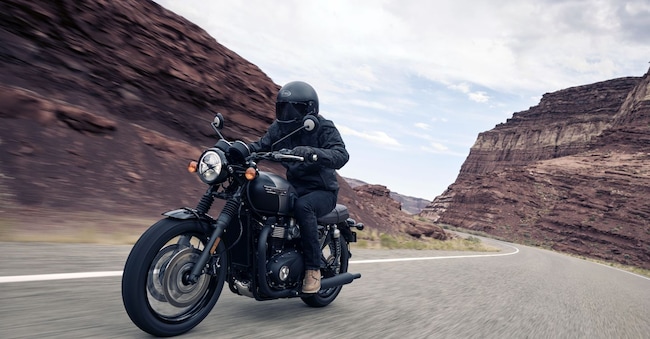
It was the forerunner of an entire segment of the motorcycling world: the Triumph Bonneville boasts a silhouette that is part of British motorcycling history; today, it has been reimagined with modern technology, refined engineering and a character that remains deeply rooted in the very essence of motorcycling. The T120 Black is the most captivating of the Bonneville range, at least in this writer’s view, thanks to the skilful combination of black with the chrome finishes on its components. For 2026, the T120 Black (€15,000) does not undergo a radical makeover, but receives a few tweaks where necessary, whilst the features that have made this motorbike one of the most recognisable ‘Modern Classics’ on the market remain intact.
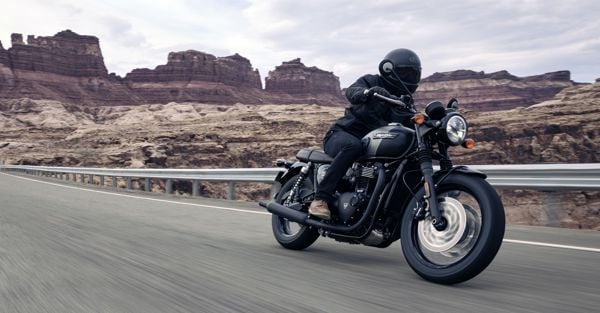
What’s new for MY2026
The T120 Black features the new cornering ABS (the braking system also takes the bike’s lean angle into account) and lean-angle-sensitive traction control, both managed by an inertial platform. Cruise control is now fitted as standard, as are the USB-C port and the new full-LED front light cluster with DRLs.
Beneath the black bodywork, however, the heart of the T120 remains unchanged: a 1,200 cc parallel-twin, liquid-cooled, with a 270-degree crankshaft angle, delivering 80 cv at 6,550 rpm and, above all, 105 Nm at just 3,500 rpm – that is, as soon as you open the throttle a little. These figures speak louder than anything else about the philosophy behind this motorbike: not a sports bike disguised as a classic, but a great twin-cylinder road bike, built to deliver torque, comfort, a commanding presence and riding pleasure. Furthermore, there’s an important new development for younger riders: the reversible power-restriction kit for the A2 licence is now available (and this applies to all modern classics as well).
A well-balanced chassis
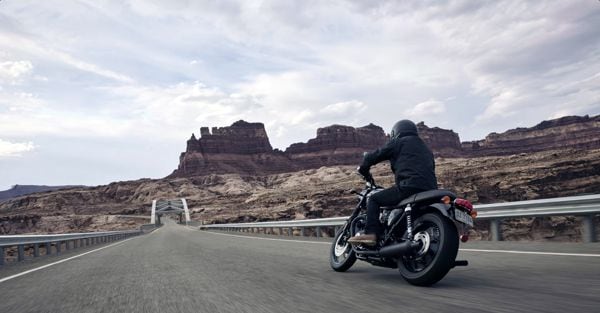
The frame is a classic double-cradle tubular steel design, a solution that contributes as much to the bike’s appearance as to its dynamic behaviour. The 41 mm KYB front fork is paired with two KYB rear shock absorbers with adjustable preload. The wheels are spoked with aluminium rims – 18-inch at the front and 17-inch at the rear – which sit well with the typical dimensions of a large classic roadster: 2,170 mm in length, 1,450 mm wheelbase and 790 mm seat height. The most striking figure, however, is the weight: 233 kg kerb weight. That’s no small matter, and you really notice it when manoeuvring from a standstill or when you need to move the bike with the engine off. But once you’re on the move, the situation changes: the weight is distributed effectively, with a relatively low centre of gravity that helps make the T120 more manoeuvrable than it might seem on paper. Braking is handled by two 310 mm front discs with Brembo floating two-piston calipers and a 255 mm rear disc with a Nissin two-piston caliper.
On the road
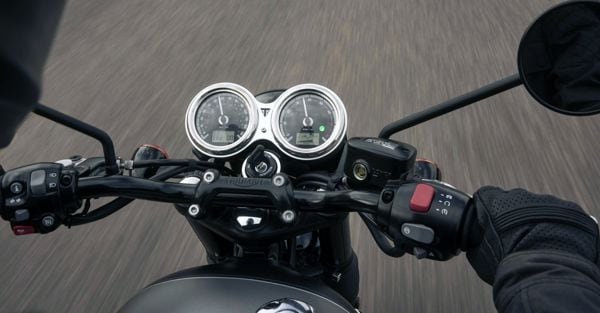
Sitting 79 cm above the ground, you can rest both feet on the ground (at least if you’re over 170 cm tall), with the handlebars and footpegs positioned to allow for a relaxed riding position. As soon as you start it up, the twin-cylinder engine immediately wins you over with its deep, throaty sound, which makes you want to rev it up. We pull the assisted clutch lever – which is smooth and never tires, even in city traffic with constant stops and starts – and engage first gear: there’s no metallic clatter or gear-grinding noise; the gear engages silently. Right from the very first few metres, we’re captivated by the engine’s elasticity: at low revs, even in sixth gear, it doesn’t ‘pound in your head’, but allows you to pull away with just a touch of the throttle, without any vibrations in either the handlebars or the footpegs. The twin-cylinder’s torque is plentiful, present but not harsh: when you open the throttle, the Bonnie delivers a surge of power that carries you away smoothly, without hesitation, with a linear response that makes you forget to look at the rev counter. There’s no need to rev the engine hard, but you’re tempted to change gear almost ‘under load’, making the most of the engine’s elasticity. We were a little surprised by the gear ratios: first and second are quite long, and in slower corners, you sometimes have to shift down to first to keep the engine revving. On mixed roads, the best approach is a smooth, fluid riding style without sudden changes of direction – something this British bike doesn’t particularly favour; in fact, it tends to offer slight resistance: there’s no need to attack the bend, but rather you enter it, let the bike flow and gradually open the throttle again. The electronic throttle, which offers two maps (Road and Rain), regulates throttle response perfectly, without any on-off effect. Ultimately, we realised that the ideal terrain for the T120 Black is hilly roads and routes full of medium-speed bends, where the twin-cylinder engine can make the most of its torque, supported by a well-balanced chassis.

